01
Warehouse and logistics
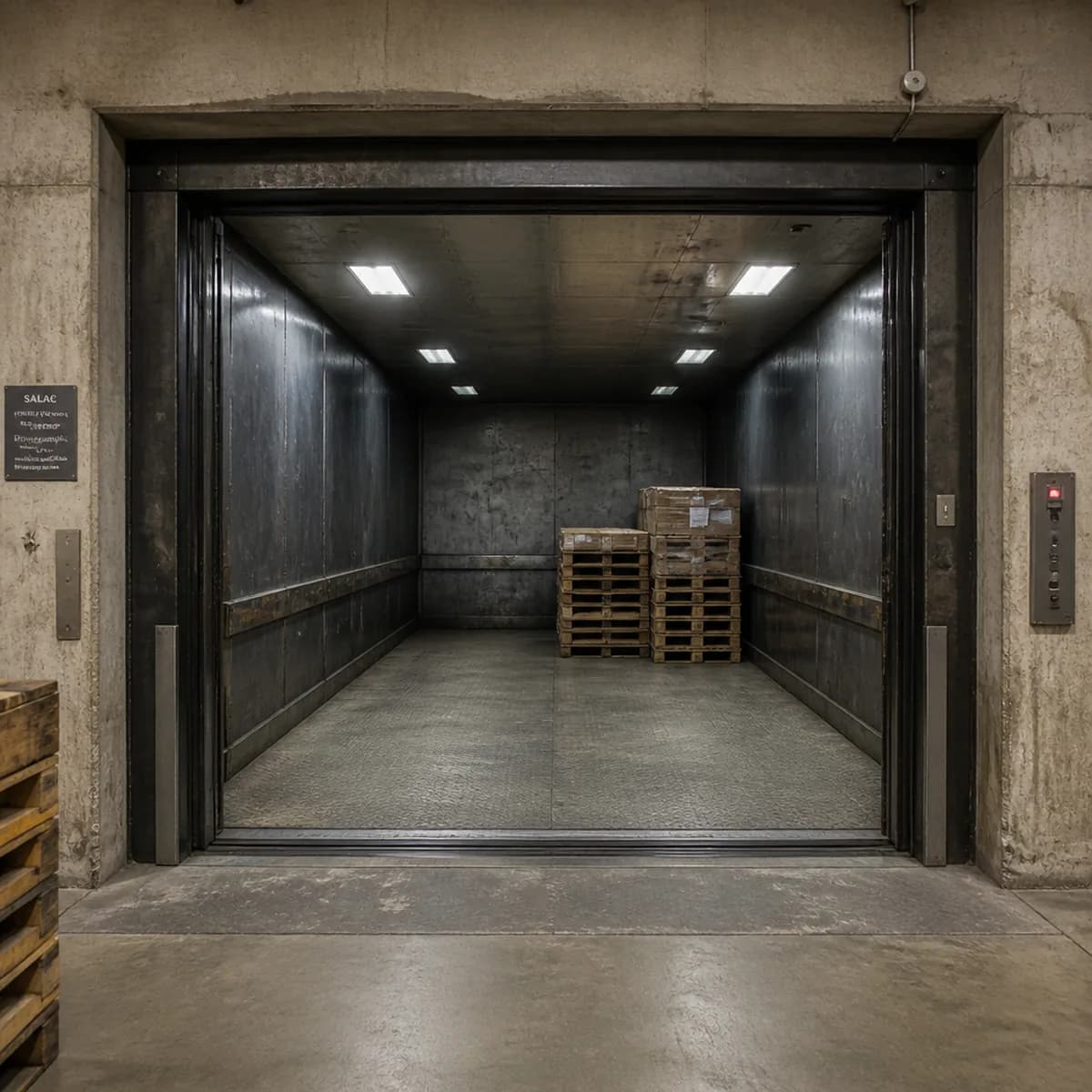
A vertical pallet path from dock to warehouse floors — wide doors and a tough floor for cart traffic.
Freight use
A freight elevator moves goods and heavy loads, not passenger traffic. Cabin, doors, floor, and shaft structure are sized for cargo from the start. The drive can be traction or hydraulic, depending on rise and load. Atlas Asanbar Arsh designs and installs in Tehran, Karaj, and cities across northern Iran.
System anatomy
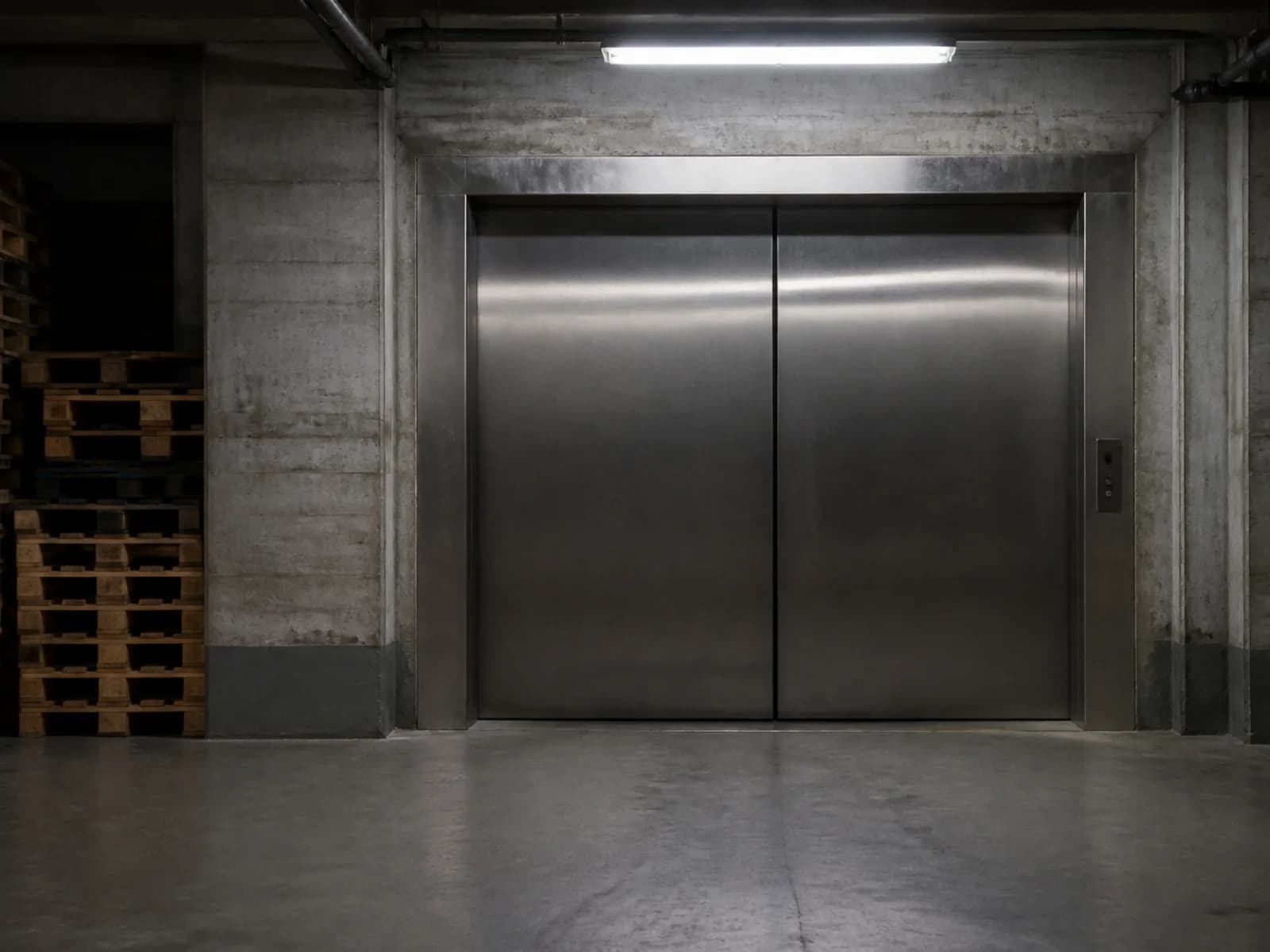
Do not confuse freight with a drive system. Use means what rides: goods and heavy loads. Drive means how the car goes up: traction with ropes, or hydraulic with a jack. Both combinations are built in Iran; the choice follows travel height and load weight — not the page title.
The kilogram figure comes from real goods, pallets, and the loading method — not from a universal law for every project. Loading class drives motor, rails, and shaft steel.
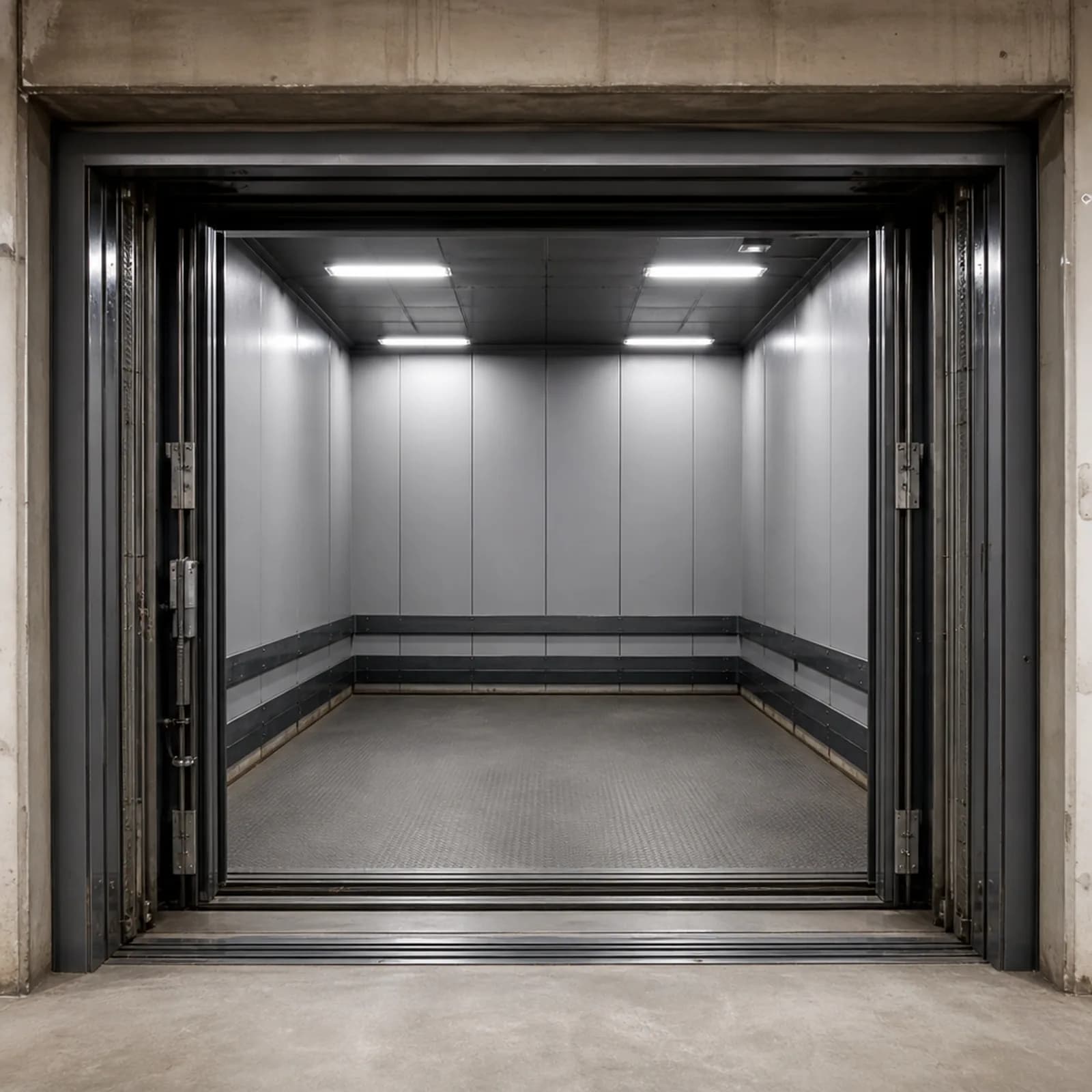
Walls, floor, and corners are built for pallet and cart impact — not lobby décor. Bumpers and a tough floor are part of freight use.
Opening width and depth must pass a pallet, cart, or wheeled load without awkward turns. A passenger door is usually too tight for that.
Shaft steel, rails, and brackets for freight are much heavier than a same-rise passenger lift. See that line separately on the quote — do not fold it into the cabin.
Freight is a use, not a motor type. Low rise and heavy load often point to hydraulic; taller travel usually to traction. We decide after measuring the shaft and defining the load.
A freight cabin is not chosen from a lobby photo. The floor must take concentrated pallet load; walls need bumpers; doors must be wider and often deeper than a passenger car. A service elevator — a tougher passenger lift for carts and housekeeping — is not the same as true freight that takes a forklift or heavy pallet.
Do not lock capacity from a brochure. Loading class, the path goods take in, and whether the load arrives by hand, wheels, or forklift change both the kilogram figure and the steel. The quote is written after the survey.
Use cases
Freight fits a site where pallets, heavy carts, or industrial goods move between floors. Warehouses, shops with stacked storage, factories, and back docks — those are usually the jobs.
A vertical pallet path from dock to warehouse floors — wide doors and a tough floor for cart traffic.
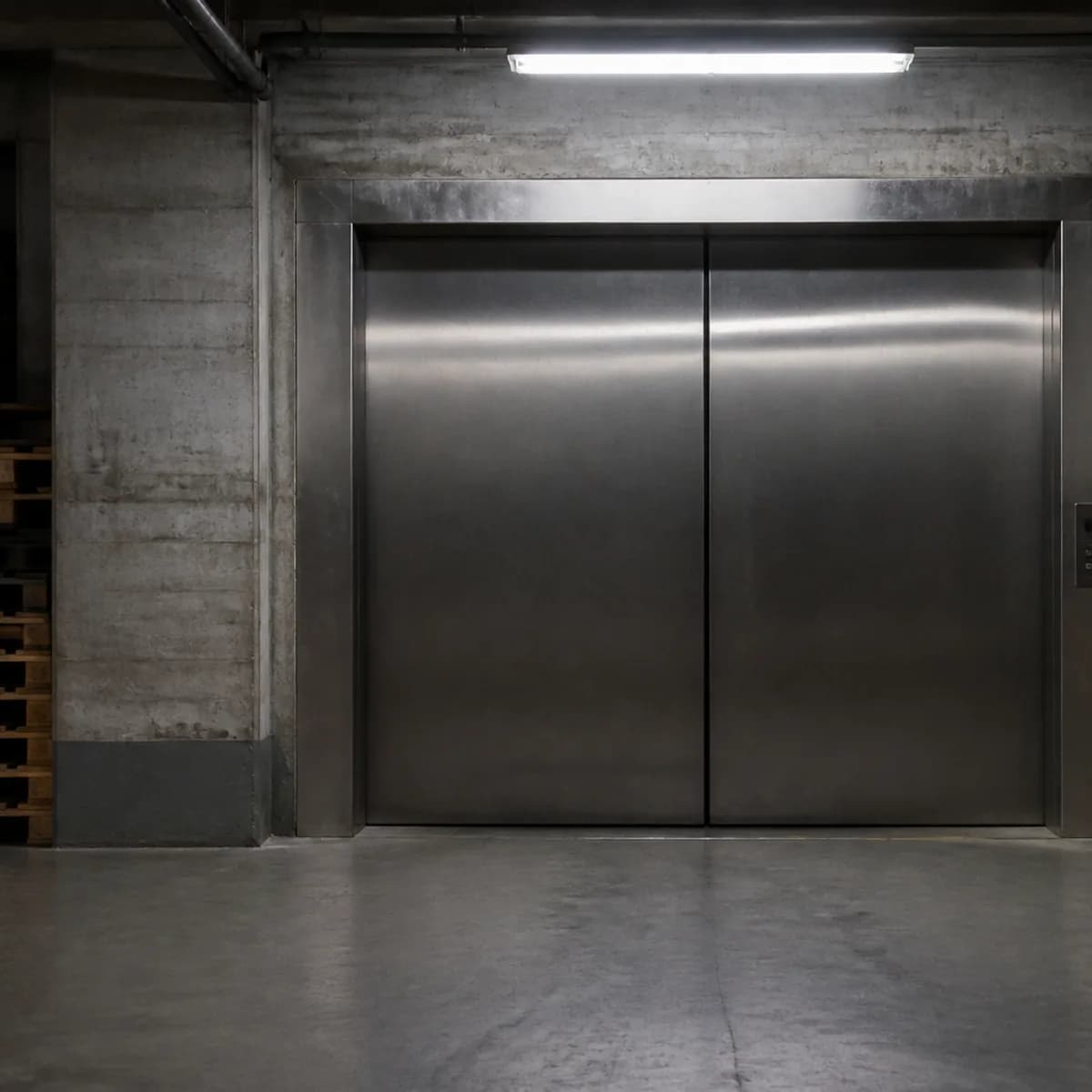
Moving stock from the back store to sales floors, apart from the customer lift — doors and cabin for cartons and carts.
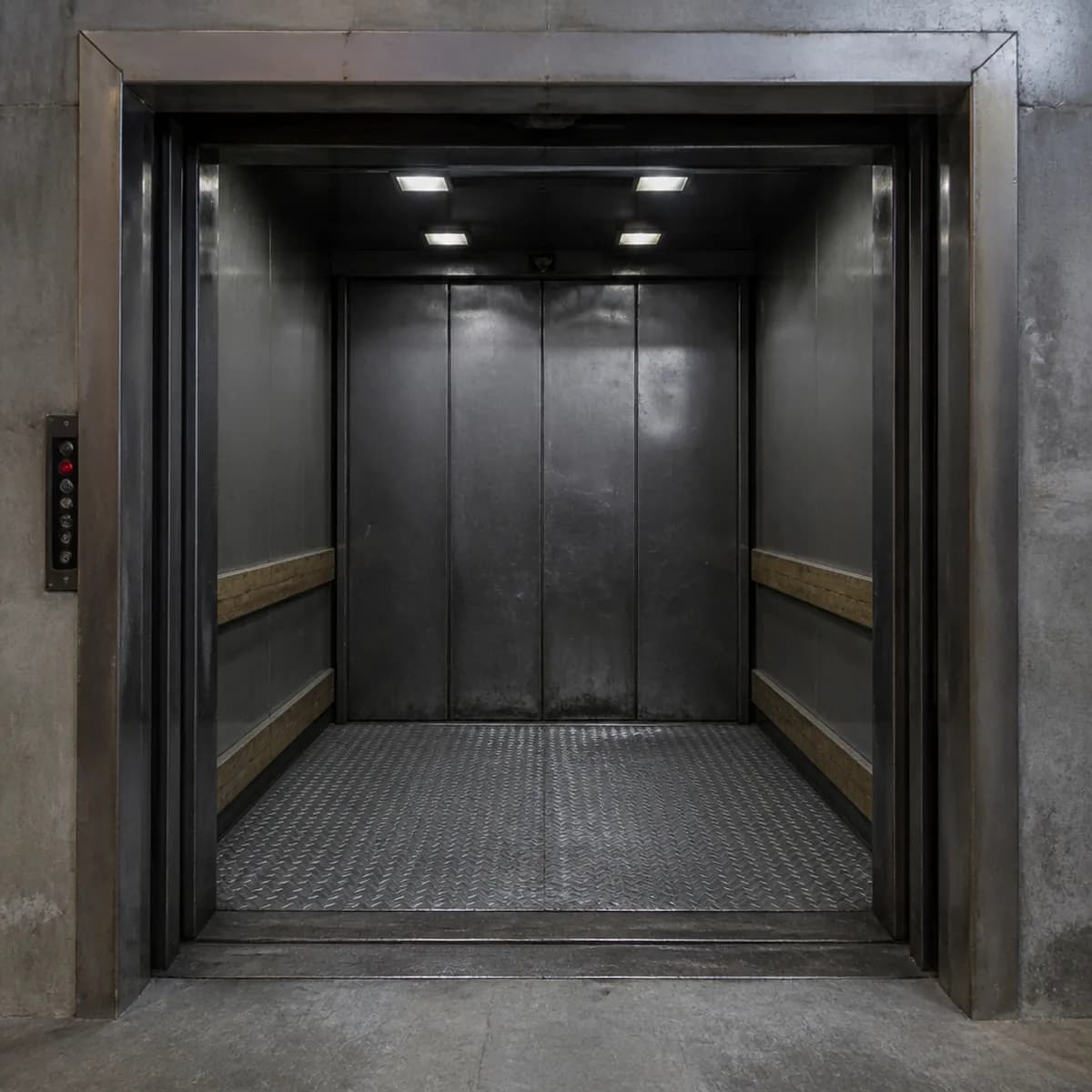
Moving parts, materials, and work-in-progress between workshop levels — capacity and loading class come from the production line.
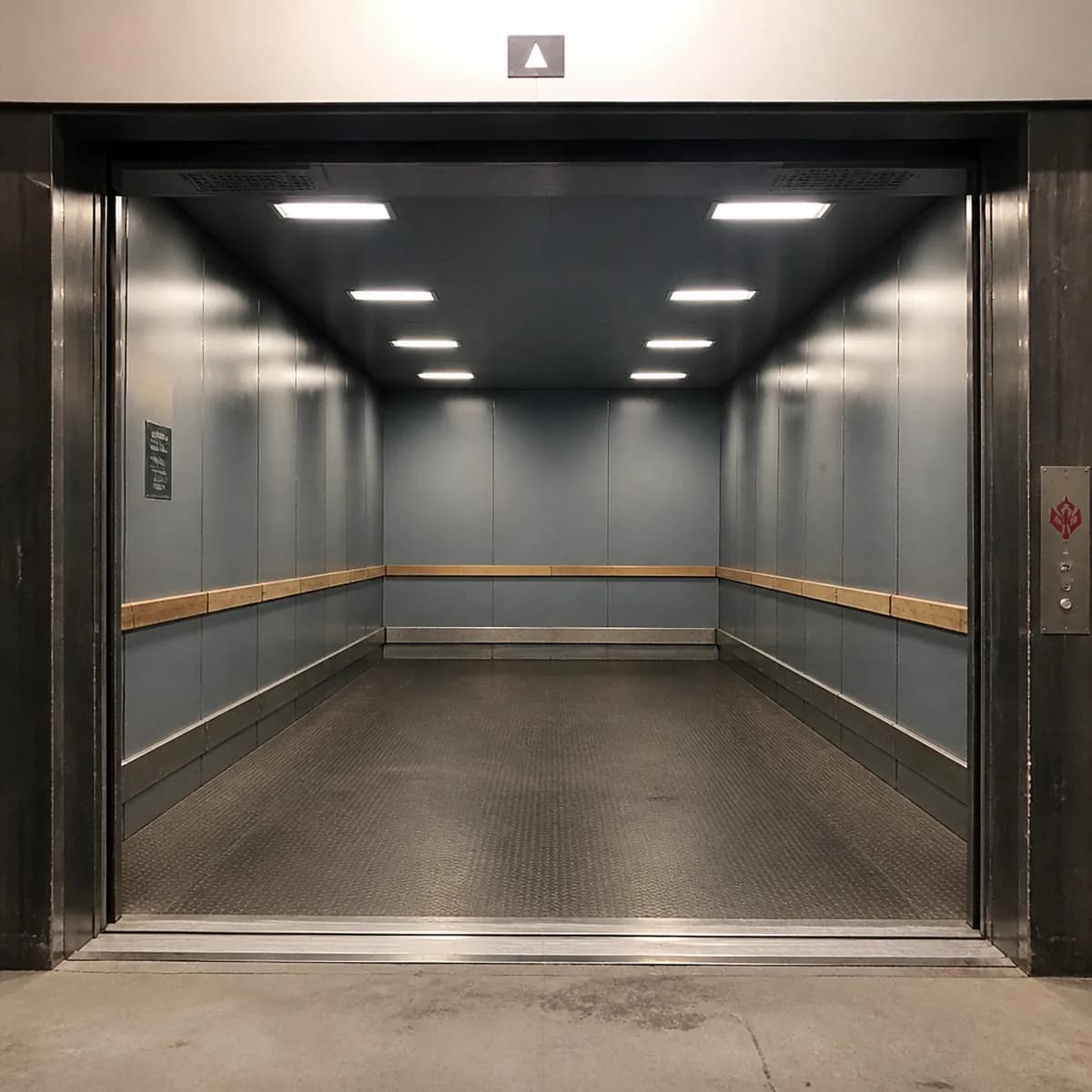
The opening must match the pallet and the forklift or cart path — do not assume a passenger door will take a wide load.
If you only move residents or customers, do not push this page — a residential passenger lift is the better fit. If a vehicle rides, that is a car lift. If it is only light cartons and a cleaning cart, weigh a service car separately from true freight.
An honest picture
Freight is the right call when goods travel from dock or store to floor on a path separate from people — or when the load is too heavy and large for a passenger car. Then wide doors, a tough floor, and heavy steel make sense.
Cabin, doors, and floor are designed for pallets and wheeled loads from day one. Turning a passenger lift into “freight” later usually leaves you with tight doors and a weak floor.
A wider, often deeper opening lets a pallet in without spinning it on the landing — if the loading corridor was planned from the start.
Rails and shaft steel are calculated for concentrated load and entry impact. That costs more — and it is what keeps the hoistway standing.
Keep hydraulic or traction separate from the use: low rise and heavy load often a jack; taller travel often traction. Both show up on freight jobs.
Freight is for moving goods safely, not for lobby peak hour. If people traffic is the priority, keep a separate passenger lift.
Freight shaft steel is much heavier than a same-rise passenger lift. If the building frame was not designed for that load, check the structure before the cabin catalog.
A service elevator is usually a tougher passenger car. True freight is for a loading class — and sometimes a forklift. Write those as two different jobs in the first meeting.
Loading class, where goods enter, and how they are loaded matter more than the plate figure. Without those, two quotes cannot be compared.
Name the limits in the same meeting. This system is usually slower, it loads the shaft, and it does not replace a busy passenger lift. If you only move cartons now and then, a service car may be enough. If a vehicle rides, that is a car lift — not general freight.
Choosing a use
If you move pallets, heavy carts, or industrial goods, freight is a serious option. If people and the lobby come first, look at a residential passenger lift on its own. Do not treat use as a drive: freight can be traction or hydraulic.
Freight
Goods and heavy load; sometimes goods-only
Passenger
Moving people in lobby and floors
Freight
Wider, tough floor, bumpers
Passenger
Passenger comfort and people-sized doors
Freight
Much heavier steel and rails
Passenger
Matched to passenger capacity
Freight
Usually calmer; traction or hydraulic
Passenger
Matched to people traffic; usually traction
Read the table against the real load, not against which column looks “stronger.” A shop moving pallets between floors wants freight. The same building moving only residents is a passenger job. Do not park a service lift in the middle unless light goods and a normal door will do. A car lift is a different page.
Project path
A freight install does not start with cabin colour. First we see the real load, loading class, door width, goods path, shaft, and whether the drive is traction or hydraulic. Without those, two quotes cannot be compared.
Shaft survey, required door width, loading path, loading class, and a first call on traction vs hydraulic.
Execution drawings, shaft steel, freight cabin and doors, and a transparent phased quote.
Rails and structure, wide doors, and rugged cabin; drive and controller wired per approved drawings.
Safety and leveling tests under load, inspection prep, and a short operator briefing.
After the survey, drawings and a phased quote follow: design, supply, install, handover. Exact timing depends on shaft readiness and equipment lead time. We also coordinate loaded tests and the inspection path. Handover means the lift works and paperwork is moving — not just a cabin on rails.
How quotes are built
There is no fixed freight price and no toman package. Two three-stop warehouses can get very different quotes; usually one has a narrower door and hand loading, the other a higher loading class, heavier steel, or a forklift path.
We write the number after the survey. If you only heard a lump sum, ask whether shaft steel, landing doors, bumpers, and delivery are inside it. Ask for capacity with loading class — not only a kilogram on paper.
Before a site visit the same questions come back: what freight is, how it differs from passenger, whether a car lift is separate, hydraulic or traction, how many kilograms, price, and whether people may ride. Short answers are here; numbers and drawings come after the load is defined and the shaft is measured.
Related types
If the load is a vehicle, look at a car lift. If it is a stretcher, hospital. If you only move people, that is passenger — and taller travel is usually traction. Freight is a use; traction is a drive.
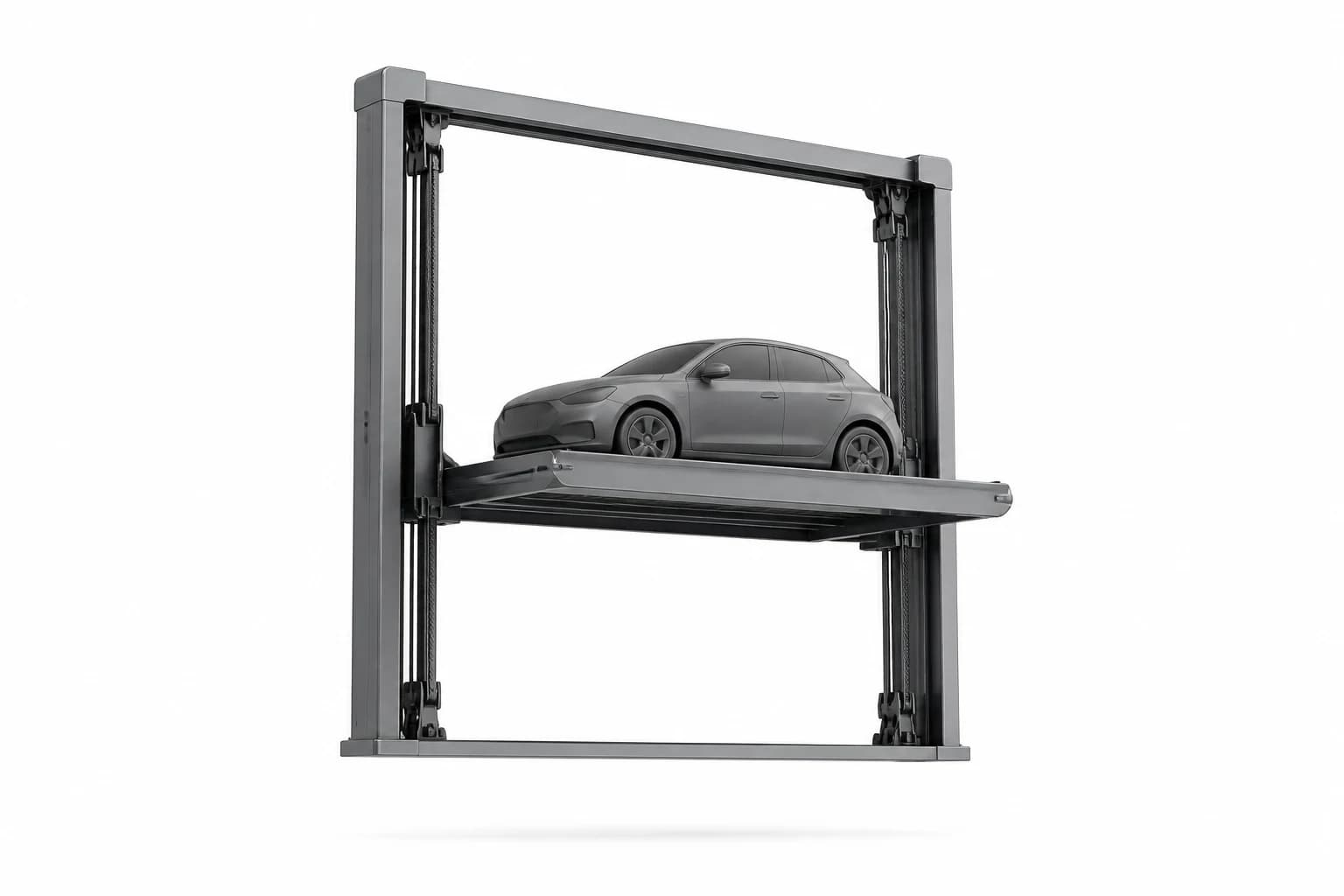
Car lift
A car lift moves vehicles between floors. Its platform, capacity, leveling, and safety are not those of a passenger elevator, and not those of a general freight goods lift. In Atlas work in Iran, hydraulic car lifts are common — jacks, rupture valves, and precise leveling. Atlas Asanbar Arsh designs and installs in Tehran, Karaj, and cities across northern Iran.
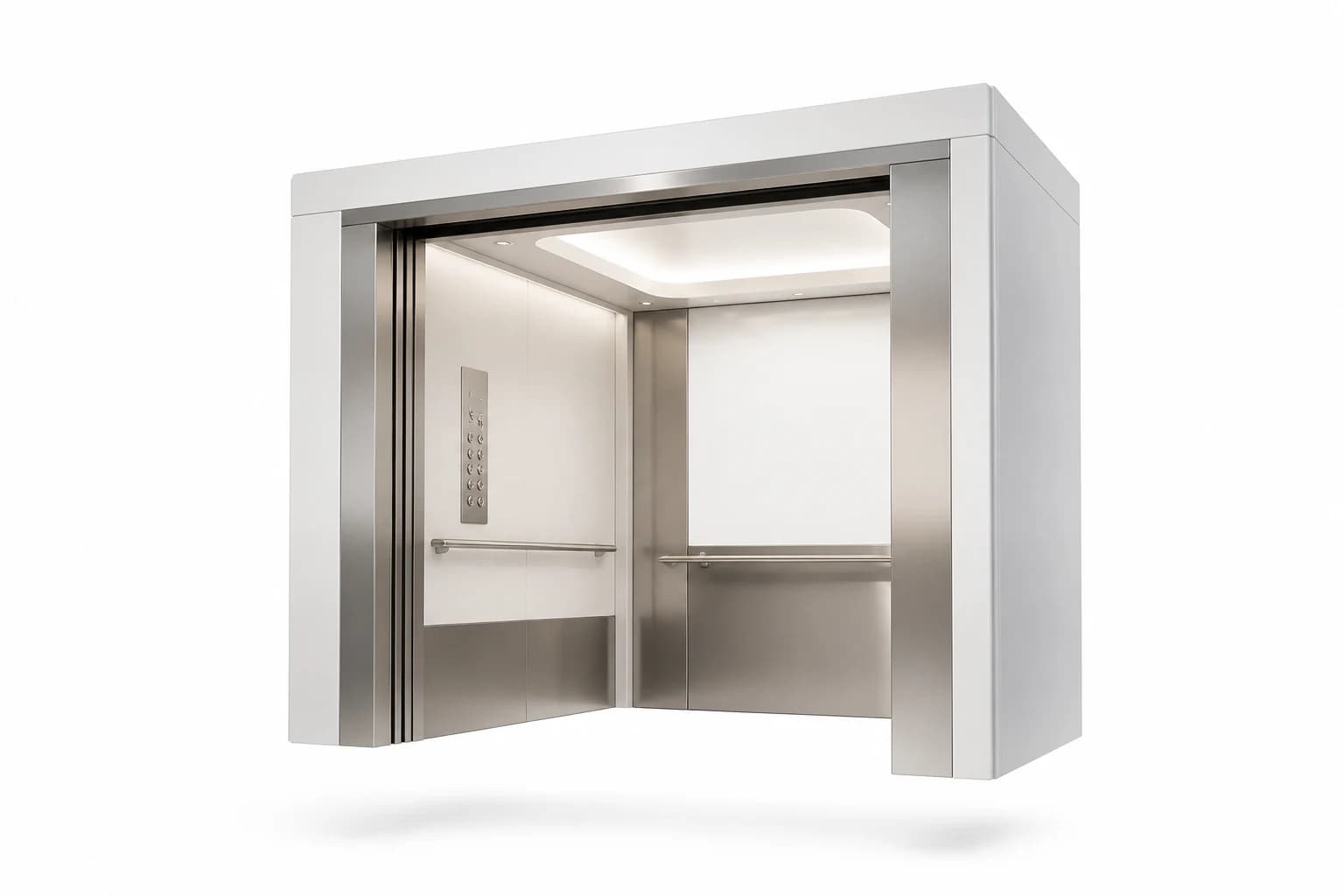
Hospital / stretcher elevator
A hospital or stretcher elevator is a building use, not a drive system. The cabin needs more depth and a wider door so a bed or stretcher plus an attendant can enter without a hard turn. Hydraulic or traction is chosen separately. Atlas Asanbar Arsh designs and installs in Tehran, Karaj, and cities across northern Iran.
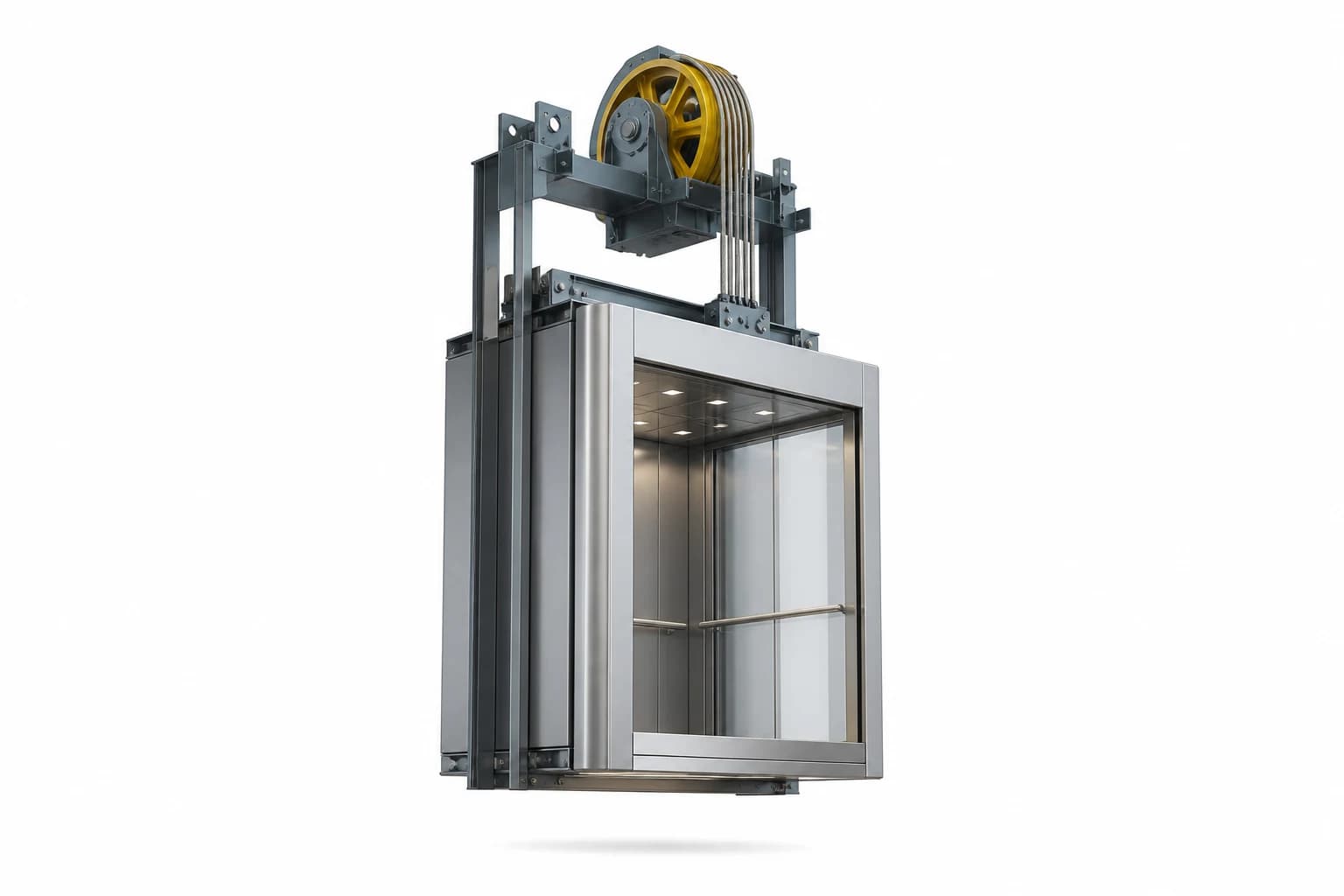
Traction elevator
A traction elevator moves the cabin with steel ropes over a motor-driven sheave and a counterweight. It is the usual choice for mid-rise and high-rise buildings with heavier traffic. Atlas Asanbar Arsh designs and installs in Tehran, Karaj, and cities across northern Iran.
Related resources
Once freight use is clear, continue from here to installation, the elevator-types map, the car lift, or a site-visit request.

Ready for a consultation?
Call now for pricing and technical advice.