01
Villas and split-level homes
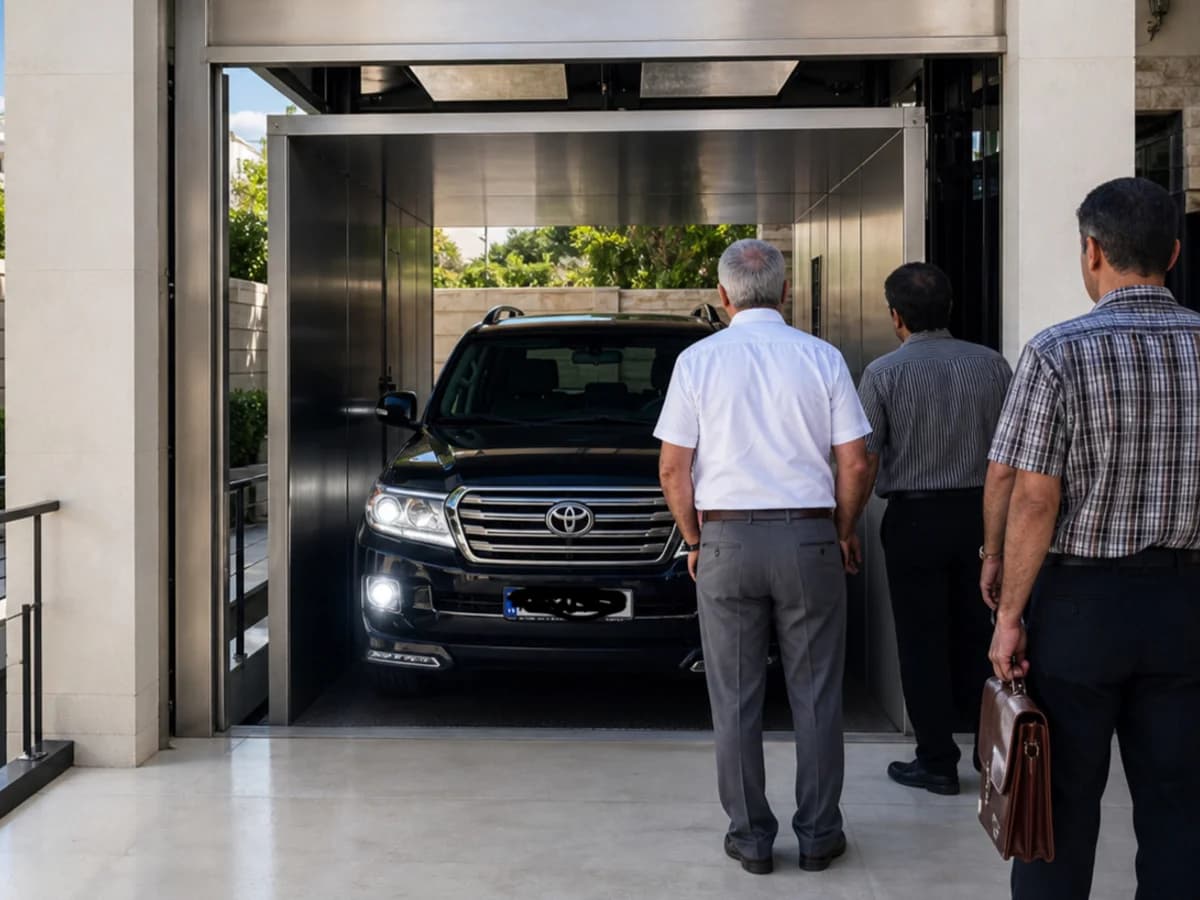
When the yard cannot take a ramp, a hydraulic car lift moves the car between levels — separate from the villa’s people elevator.
Vehicle use
A car lift moves vehicles between floors. Its platform, capacity, leveling, and safety are not those of a passenger elevator, and not those of a general freight goods lift. In Atlas work in Iran, hydraulic car lifts are common — jacks, rupture valves, and precise leveling. Atlas Asanbar Arsh designs and installs in Tehran, Karaj, and cities across northern Iran.
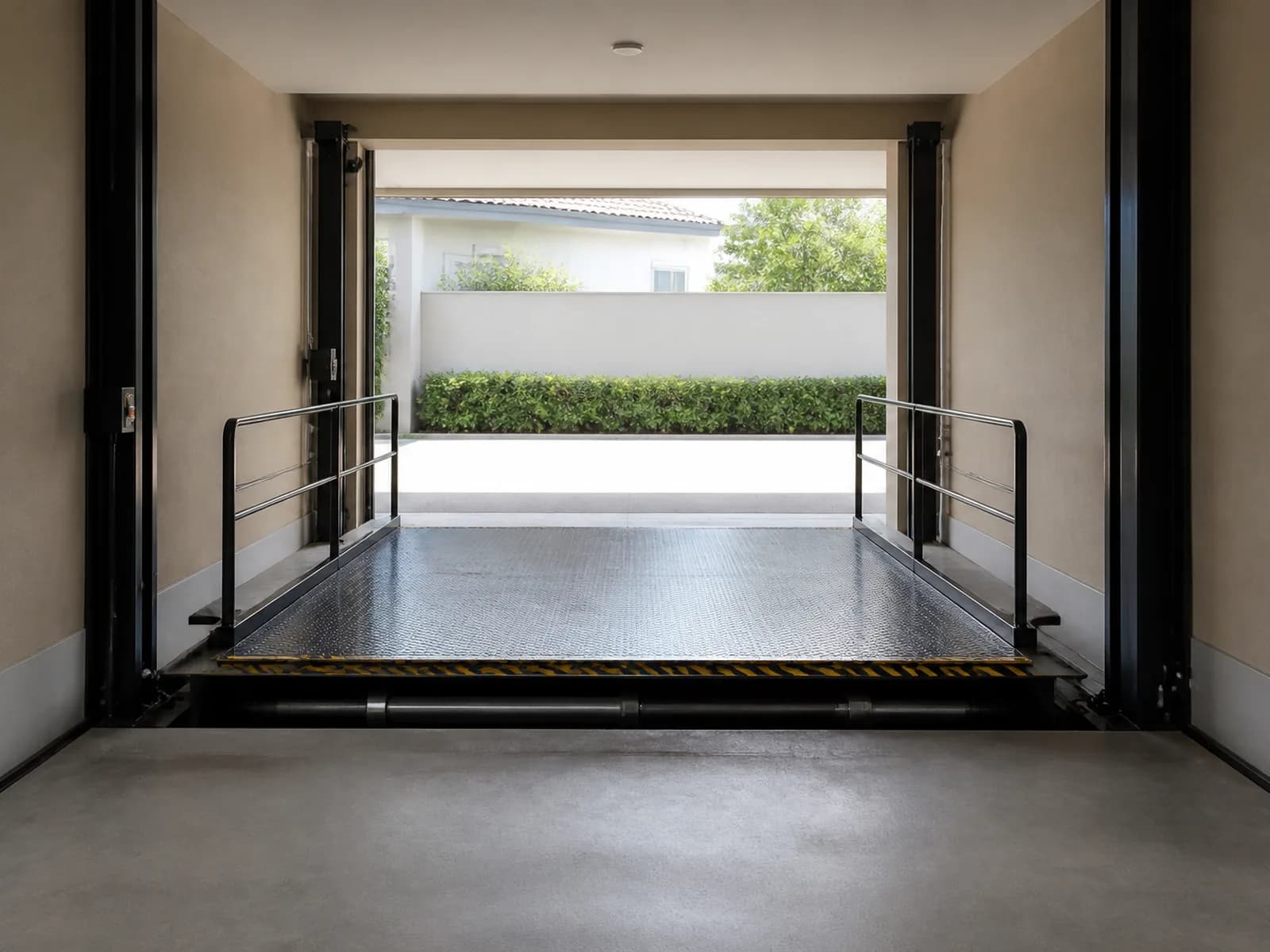
System anatomy
A car lift is not a passenger elevator you drive a car into. The platform takes the cabin’s place; the vehicle stands on the deck and moves between levels. Length, width, useful headroom, and vehicle weight belong on the table from the first survey — otherwise shaft and jacks will not fit the next job.
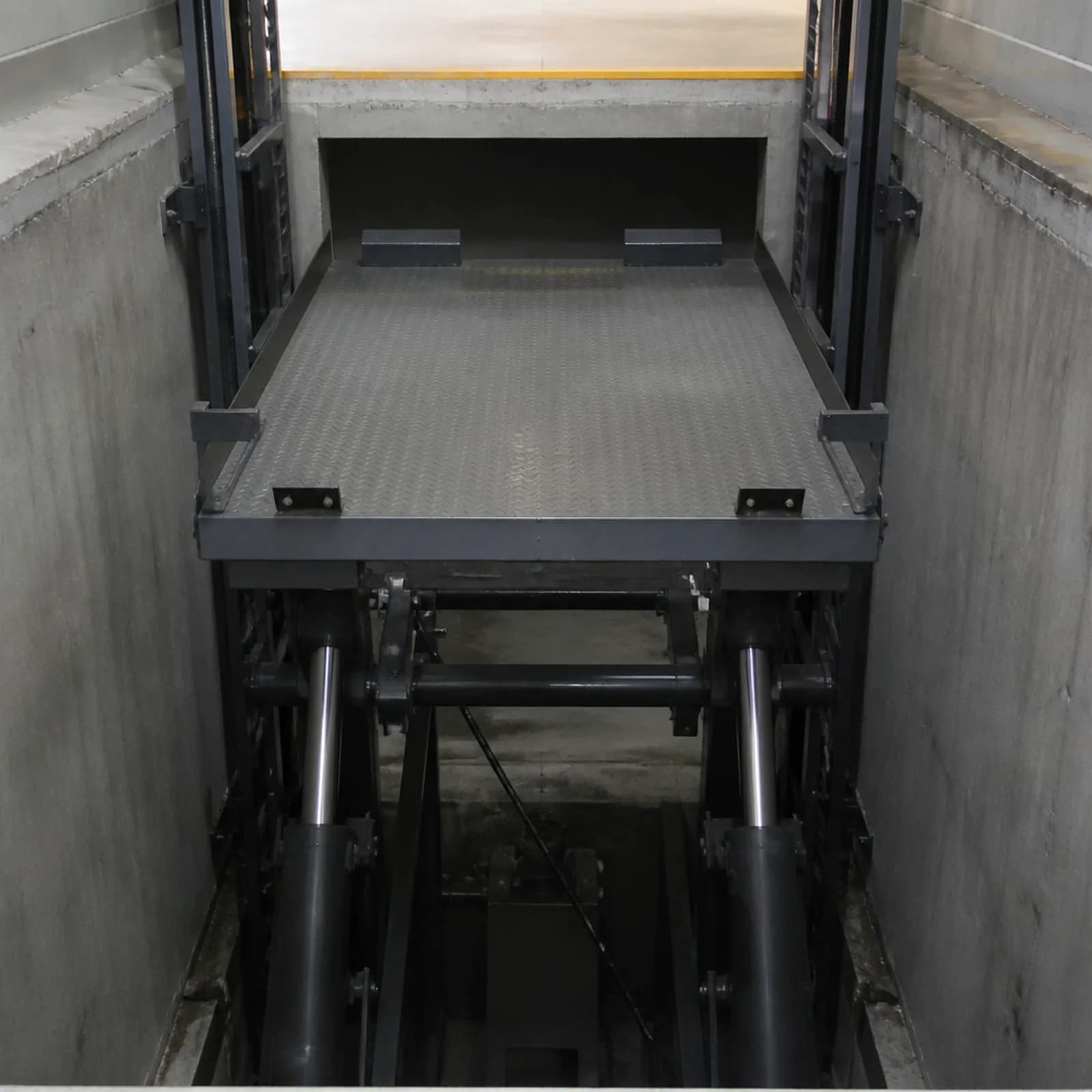
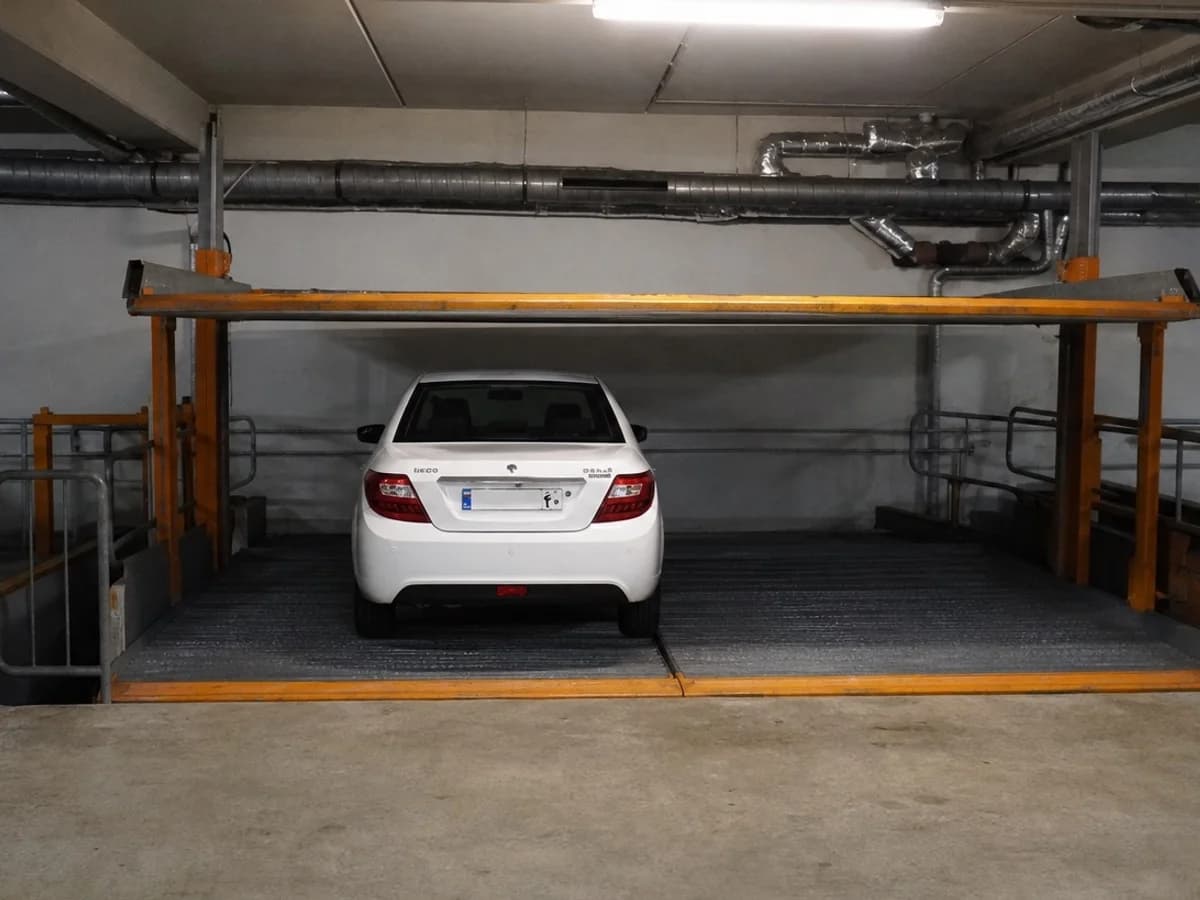
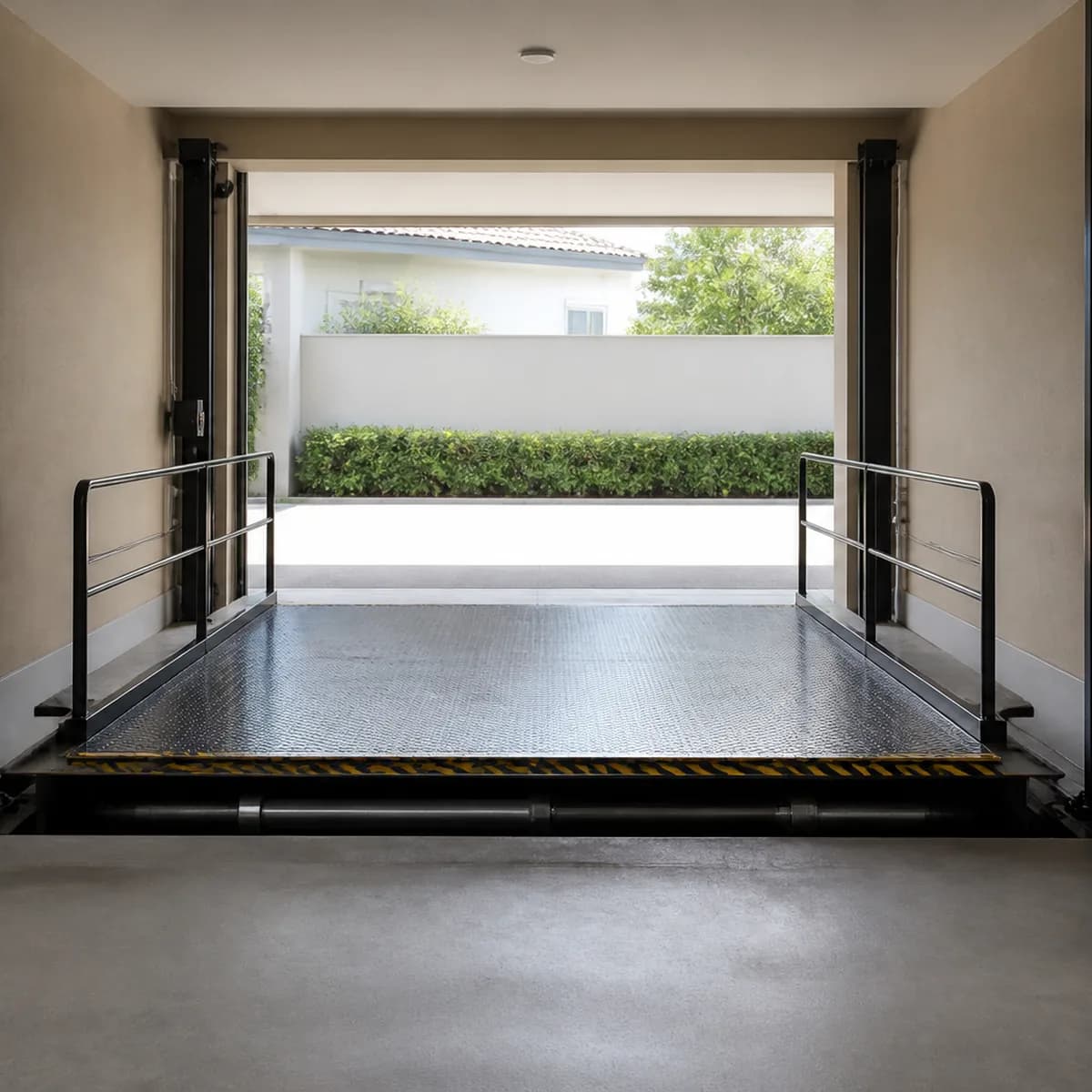
The vehicle deck. Length, width, and useful height must match the project’s cars — not a passenger cabin.
Common in Atlas projects: oil pressure extends pistons that lift the platform. Jack count and layout follow structure and capacity.
Weight, size, and load when a car rolls on and off are not the same as cartons and pallets. We do not lock capacity from a brochure; it comes from the project’s actual vehicles.
A quality rupture valve and descent control stop a free fall of the platform. Precise leveling with the floor is also part of safe drive-on and drive-off.
The shaft, rails, and chassis are heavier than a passenger lift; wheel loads sit as point forces on the deck. Steelwork and structure are closed after the survey.
In Atlas work in Iran, car lifts are usually hydraulic. The power unit sends oil to the jacks and the platform rises. Descent is controlled, and a quality rupture valve shuts the emergency path if an oil line is damaged. Platform-to-floor leveling is what keeps the vehicle’s suspension from taking a hit.
Do not mix capacity with a freight goods lift. Freight is for pallets and carts; a car lift is for a specified vehicle, with its own size, weight, and entry path. Numbers and drawings come after the shaft is measured and the vehicle type is named — not from an ad table.
Use cases
A car lift fits a building that must move a car between levels when a ramp is expensive or impossible. A split-level villa, stacked parking on a tight lot — those are usually the jobs. Atlas has built this use in Karaj and nearby with hydraulic jacks.
When the yard cannot take a ramp, a hydraulic car lift moves the car between levels — separate from the villa’s people elevator.
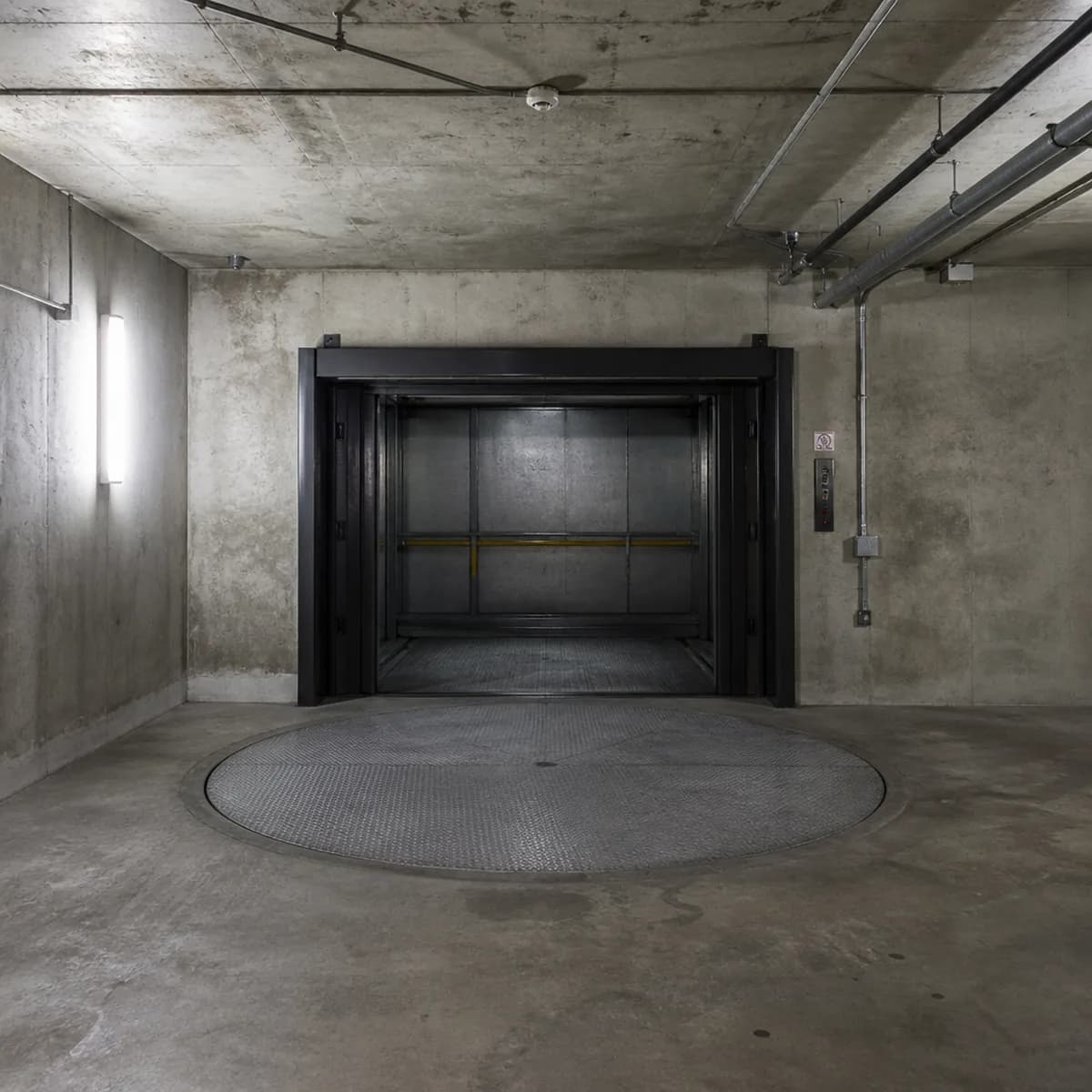
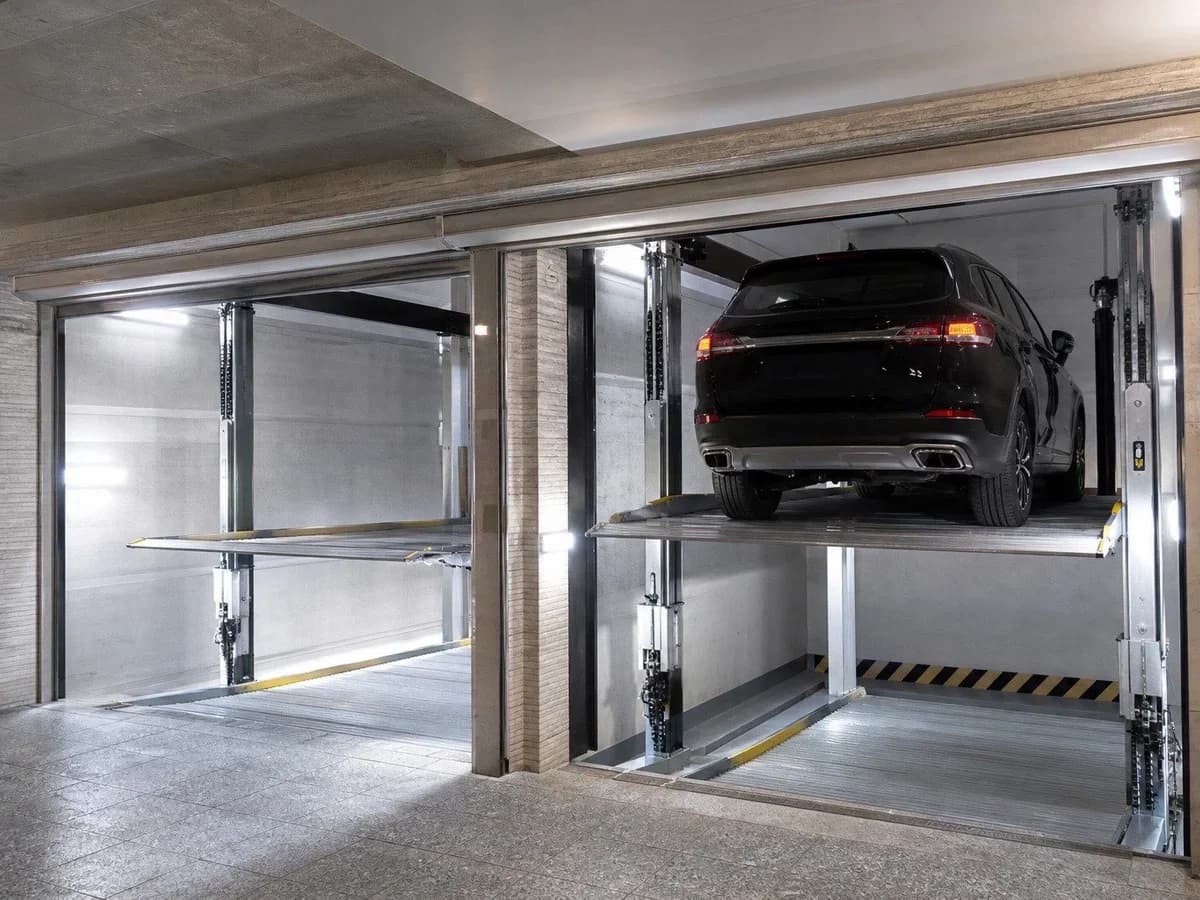
In urban fabric where a ramp will not fit, a car-lift shaft ties parking levels together.
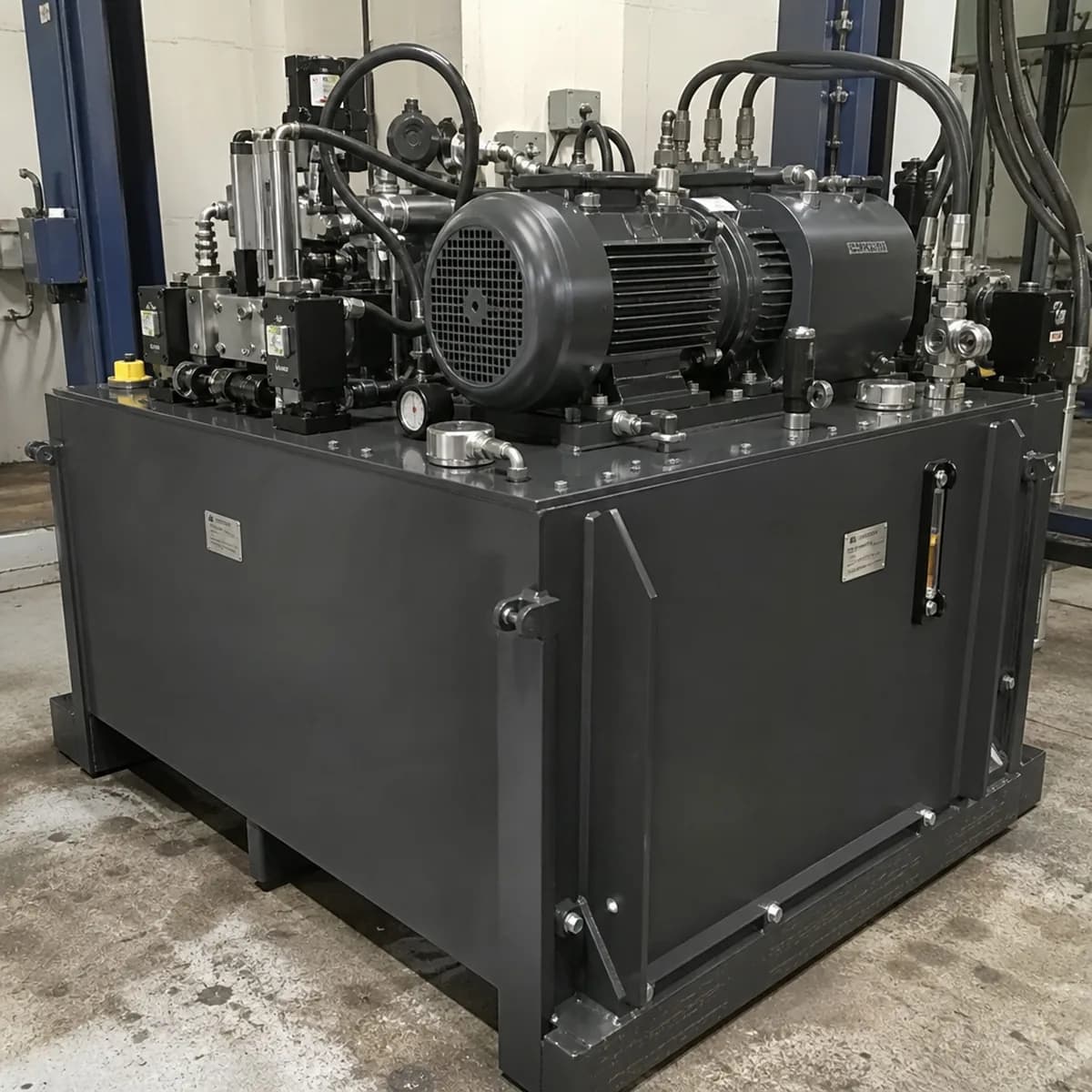
Jacks, power unit, and rupture valve — Atlas’s usual mix for heavy capacity and controlled descent.
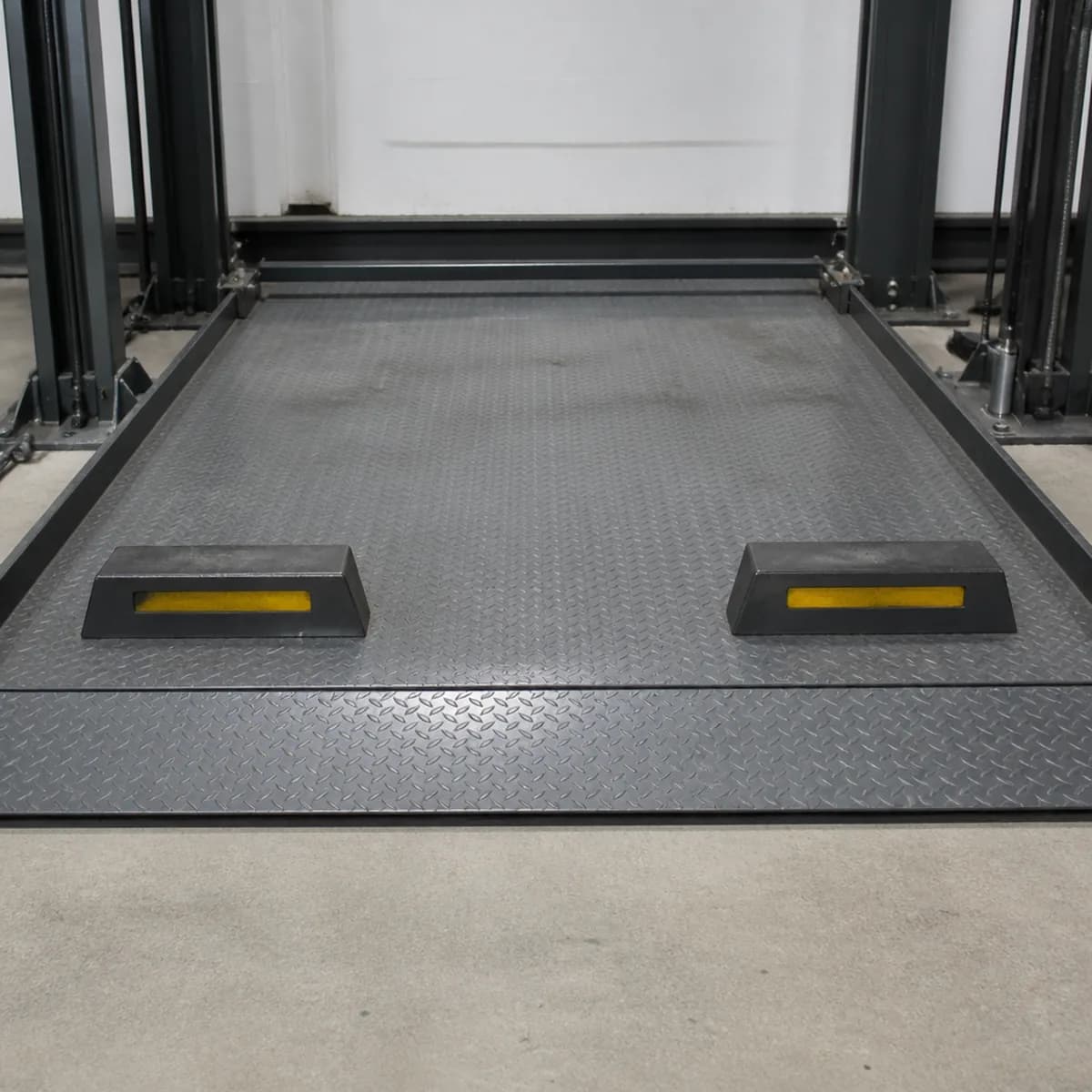
Deck size is closed from vehicle length, width, and height; flush landing with the floor is required for a shock-free entry.
If you need to move crates and pallets, do not swap this page with freight. If you need villa residents to travel, look at the villa lift separately. A car lift is only the vehicle path.
An honest picture
A car lift makes sense when the building must move a car between floors and a ramp has no room or costs too much. That is the villa and the tight urban garage. Atlas has built this use with hydraulic jacks in Karaj and nearby — from Gohardasht and Mehrvila to Kamalshahr.
A wide ramp eats floor area. On a villa or a tight urban lot, a car lift makes the same transfer in a vertical shaft.
Platform size, wheel-load pattern, and the entry path are designed for a vehicle from the start — not a scaled-up passenger cabin.
Jacks, a power unit, and a quality rupture valve keep heavy travel controlled, and a safe descent path remains if power fails.
From a villa stop to several parking levels — the use is the same: a vehicle between floors. Stop count is set by the building, not by a page slogan.
A people cabin, resident floor buttons, and passenger rules are not the design brief here. Do not treat a car lift as a people elevator.
Pallet-door size, a goods deck, and a warehouse path are not a vehicle platform and a wheel path. If you move crates, see the freight page.
Wheel loads on the deck and vehicle mass need serious steelwork and foundations. Without a suitable structure, we do not push the system.
Length, height, and vehicle weight class change the shaft and deck. We do not write invented legal tonnes or metres here; the survey and vehicle type are the base. Hydraulic also needs oil service.
Better to name the limits in the first meeting. This system does not move people, and it is not a goods warehouse lift. If you need pallets, open freight. If you need residents, look at hydraulic or villa. We do not promise capacity or metres without a survey.
Choosing the vehicle path
If the plot is tight, a ramp would eat floor area, or a villa must take a car to an upper level, a car lift is a serious option. If land and slope allow a proper ramp and you want continuous traffic, do not take the ramp off the table. Do not confuse either with a freight goods lift.
Car lift
Vertical shaft; ramp floor area is freed
Parking ramp
Long and wide; the slope consumes floor area
Car lift
Drive onto the deck, stop at level, exit at the next floor
Parking ramp
Continuous travel on a slope; no platform wait
Car lift
Heavy shaft, rails, and deck — after survey
Parking ramp
Civil work for ramp, walls, and grade
Car lift
Villa, tight lot, compact stacked parking
Parking ramp
When land and slope allow a proper ramp
Read the table against your plot, not against which option is “more modern.” A duplex villa with a tight yard is almost always a car lift. The same building with yard and length for a ramp can stay with a ramp. Freight goods are not a third column here; that use is separate, and the link below is that page.
Project path
A car-lift install does not start with picking a deck finish. First we see vehicle type, length and useful height, shaft, pit, power, and where the power unit can sit. Without those measurements, two quotes cannot be compared.
Vehicle size, shaft and pit, capacity needs, and hydraulic-jack type plus machine-room placement.
Execution drawings, deck size, hydraulic gear and safety valve, and a transparent phased quote.
Jack, rails, and deck install; power unit and controller wiring per approved drawings.
Descent safety tests, platform leveling to each floor, inspection prep, and owner handover briefing.
After the survey, drawings and a phased quote follow: design, supply, install, handover. Exact timing depends on structure readiness and jack lead time. After load and leveling tests we also coordinate the technical inspection. Handover means the deck works and paperwork is moving — not just a platform on rails.
How quotes are built
There is no fixed car-lift price. Two one-stop villas can get very different quotes; usually one has a shorter deck and a lighter car, the other a tighter shaft or dearer valves and jacks.
We write the number after the survey. Vehicle type changes deck length; stops sit on the jacks; structure is counted separately. If you only heard a lump sum, ask whether shaft steelwork, the rupture valve, and delivery are inside it.
Project proof
A few real Atlas jobs: hydraulic car lifts in Gohardasht and Mehrvila, and two seven-stop units in Kamalshahr. Open a card for the details of each job.
Before a site visit the same questions come back: what it is, how it differs from freight, whether it is hydraulic, how many stops, villas, safety, price. Short answers are here; numbers and drawings come after the shaft is measured and the vehicle is named.
Related types
If you need goods and pallets, look at freight. If residents need a low-rise people lift, hydraulic or villa is that path — not a vehicle deck.
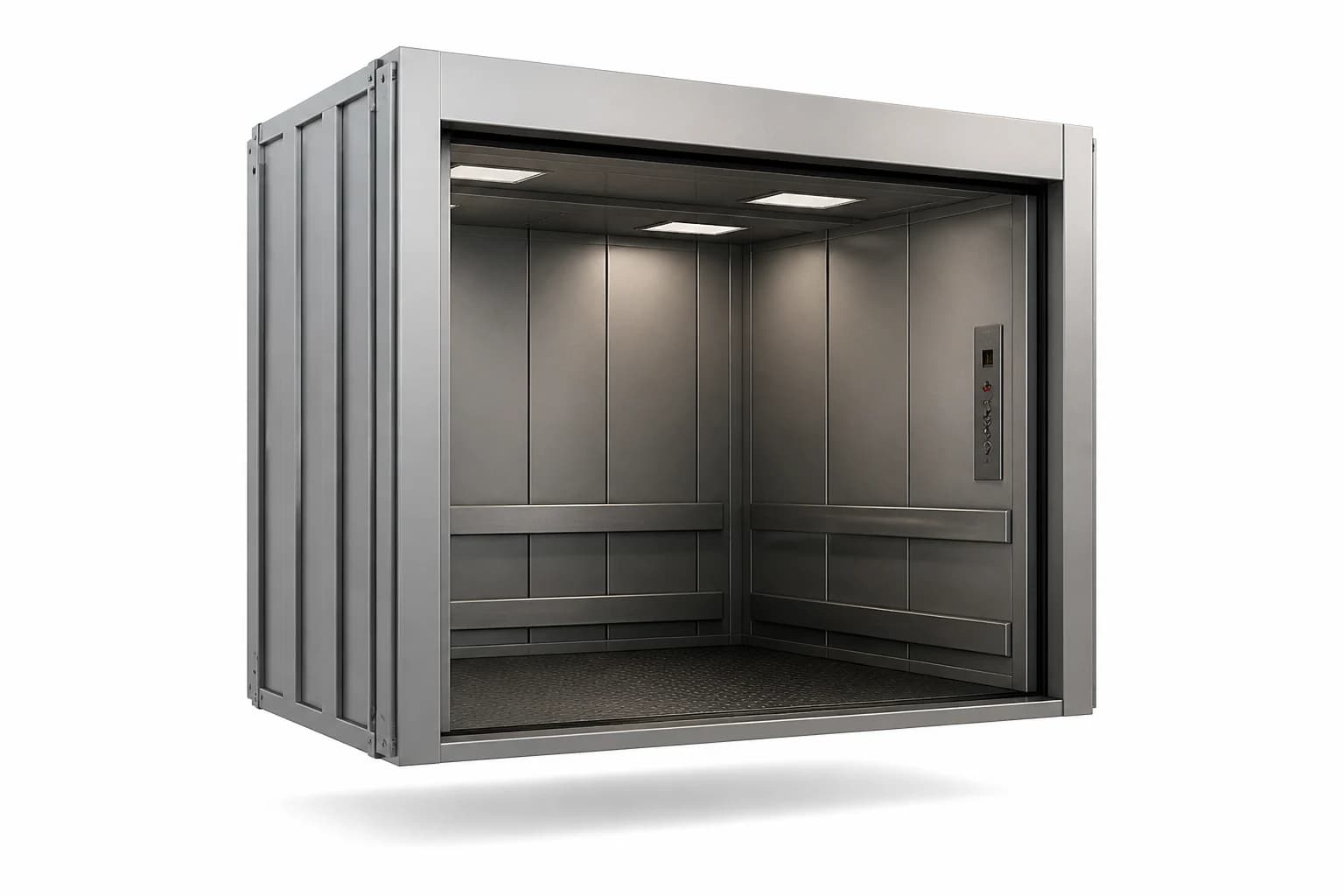
Freight elevator
A freight elevator moves goods and heavy loads, not passenger traffic. Cabin, doors, floor, and shaft structure are sized for cargo from the start. The drive can be traction or hydraulic, depending on rise and load. Atlas Asanbar Arsh designs and installs in Tehran, Karaj, and cities across northern Iran.
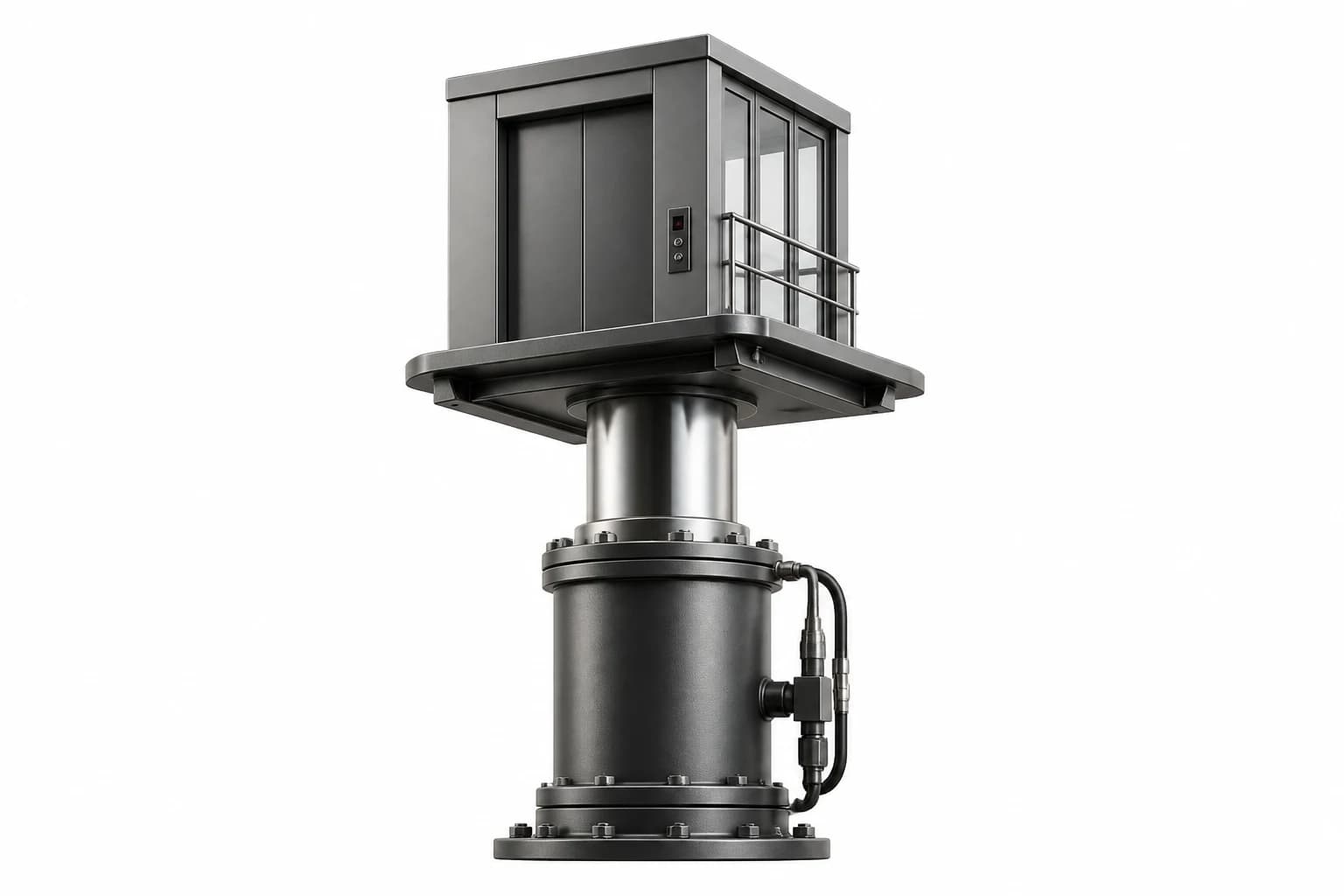
Hydraulic elevator
A hydraulic elevator uses a jack and power unit to move the cabin. It suits villas and 2–6 stop buildings that cannot put a machine room on the roof. Atlas Asanbar Arsh designs and installs in Tehran, Karaj, and cities across northern Iran.
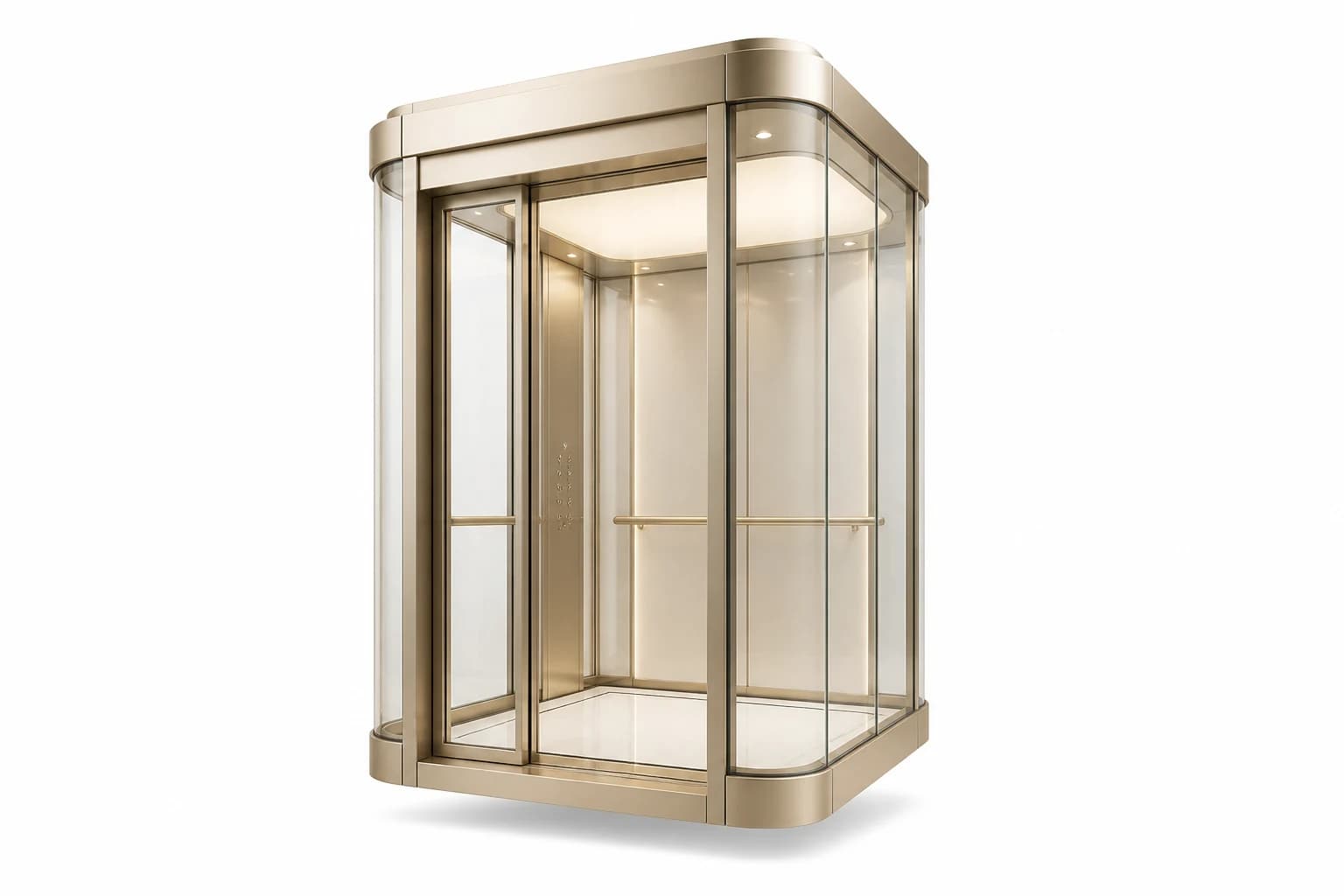
Villa / home elevator
A villa elevator — often sold as a homelift or home elevator — is for a private house, duplex, or villa, not a shared apartment shaft. In Iran those labels usually overlap; measure the shaft before you compare package names. Atlas Asanbar Arsh designs and installs in Tehran, Karaj, and cities across northern Iran.
Related resources
Once vehicle use is clear, continue from here to installation, freight (goods, not cars), hydraulic, or the elevator-types guide.

Ready for a consultation?
Call now for pricing and technical advice.