01
Mid-rise apartments
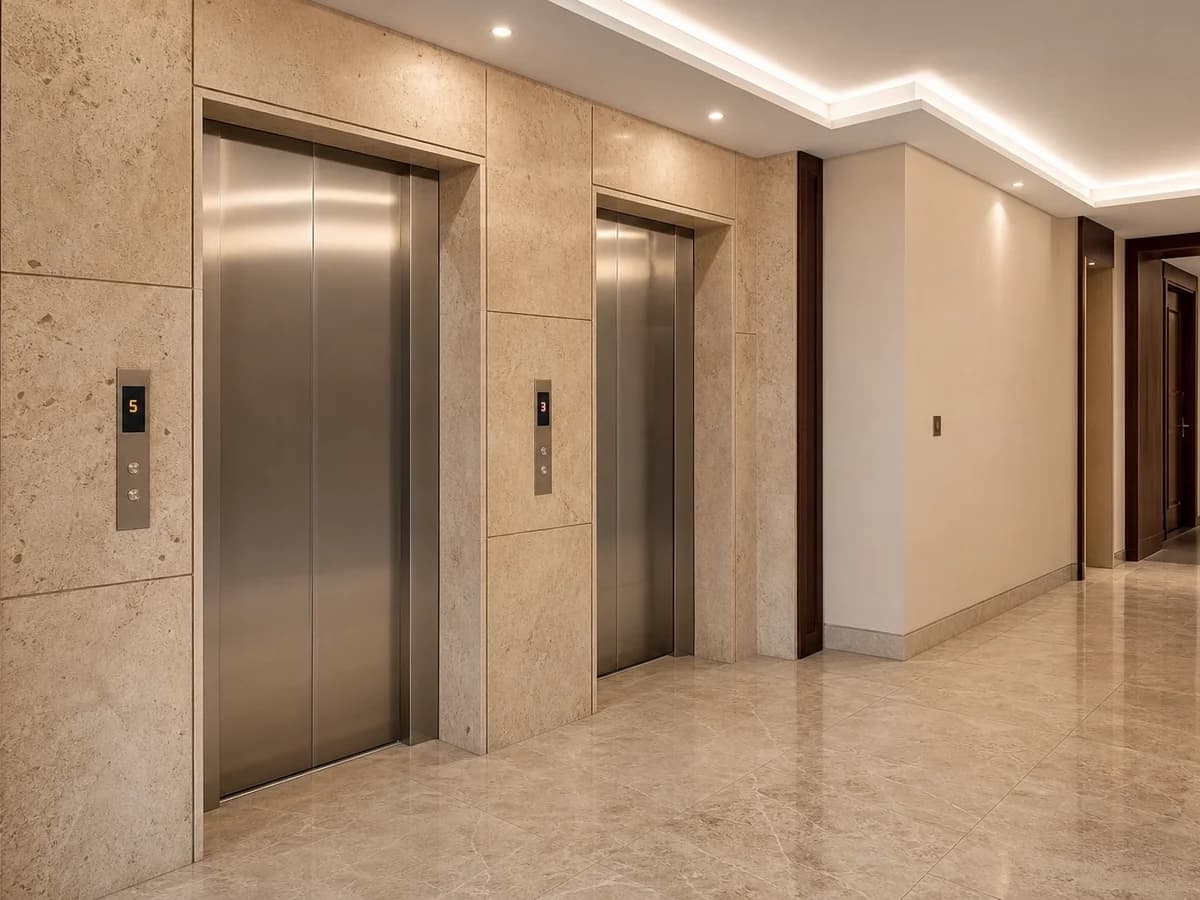
New-build with a planned shaft; lock capacity and drive against stops and units, then the cabin.
Building use
A residential elevator here means the shared lift in an apartment building or complex — not a villa home-lift. Lock capacity, stops, and resident traffic before cabin finish. The drive can be traction, MRL, or hydraulic, depending on height and the shaft. Atlas Asanbar Arsh designs and installs in Tehran, Karaj, and cities across northern Iran.
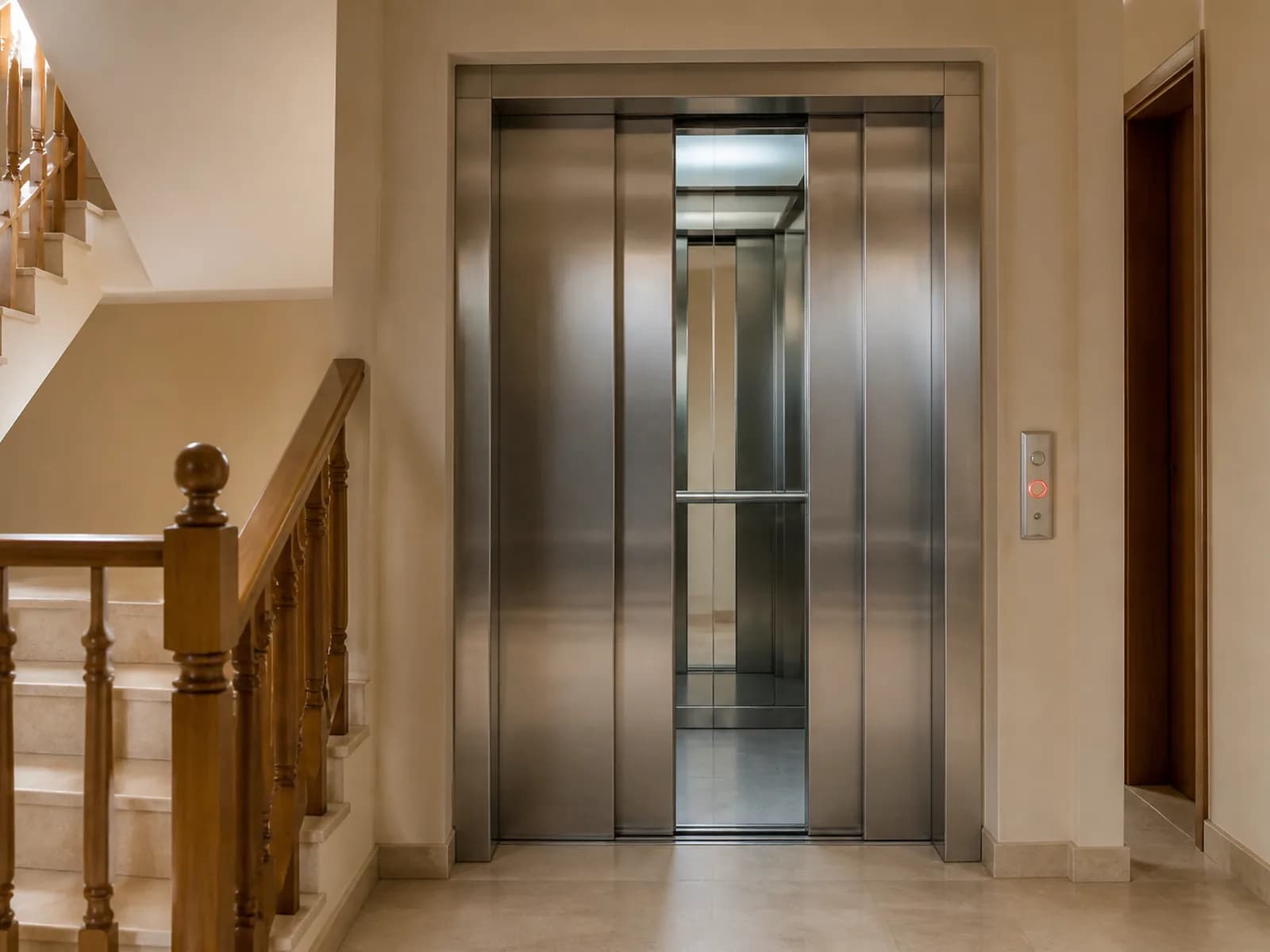
System anatomy
A residential elevator is the shared lift in an apartment building. Before you ask for quotes, write stops, unit count, and shaft condition on one sheet. We match the drive to height: low-rise is sometimes hydraulic; mid-rise is usually traction or MRL. We say that after measuring the shaft — not from a cabin photo.
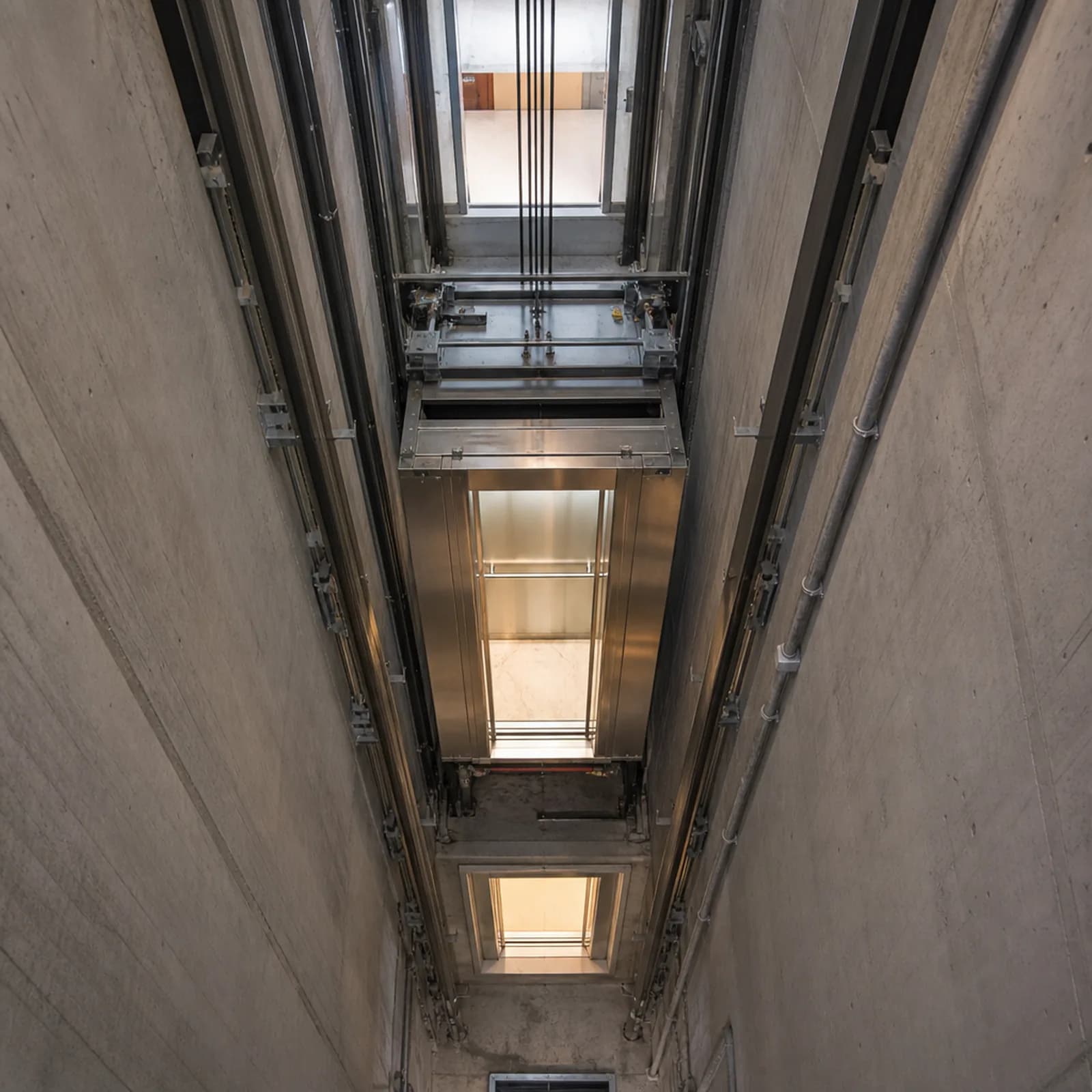
Write stops, unit count, and peak hours on a sheet first. Four-person capacity is common in the market — it is not a rule for every building.
Traction, MRL, or hydraulic — depending on height, machine-room space, and shaft size. Residential is a building use, not one drive family.
Pick cabin finish and landing-door type after capacity and drive. Do not treat a cabin photo as the whole package.
A new build forms the shaft from the start; an older building may have a tight shaft, little overhead, or a shallow pit. Shaft steelwork may sit outside the quote.
Plan the standard certificate and a service contract from day one. A construction warranty is not a monthly service agreement.
Cabin and landing doors shape how residents feel the lift and how the landing looks, but they do not replace capacity and drive. Lock people-count and system family first, then stainless and mirrors.
Do not drop the standard certificate and service from the checklist. The quote comes after the site visit; stops, capacity, drive, landing doors, and shaft condition move the number.
Use cases
This page is for the shared lift in apartments and complexes. A new mid-rise, an older building with a tight shaft, a cabin that must match the lobby, and neighbors who need a quiet shaft — those are usually the jobs.
New-build with a planned shaft; lock capacity and drive against stops and units, then the cabin.
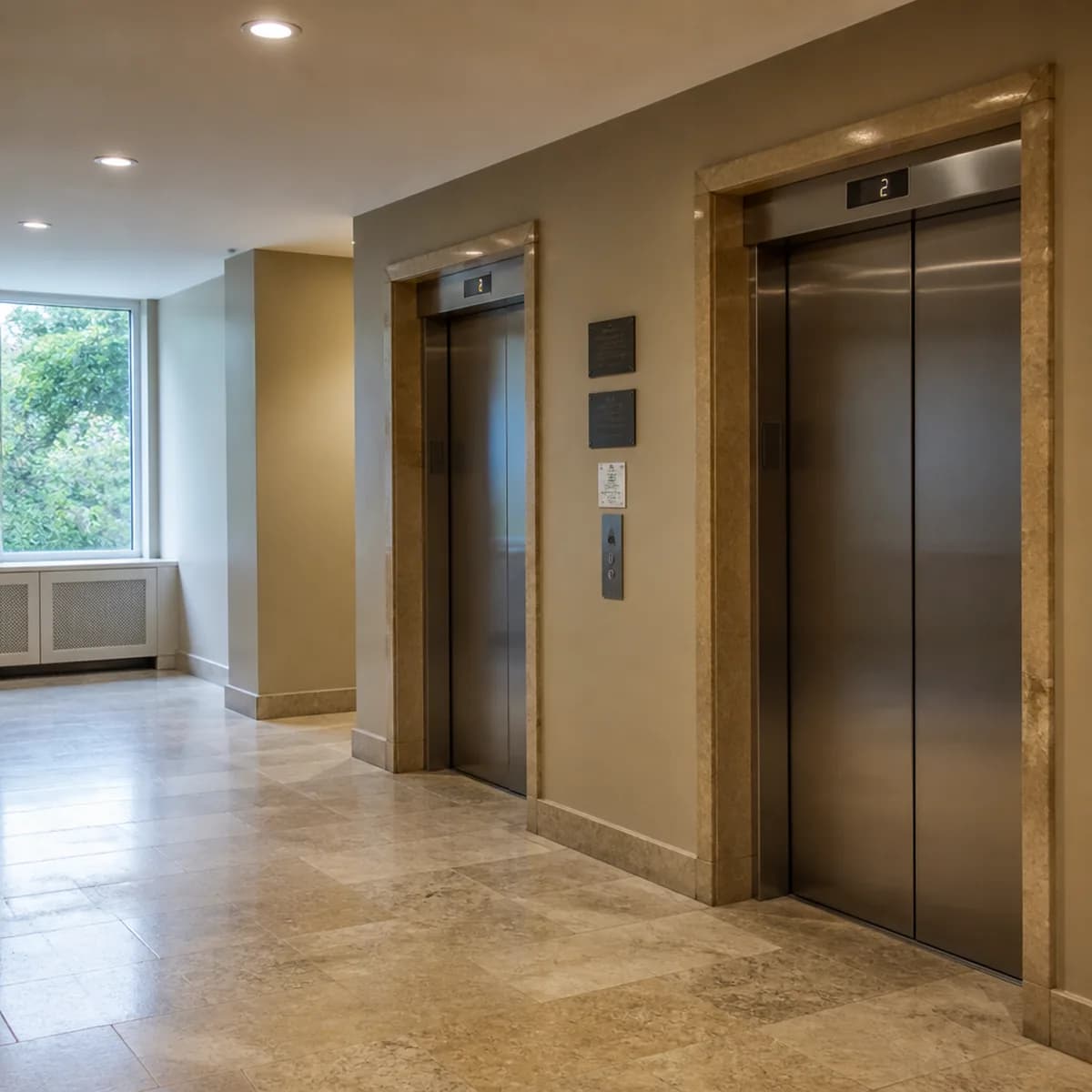
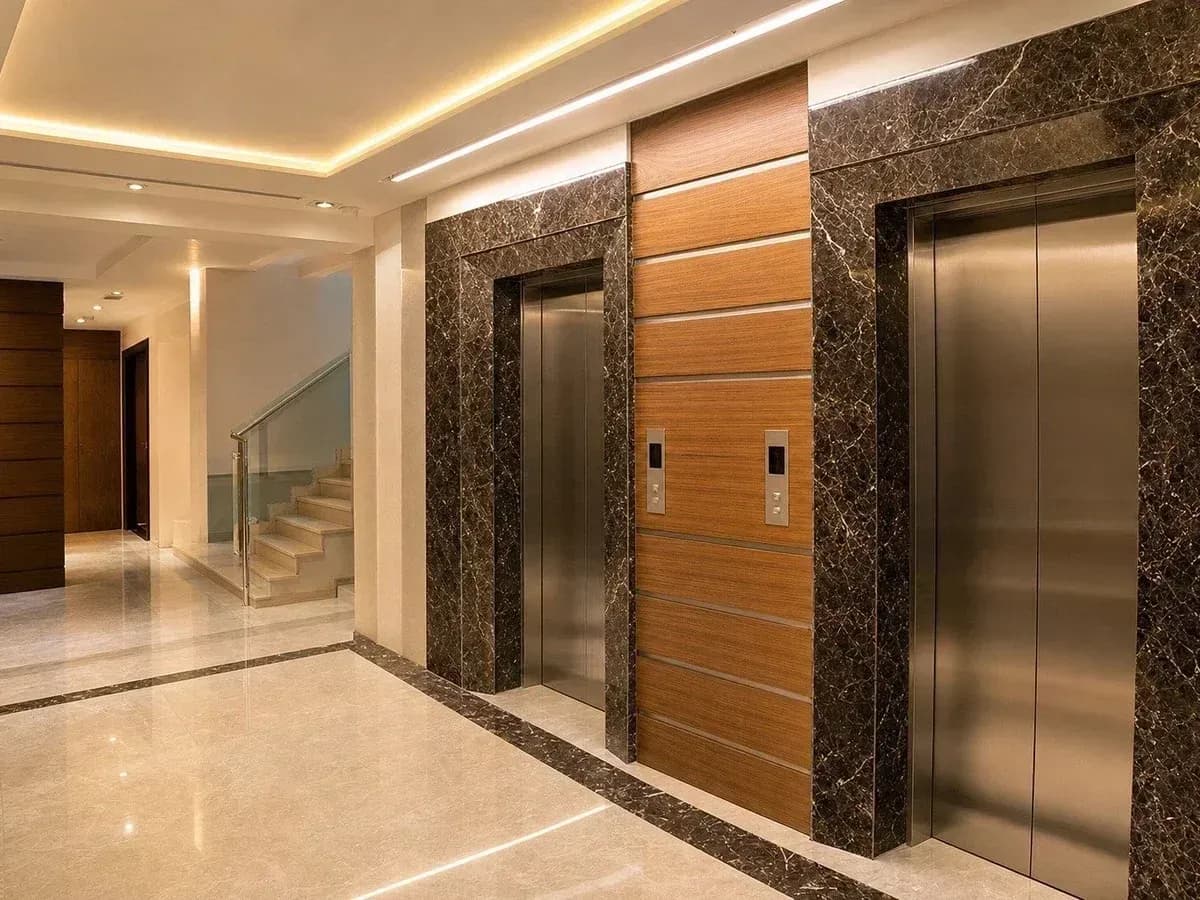
Peak in-and-out hours, unit count, and whether one car is enough — before cabin finish.
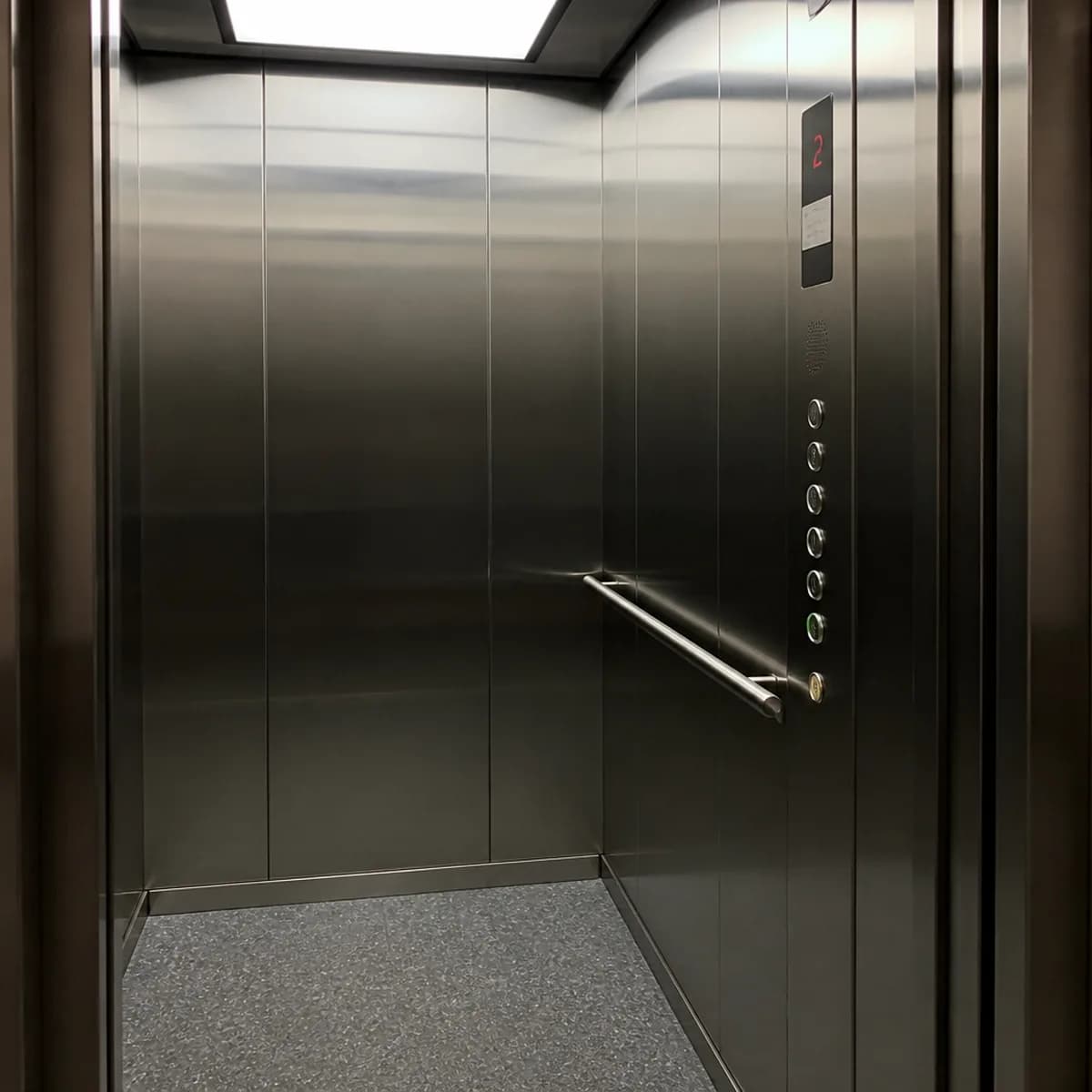
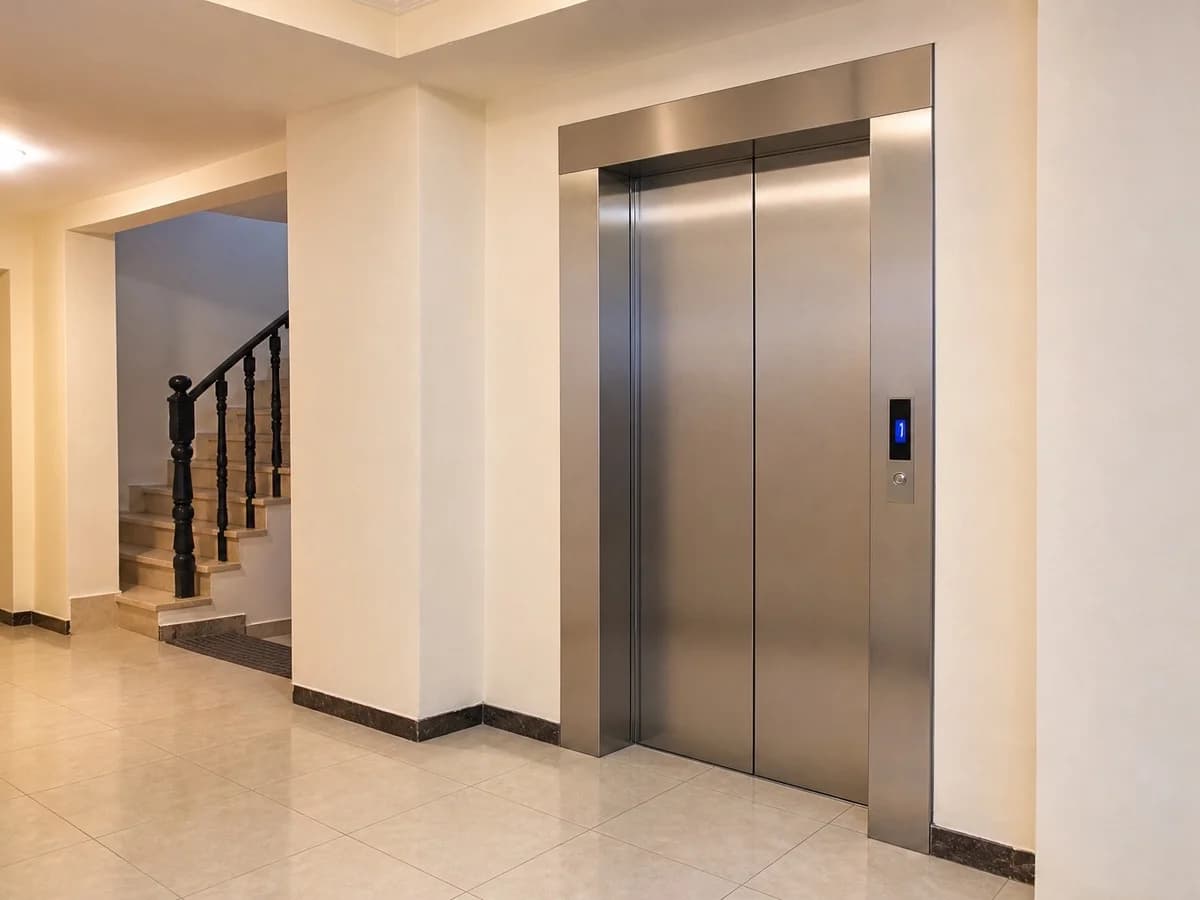
Cabin finish and landing doors follow lobby architecture — after capacity and drive, not instead of them.
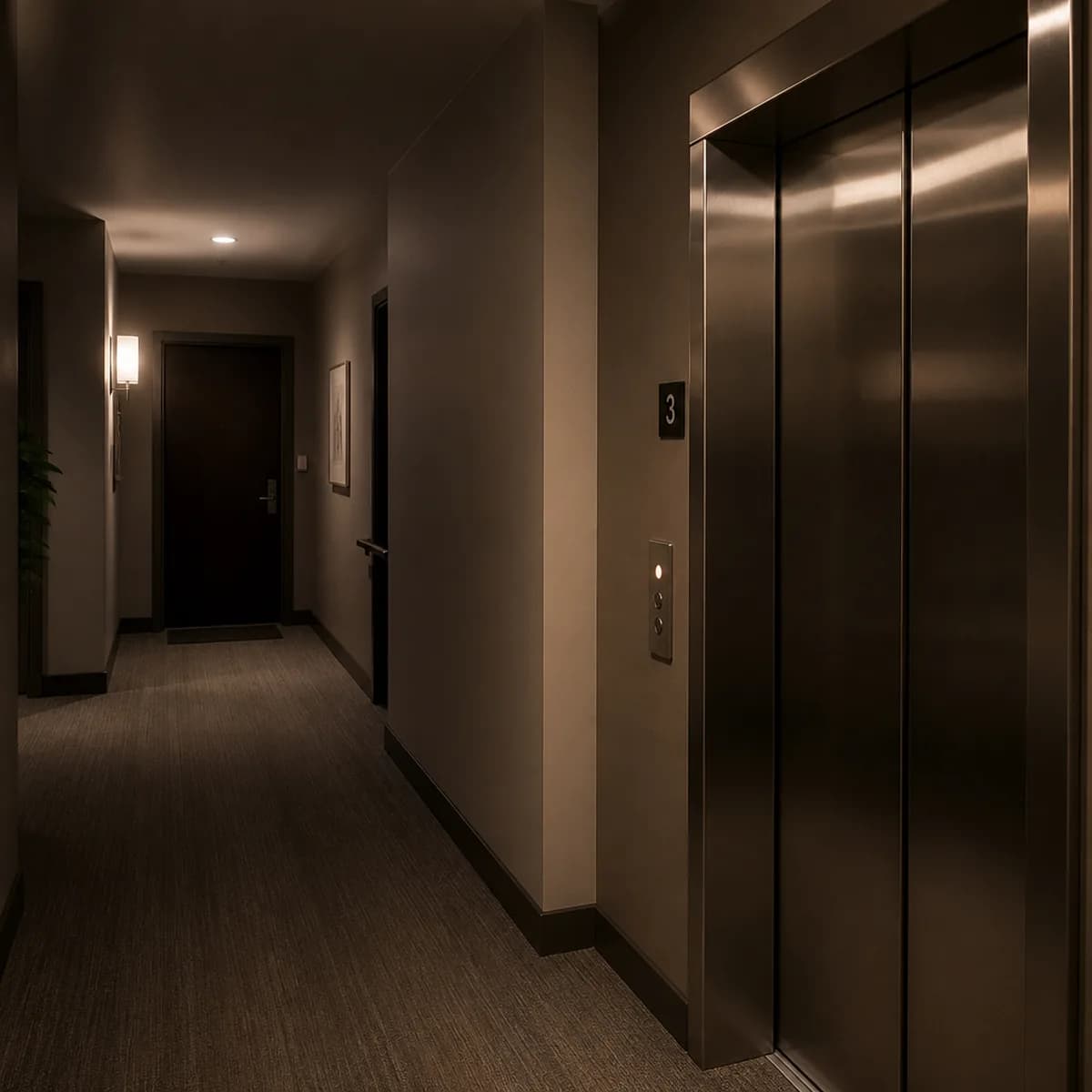
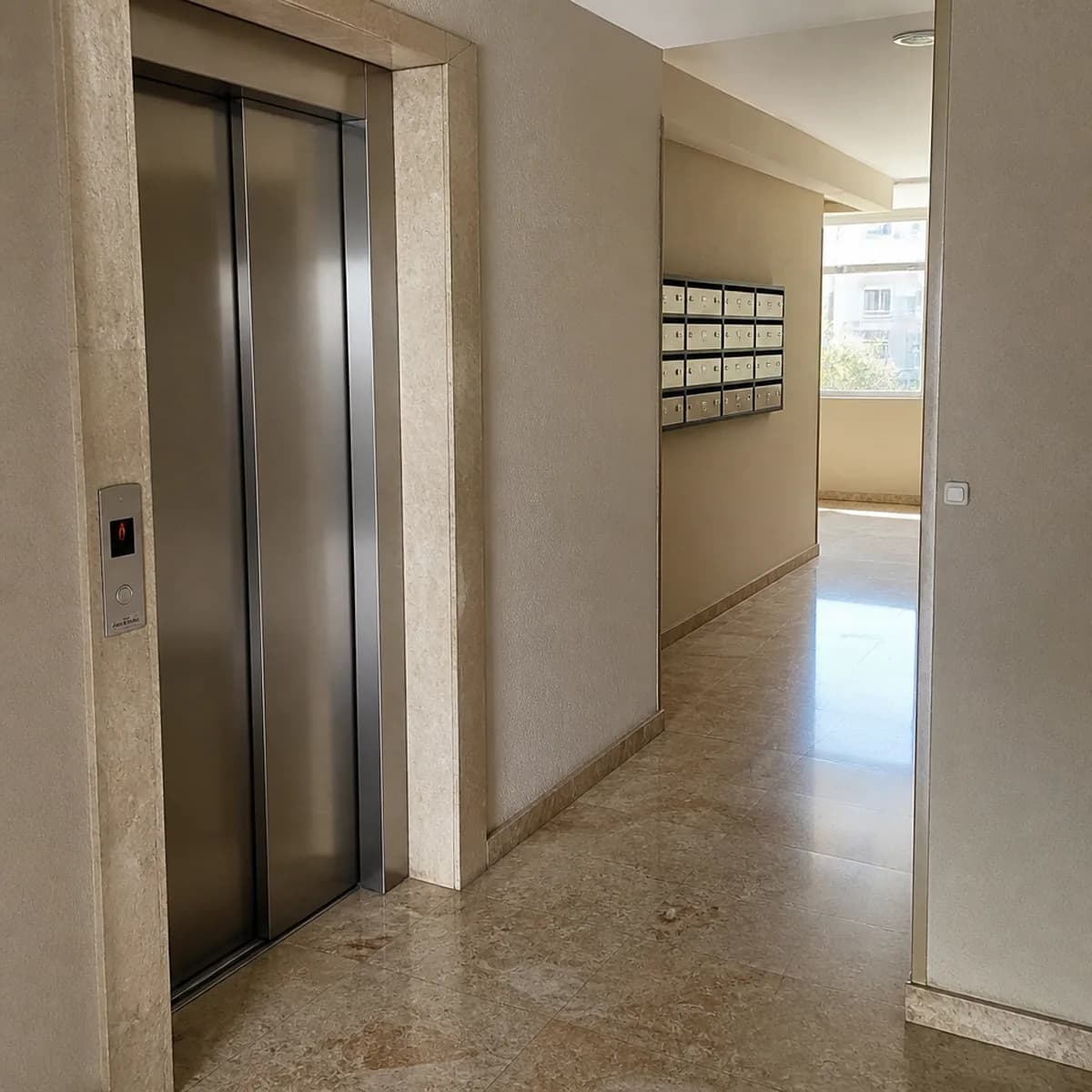
The shaft sits against dwellings. A calm ride and regular service matter as much to the neighbor as to the passenger.
If the job is a one-family house or villa, do not push this page; a villa lift has a different spec. We do not lock the drive here — traction, MRL, or hydraulic is settled after height and shaft.
An honest picture
A shared apartment lift has to do a few things at once: the right capacity for peak hours, a drive that fits the height, and travel that does not punish the unit beside the shaft. Those points hold when the building spec is locked before cabin finish.
We size capacity and car count against units and peak hours — not against one apartment’s taste.
Traction, MRL, or hydraulic is chosen against stops, shaft, and machine-room space. One system is not prescribed for every apartment.
After the spec is locked, cabin finish follows landing architecture — catalog or custom.
In an apartment the shaft sits against dwellings. A calm ride and regular service matter as much to the neighbor as to the passenger.
A villa home-lift has lighter traffic and a smaller footprint. Do not copy villa specs onto an apartment.
A tight shaft, little overhead, or a shallow pit changes drive and cabin choices. A new-build checklist is not enough for a retrofit.
Four-, six-, and eight-person cars are common in the market. The right number depends on units, stops, and traffic — not on a mandatory table.
Until motor, landing doors, shaft steelwork, install, and the standard certificate line up, the cheapest figure is usually just the most incomplete.
Better to name the limits in the first meeting. Do not mix a villa with an apartment. Do not score an old building against a new-build checklist. If you only heard a lump sum, ask whether landing doors and shaft steelwork are inside it.
Choosing a use
If the lift is shared by several units and peak-hour traffic matters, stay on this page. If it is a low-stop house or villa for one household, go to the villa / home-lift page.
Apartment residential
Shared apartment or complex
Villa / home
One-owner house or villa
Apartment residential
Moderate to heavy; resident peak hours
Villa / home
Light; one household
Apartment residential
By units and stops; 4-person is common, not mandatory
Villa / home
Typically smaller than apartment cars
Apartment residential
Mid- to high-rise; board and residents
Villa / home
Typically 2–4 stops; one owner
Read the table against your building, not against which lift looks more “luxurious.” An eight-unit complex with a shared car belongs on this page. A three-level villa for one household belongs on the villa page. Mix the specs and both capacity and drive go wrong later.
Project path
A residential install does not start with picking a cabin finish. First we see stops, unit count, shaft, and machine-room space. Without those measurements, two quotes cannot be compared.
Shaft survey, stop and unit count, peak-hour traffic, and drive choice — traction, MRL, or hydraulic.
Execution drawings, cabin and landing-door selection, and a transparent quote with matching line items — motor, install, steelwork, certificate.
Steelwork and rails, landing doors and cabin; drive install and control wiring per approved drawings.
Safety tests, speed and leveling adjustment, certificate prep, and owner handover briefing.
After the survey, drawings and a phased quote follow: design, supply, install, handover. Exact timing depends on shaft readiness and equipment lead time. After testing we also coordinate inspection and the standard certificate. Handover means the lift works and inspection paperwork is moving — not just a cabin on rails.
How quotes are built
There is no fixed residential price. Two apartment buildings with the same stop count can get very different quotes; usually one has a simpler capacity and doors, the other a tighter shaft, a different drive, or steelwork billed apart.
We write the number after the survey. If you only heard a lump sum, ask whether the motor, landing doors, shaft steelwork, install, and standard certificate are inside it. Until the line items match, comparison is meaningless.
Project proof
A few projects where a shared apartment lift is in place. Open a card for the details of each job.
Before a site visit the same questions come back: what it is, how many people, how it differs from a villa lift, hydraulic or traction, what belongs on a quote, what changes in an old building, where price comes from. Short answers are here; numbers and drawings come after the shaft is measured.
Related types
If the job is a villa or house, look at the villa page. If you want the drive on its own, traction and MRL are here.
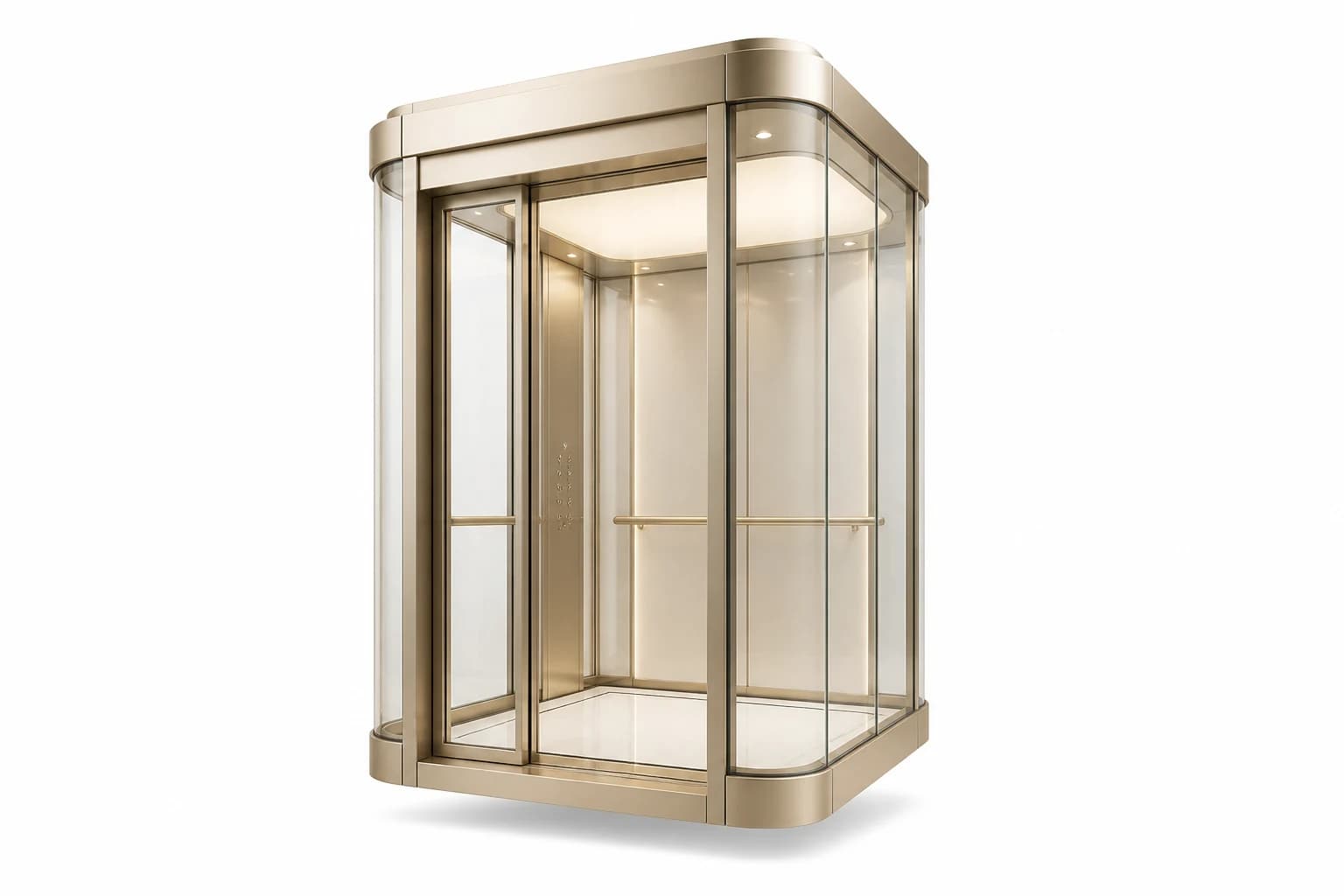
Villa / home elevator
A villa elevator — often sold as a homelift or home elevator — is for a private house, duplex, or villa, not a shared apartment shaft. In Iran those labels usually overlap; measure the shaft before you compare package names. Atlas Asanbar Arsh designs and installs in Tehran, Karaj, and cities across northern Iran.
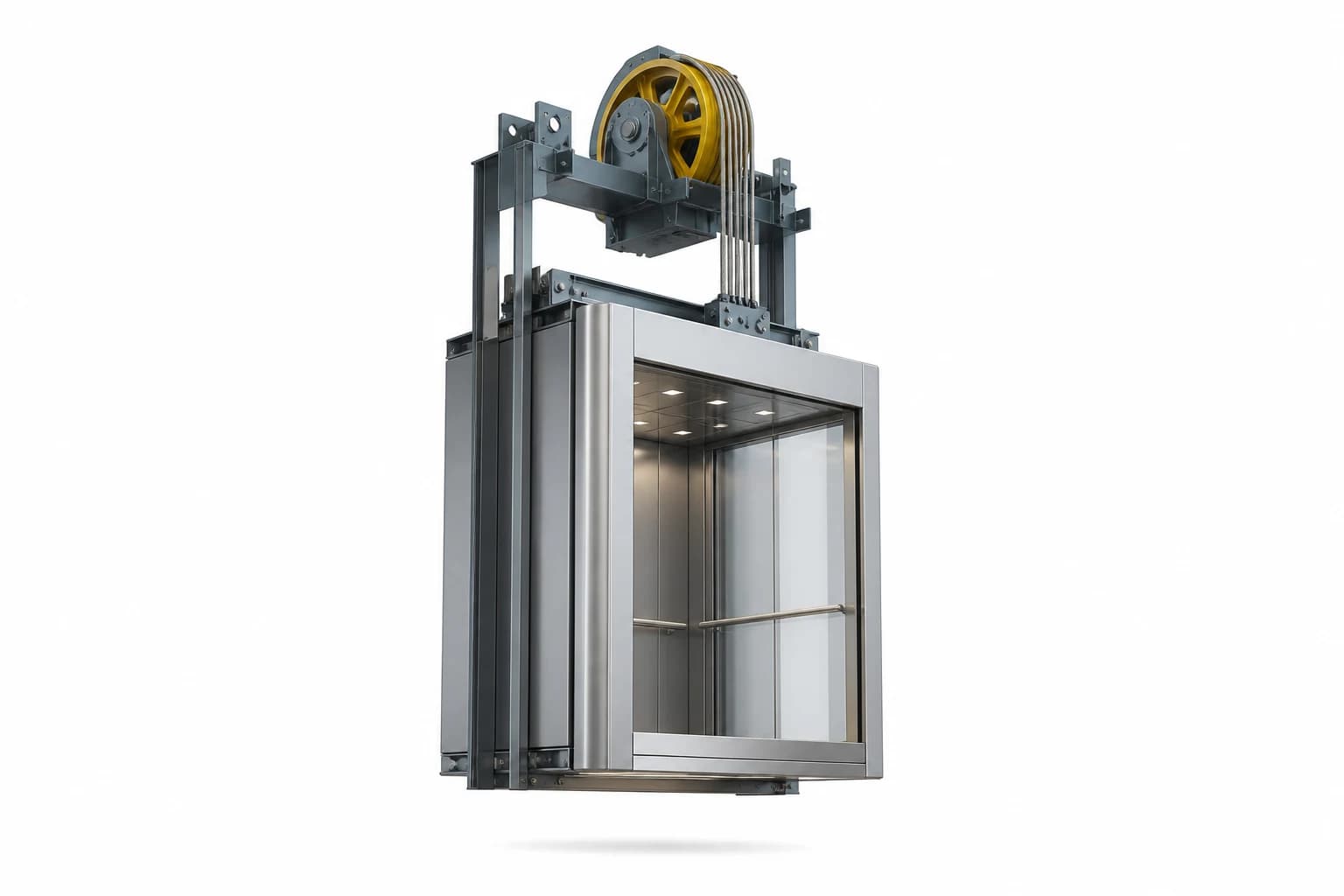
Traction elevator
A traction elevator moves the cabin with steel ropes over a motor-driven sheave and a counterweight. It is the usual choice for mid-rise and high-rise buildings with heavier traffic. Atlas Asanbar Arsh designs and installs in Tehran, Karaj, and cities across northern Iran.
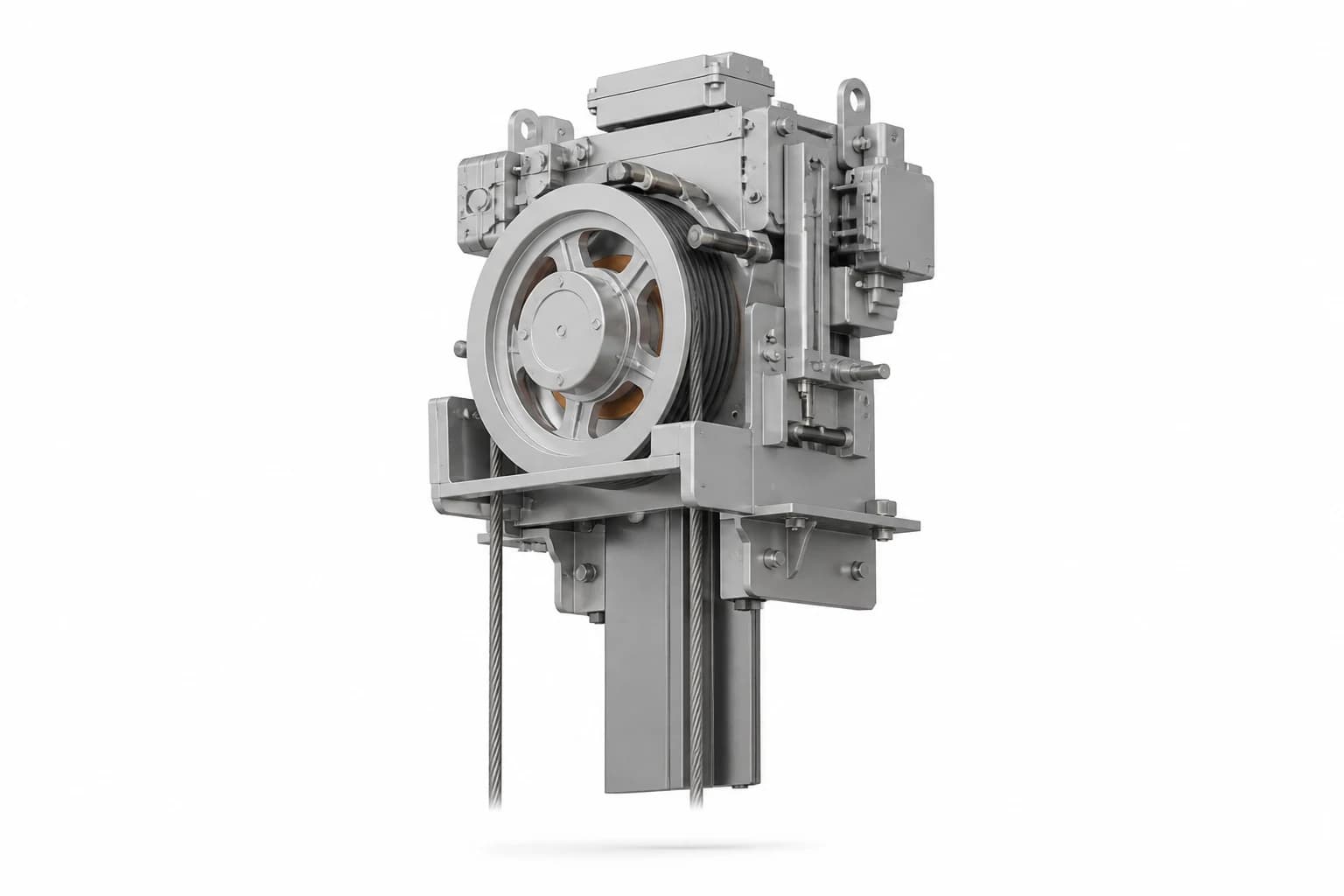
MRL elevator
An MRL elevator has no separate rooftop machine room. The drive usually sits in the hoistway on a support beam; the controller is often a cabinet at the top landing. It is common in Iran for mid-rise apartments and retrofits with a tight roof. Atlas Asanbar Arsh designs and installs in Tehran, Karaj, and cities across northern Iran.
Related resources
Once apartment use is clear, continue from here to installation, the spec checklist, drive types, or cabin selection.

Ready for a consultation?
Call now for pricing and technical advice.