01
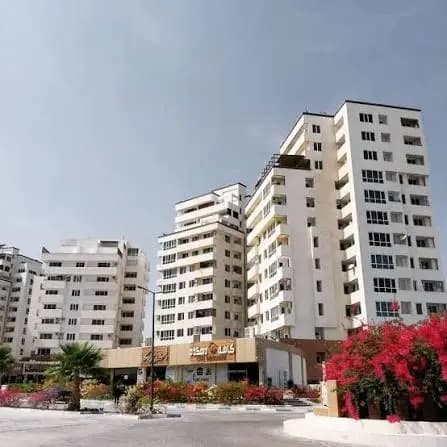
Mid-rise residential without a rooftop room
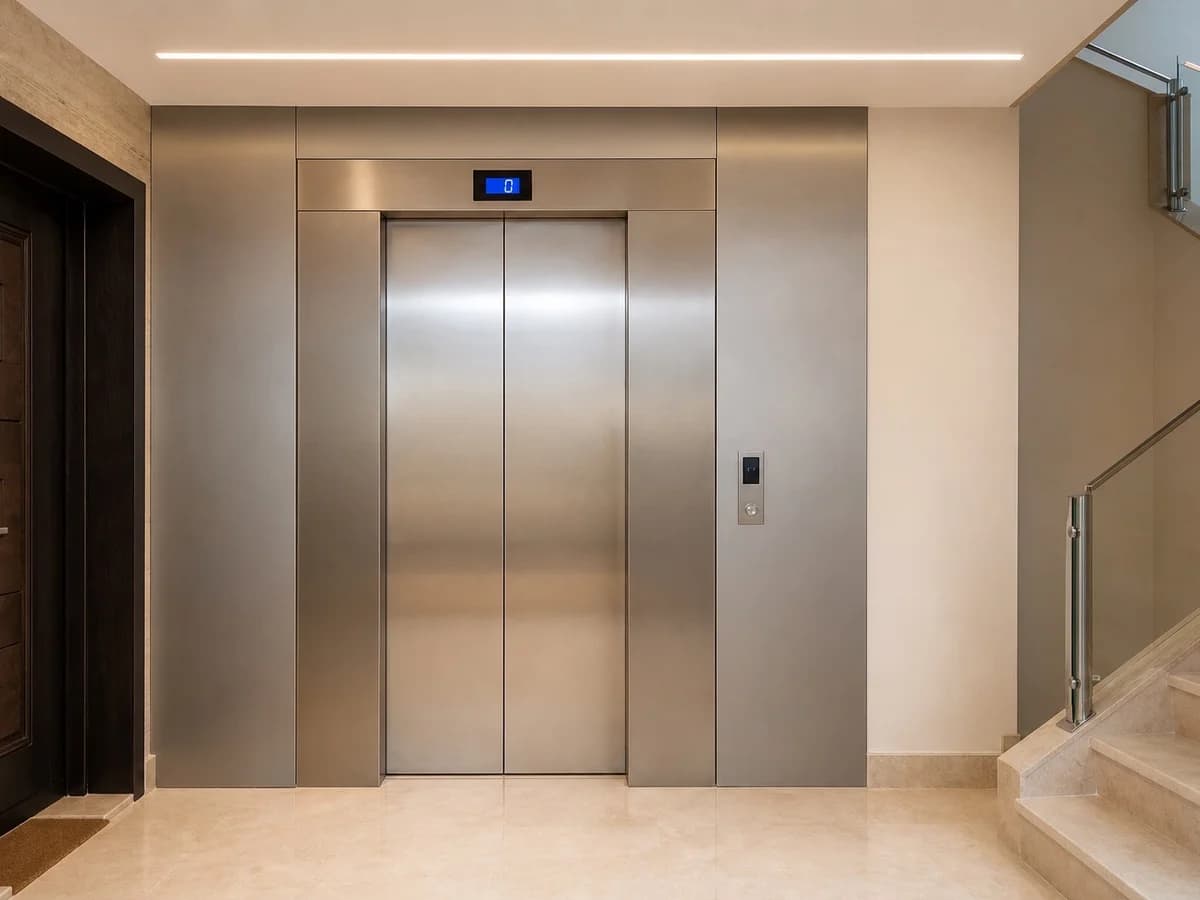
Mid-rise apartments when shaft and overhead allow — drive in the shaft, no rooftop machine room.
Machine-room layout
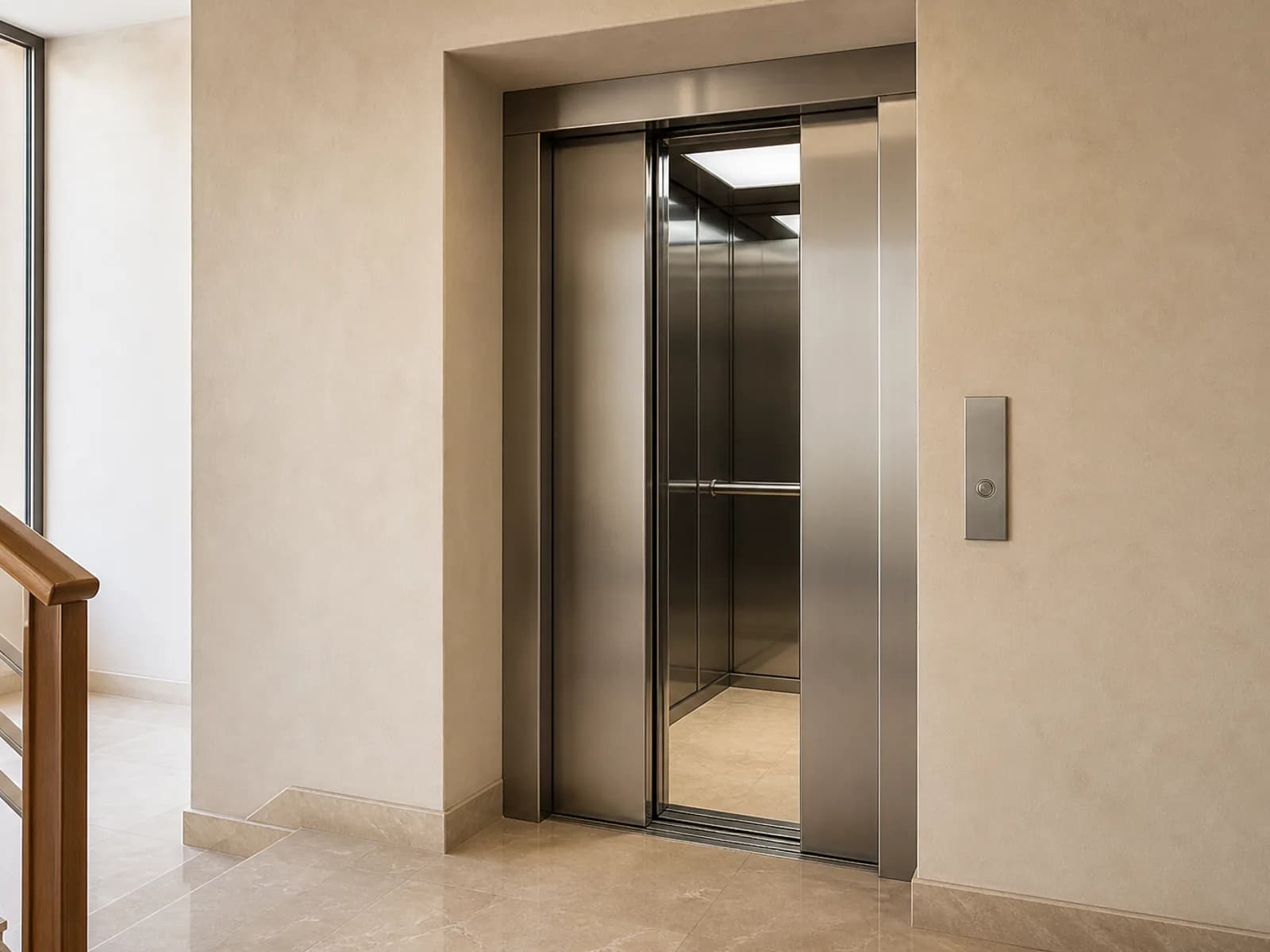
An MRL elevator has no separate rooftop machine room. The drive usually sits in the hoistway on a support beam; the controller is often a cabinet at the top landing. It is common in Iran for mid-rise apartments and retrofits with a tight roof. Atlas Asanbar Arsh designs and installs in Tehran, Karaj, and cities across northern Iran.
System anatomy
MRL means Machine Room Less: no separate machine room. The drive — usually a compact gearless motor — sits in the hoistway, typically at the top on a support beam. The controller is often a cabinet at the top landing, opened from the corridor. The roof stays free for plant; no rooftop machine room is built.
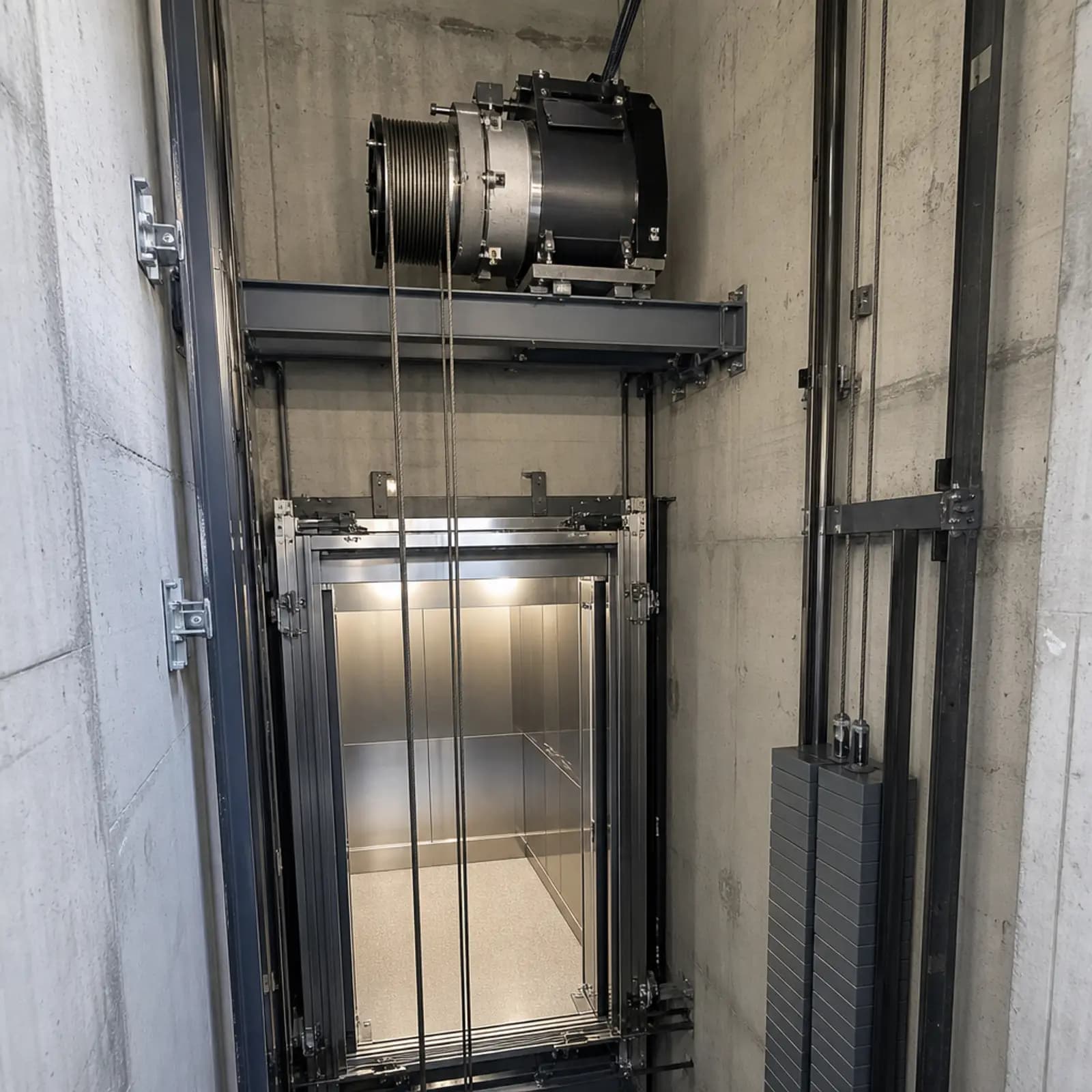
A compact motor usually mounts at the top of the hoistway on a support beam. MRL is a layout; gearless is a motor type.
The car still moves on a sheave and ropes — like classic traction; there is simply no separate machine room.
Offsets part of the car weight. A hydraulic lift does not use this part.
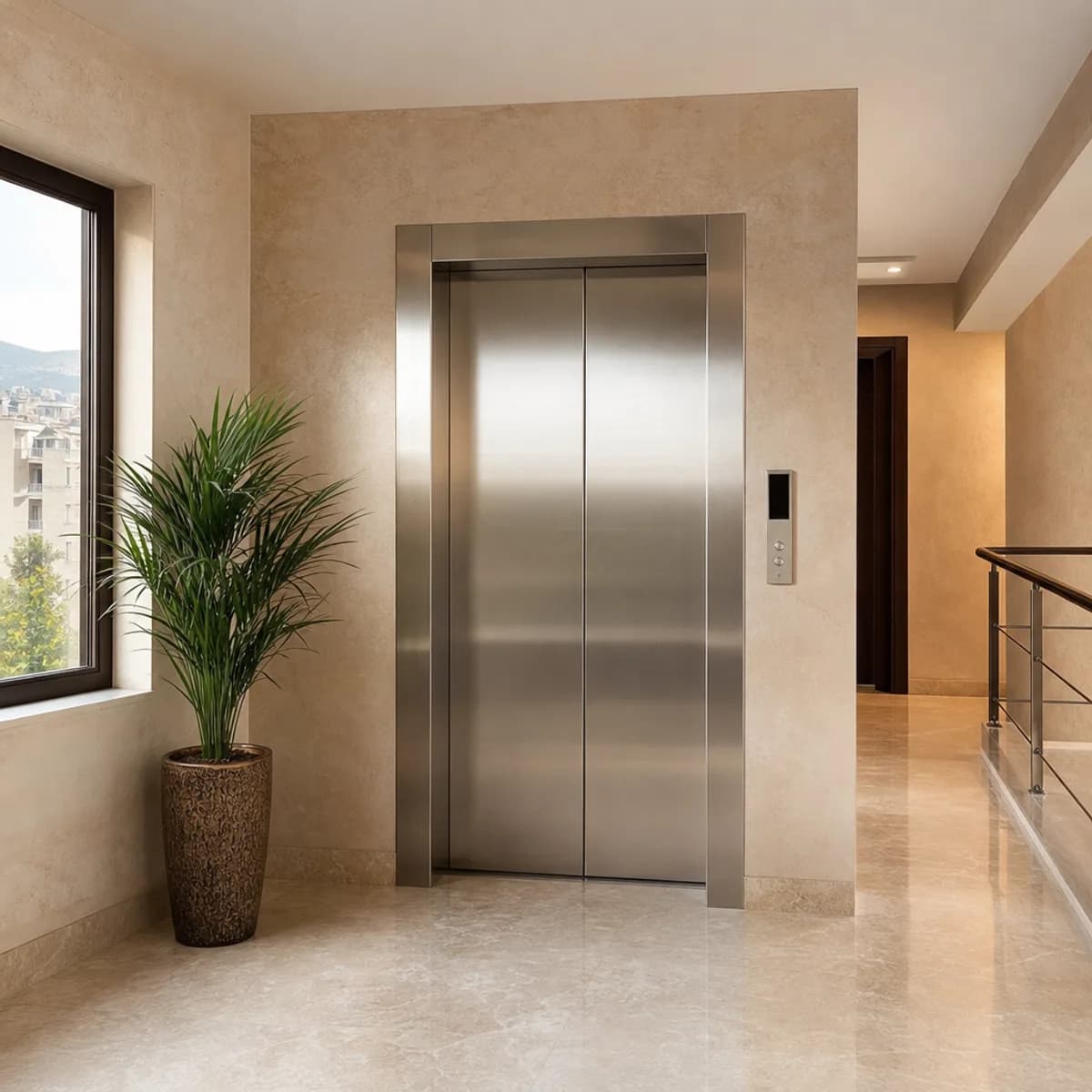
Usually a cabinet at the top landing, reached from the corridor — not inside a rooftop machine room.
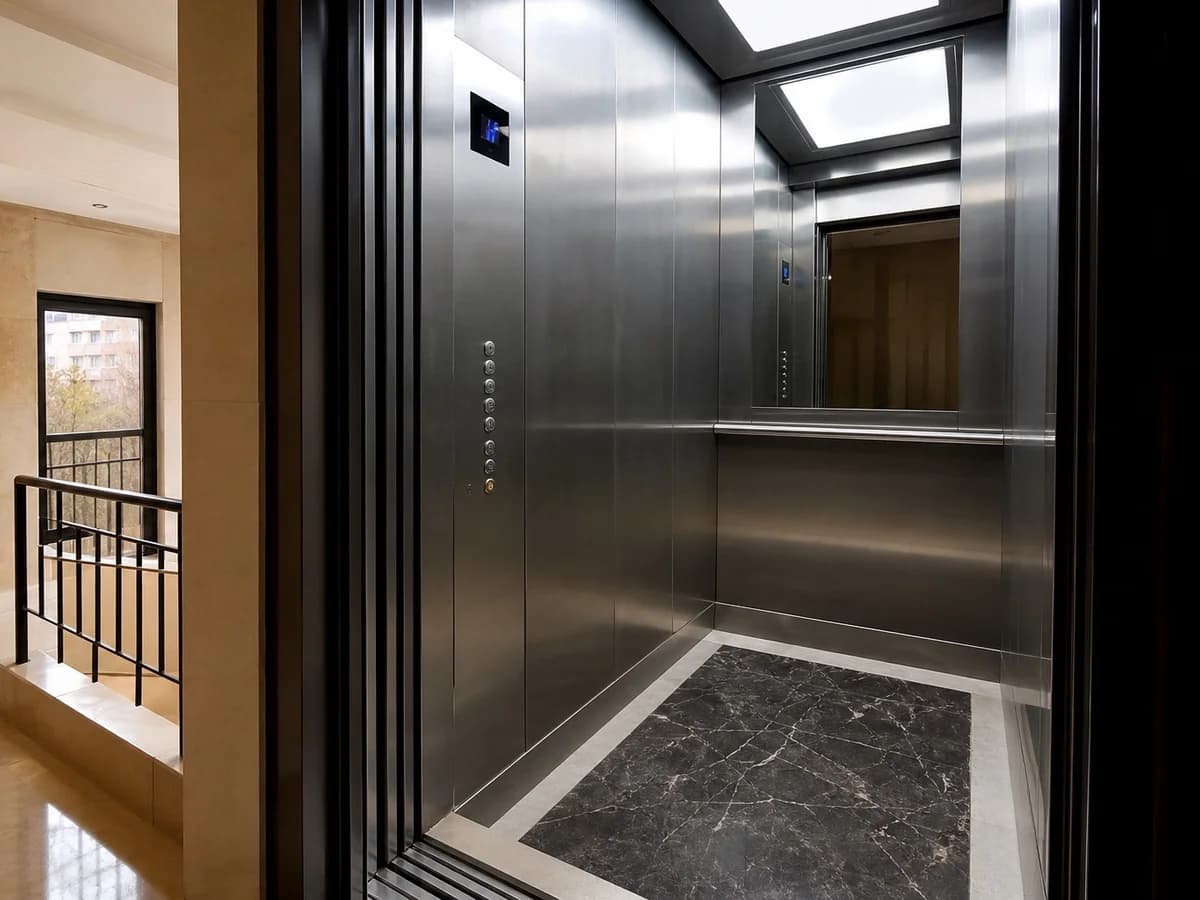
The passenger car. Finish and size come from catalog or custom specs — independent of the machine layout.
MRL is a layout name, not a motor name. In Iran most MRLs use gearless motors because they are compact enough for the shaft. Gearless can still have a machine room. Check the motor separately from the MRL label.
You pick the cabin separately from the layout — catalog or custom. The quote comes after the site visit; stops, motor and controller brands, cabin finish, overhead, and service-access design move the number.
Use cases
MRL fits a building that cannot spare a rooftop machine room and stays in the mid-rise range. An apartment with no roof room, an old-building retrofit, a roof you want back — those are usually the jobs.
Mid-rise apartments when shaft and overhead allow — drive in the shaft, no rooftop machine room.
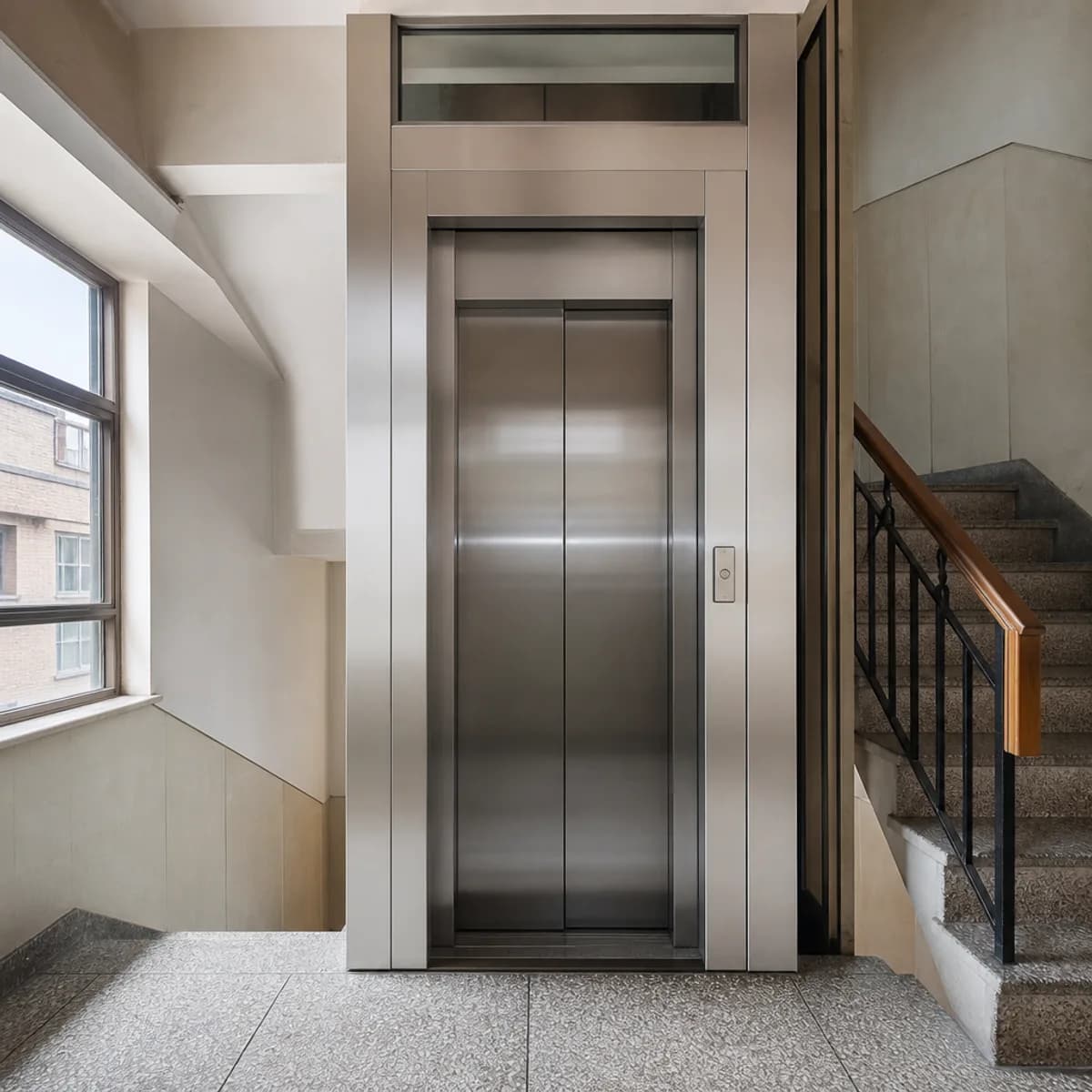
When a new rooftop machine room is hard to build, in-shaft MRL is a practical retrofit path — if overhead and service access exist.
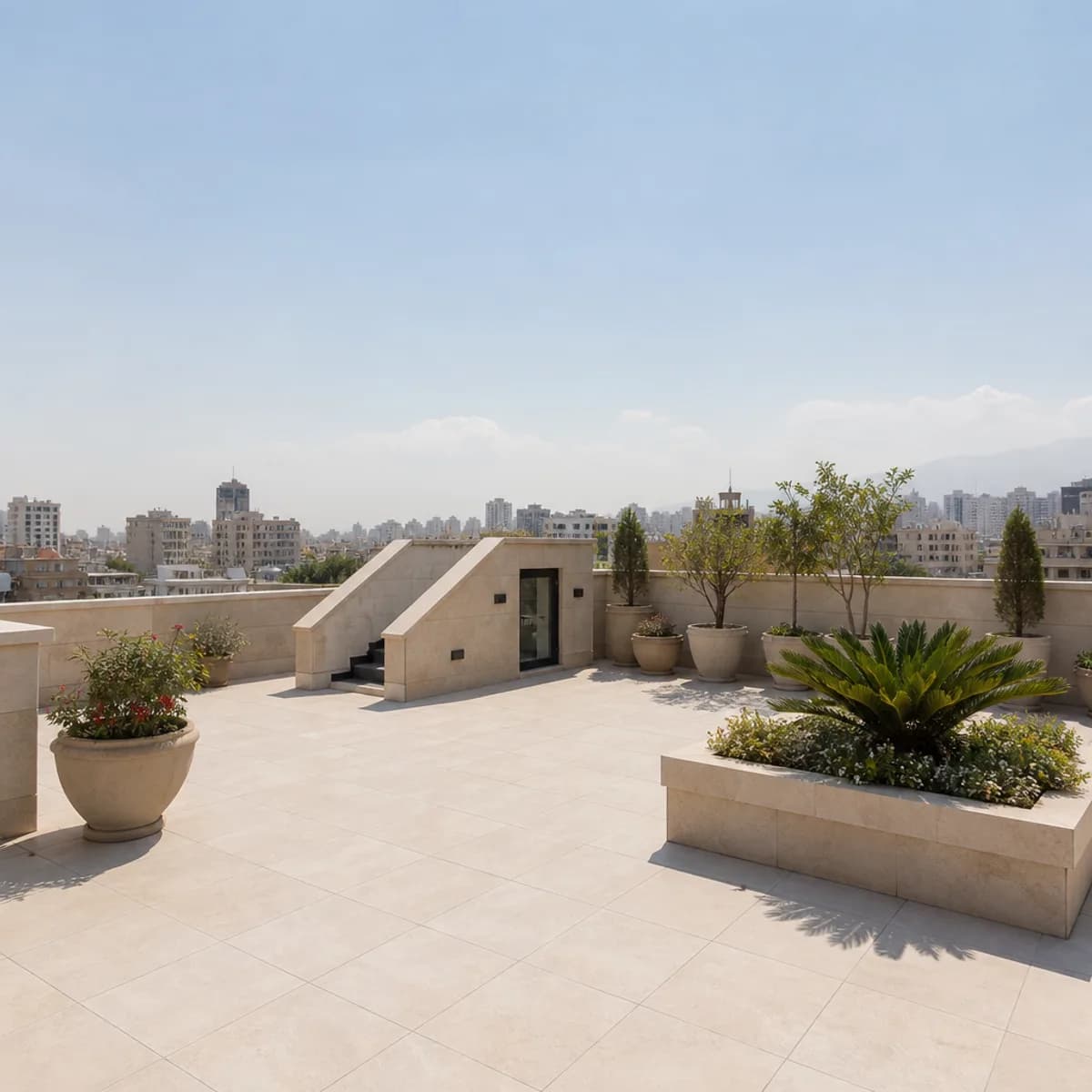
Removing the rooftop room leaves space for plant or other use — it does not remove overhead inside the shaft.
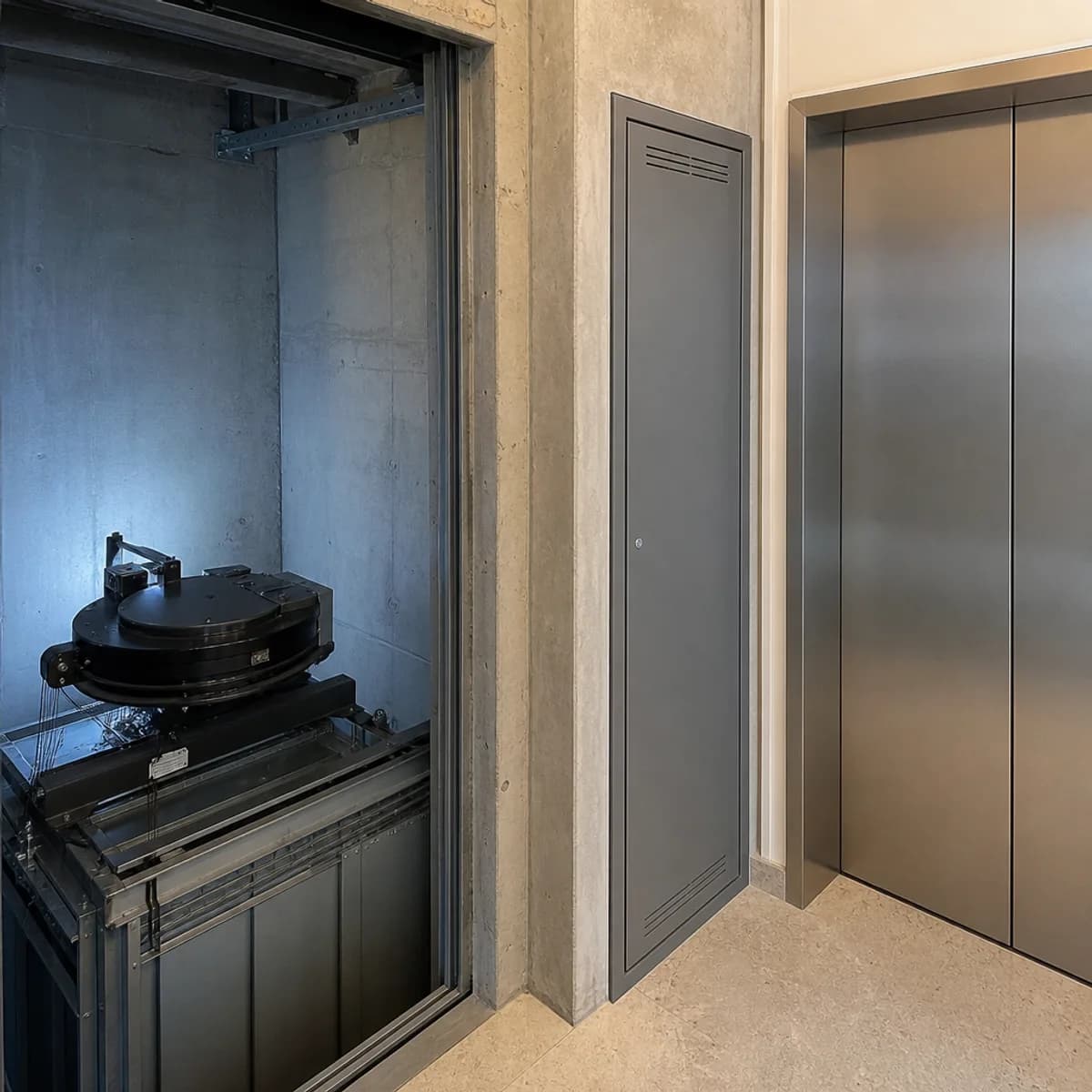
Compact motor on a beam in the shaft; the controller is usually a cabinet at the top landing, opened from the corridor.
If the shaft and overhead do not fit, MRL alone does not solve it. Do not push this layout on a tower, or where the lift must run nonstop at peak hours — a classic machine room is the better fit. Hydraulic is a different story: villas and low-rise.
An honest picture
MRL does a few things well: no rooftop machine room, a cleaner roof, and a common mid-rise layout when shaft and overhead fit. Those points hold when the service path is in the design from the first meeting.
No separate rooftop machine room is built. The roof stays free for plant, storage, or usable space.
The roof line stays cleaner. When a rooftop room would crowd the elevation or the structure, an in-shaft layout eases the job.
Most Iranian MRLs use a compact gearless motor. At typical mid-rise speeds you avoid the noise of a classic rooftop machine room.
When shaft and overhead allow, it is a common layout for apartments of about 5–12 stops — not for every tower, and not without a survey.
Technicians usually reach the drive from the car top and access panels, not from a rooftop room. That path must be in the drawings from day one; it needs trained service.
Dropping the rooftop room does not mean “no overhead.” Travel still needs headroom at the top of the shaft. We give that figure after measuring — not from a brochure table.
A compact gearless motor and a specialist controller can raise first cost. Service is more specialised too. Losing the rooftop room alone does not cut lifetime cost.
For a tower, very heavy traffic, or 24-hour uptime, a classic machine room usually gives easier service and more stable operation. MRL is for mid-rise and tight roof space.
Better to name the limits in the first meeting. Car-top service is harder than a rooftop room. Overhead does not disappear. Do not judge lifetime cost by the “no machine room” label. If the lift must run fast and nonstop at peak hours, switch to a classic machine room from here.
Choosing a drive
If the building is mid-rise, the roof is tight, or a retrofit makes a rooftop room hard to build, MRL is a serious option. If traffic is very heavy, the building is a tower, or service should come from a machine room, classic MR leads.
MRL
Drive in the shaft; no separate rooftop room
Classic machine room (MR)
Separate room above the shaft or on the roof
MRL
Shaft overhead still required; roof stays free
Classic machine room (MR)
Overhead plus machine-room volume
MRL
Car top and panels; must be designed in
Classic machine room (MR)
Walk-in machine room is simpler
MRL
Mid-rise when shaft and overhead allow
Classic machine room (MR)
Better for towers and heavy traffic
Read the table against your building, not against which system looks more “modern.” An eight-stop apartment with a roof full of plant is often MRL — if overhead and service access fit. The same site as a busy tower with 24-hour uptime tips toward classic MR. Do not confuse MRL with hydraulic; hydraulic is a different drive.
Project path
An MRL install does not start with picking a cabin finish. First we see the shaft, overhead, service-access path, and where the controller can sit. Without those measurements, two quotes cannot be compared.
Shaft survey, overhead check, service path to the drive, and controller location at the landing.
Execution drawings, cabin and in-shaft equipment selection, and a transparent phased quote.
In-shaft machine, rails, doors, and cabin; controller cabinet at the landing per approved drawings.
Safety tests, speed and leveling adjustment, inspection prep, and owner handover briefing.
After the survey, drawings and a phased quote follow: design, supply, install, handover. Exact timing depends on shaft readiness and equipment lead time. After testing we also coordinate the technical inspection. Handover means the lift works and inspection paperwork is moving — not just a cabin on rails.
How quotes are built
There is no fixed MRL price. Two eight-stop apartments can get very different quotes; usually one has easier overhead and a simpler cabin, the other a tighter shaft, a dearer motor, or a harder service path.
We write the number after the survey. Stops and capacity sit on the motor; controller and cabin are chosen separately and move the figure there. If you only heard a lump sum, ask whether shaft steelwork, landing doors, controller location, and service access are inside it.
Project proof
A few projects where an MRL layout is in place — mostly mid-rise and retrofit. Open a card for the details of each job.
Before a site visit the same questions come back: what MRL is, whether a machine room is needed, whether it must be gearless, how many floors, whether service is harder, where price starts, whether it is hydraulic. Short answers are here; numbers and drawings come after the shaft is measured.
Related types
If MRL does not fit the height, traffic, or service access of your project, look at the other types here. Traction with a machine room is for towers and heavy traffic; gearless is a motor type, not a layout; hydraulic is for villas and low-rise.
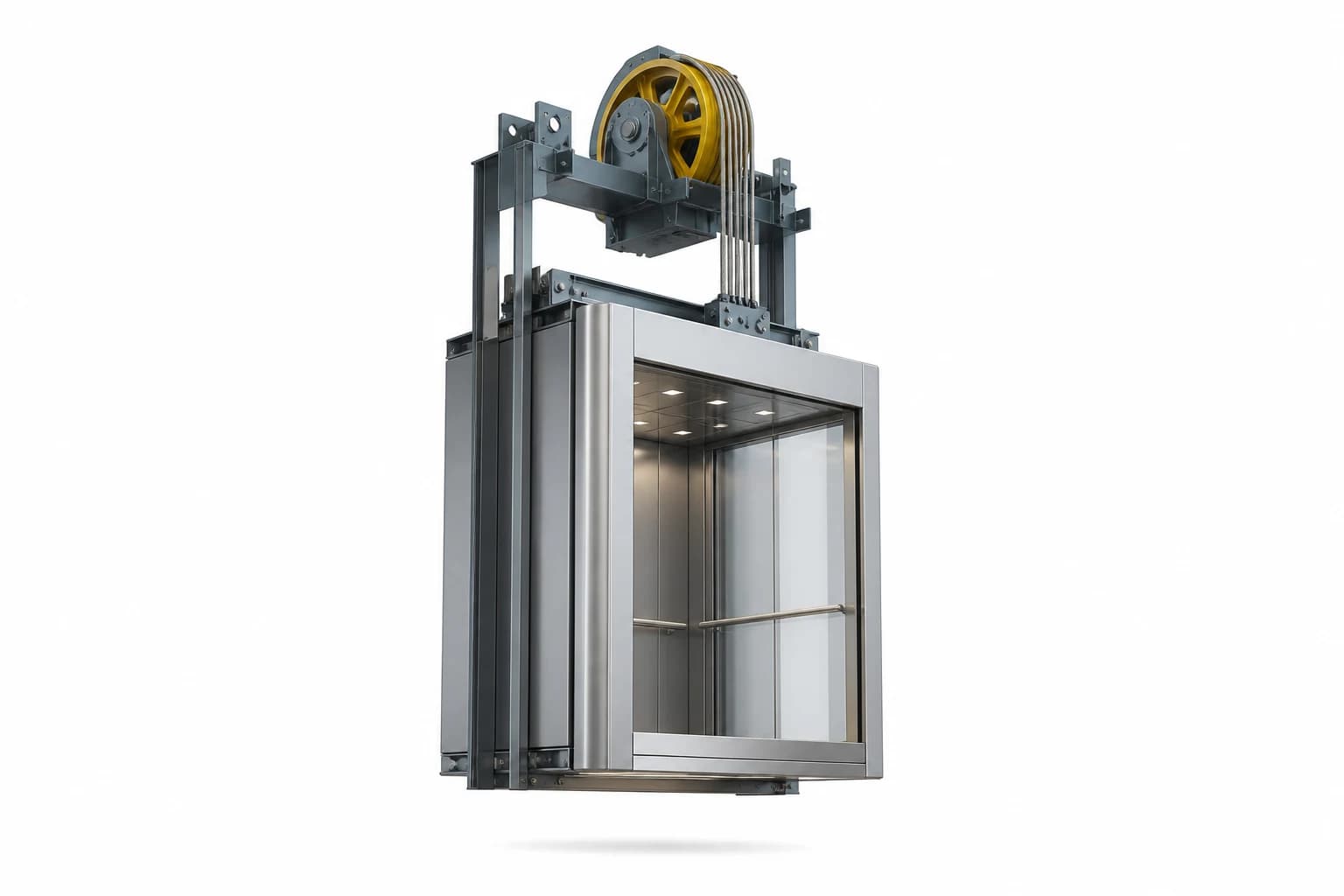
Traction elevator
A traction elevator moves the cabin with steel ropes over a motor-driven sheave and a counterweight. It is the usual choice for mid-rise and high-rise buildings with heavier traffic. Atlas Asanbar Arsh designs and installs in Tehran, Karaj, and cities across northern Iran.
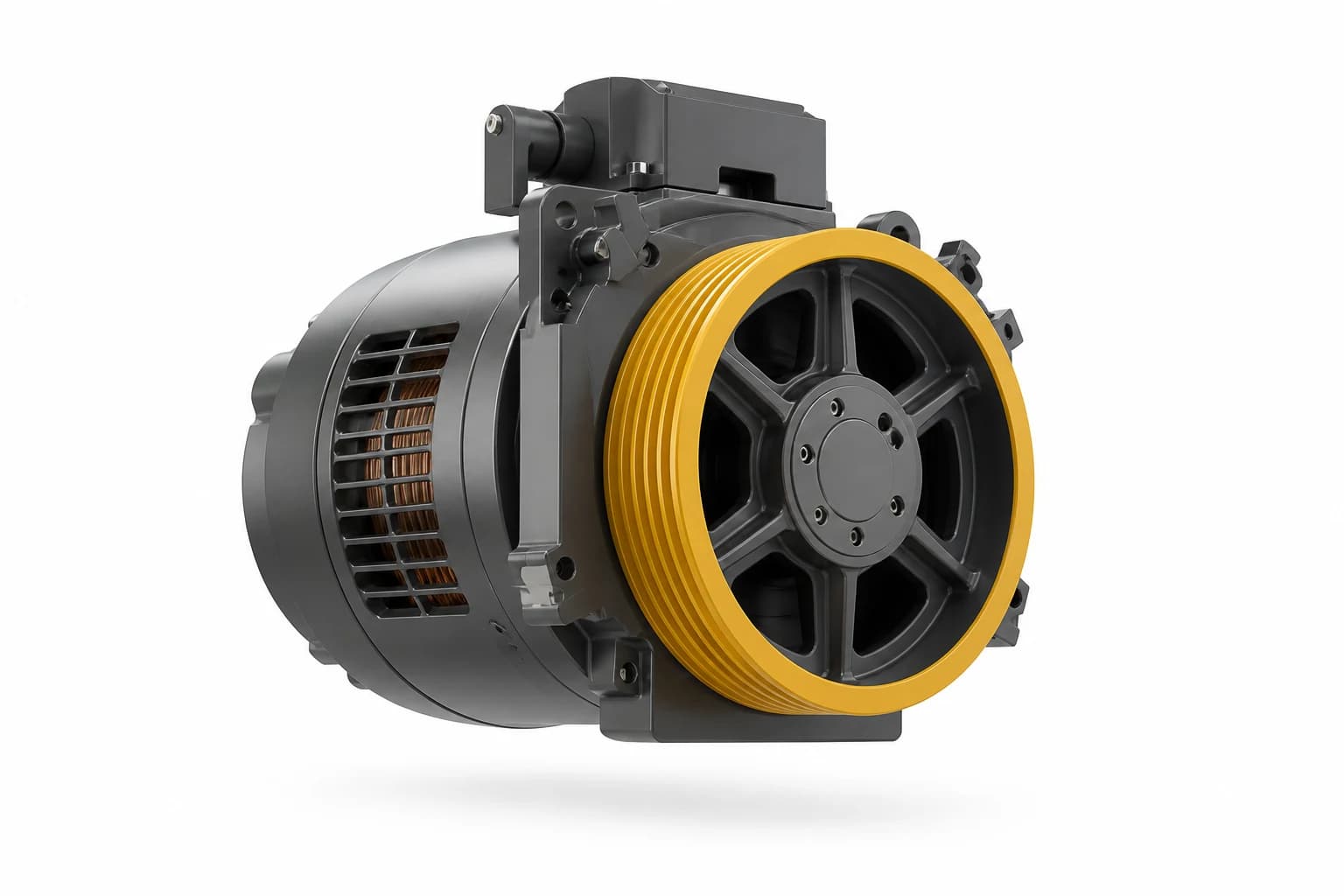
Gearless elevator
A gearless elevator uses a motor without a gearbox — usually a permanent-magnet synchronous machine coupled straight to the traction sheave. It is common on mid- and high-rise work, but it is not the same as MRL: it runs with a machine room or without one. Atlas Asanbar Arsh designs and installs in Tehran, Karaj, and cities across northern Iran.
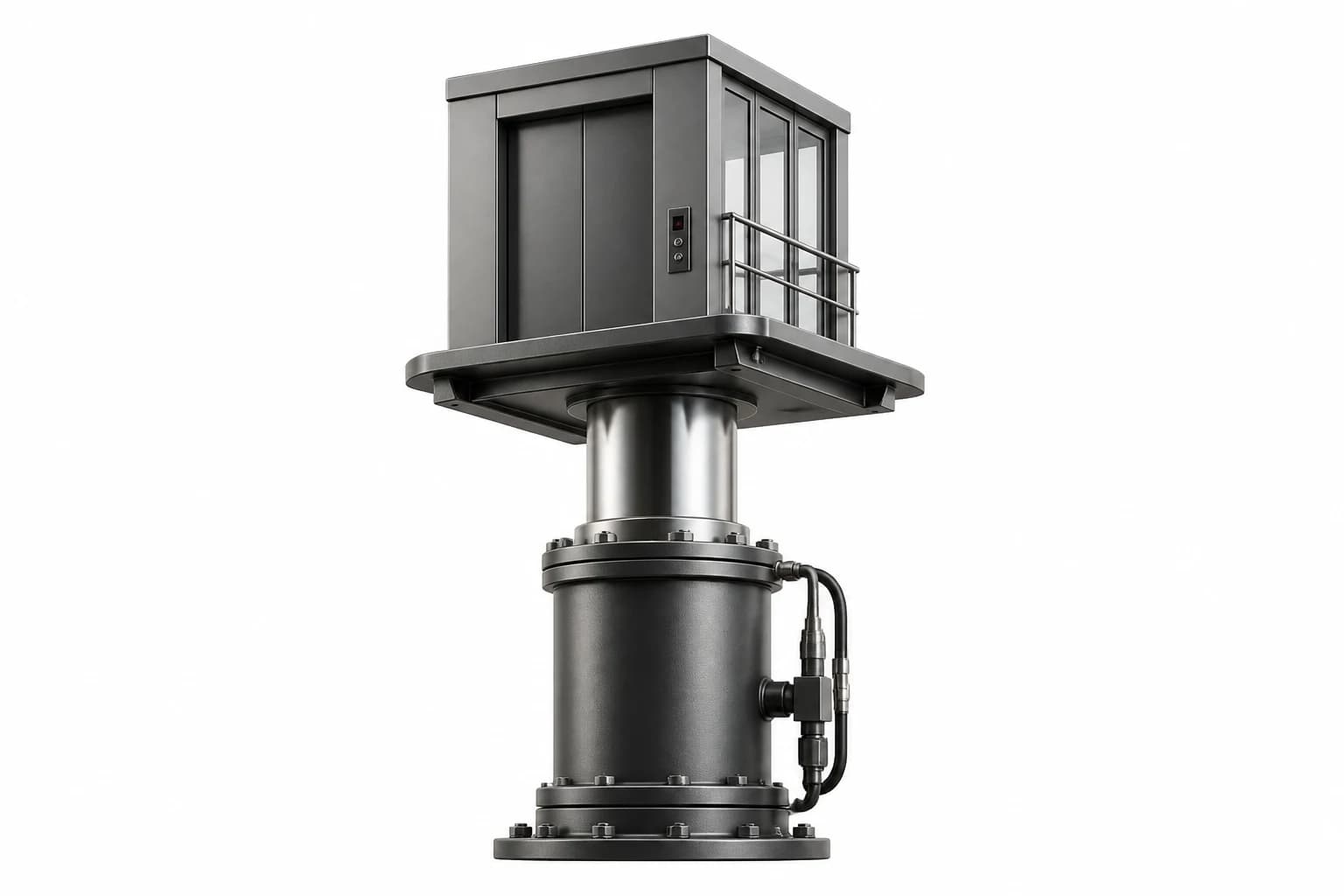
Hydraulic elevator
A hydraulic elevator uses a jack and power unit to move the cabin. It suits villas and 2–6 stop buildings that cannot put a machine room on the roof. Atlas Asanbar Arsh designs and installs in Tehran, Karaj, and cities across northern Iran.
Related resources
Once the layout is clear, continue from here to installation, the MRL guide, or the gearless-motor catalog.

Ready for a consultation?
Call now for pricing and technical advice.