01
Mid-rise residential and quiet towers
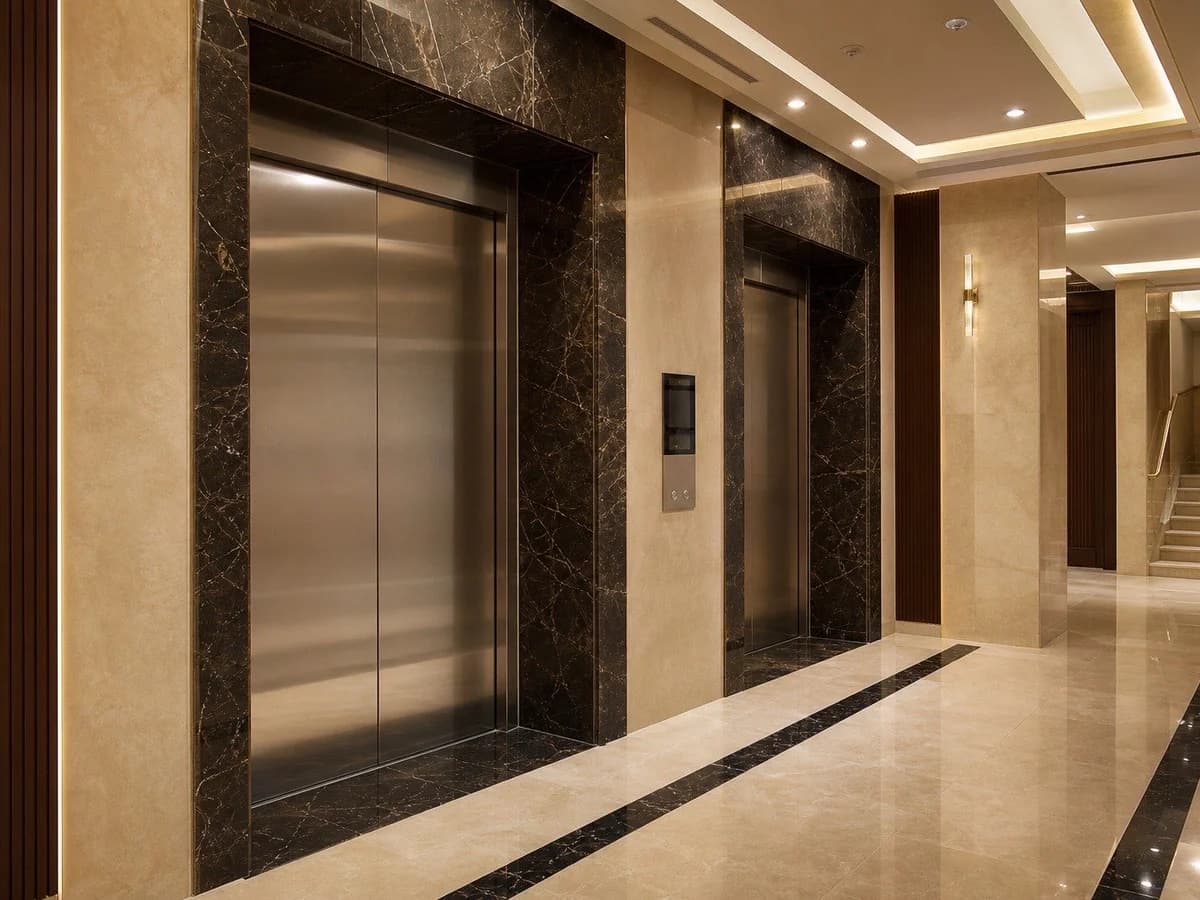
Gearless lifts for 5–15 stop complexes and quiet towers — smooth, low noise, built for living.
Motor type
A gearless elevator uses a motor without a gearbox — usually a permanent-magnet synchronous machine coupled straight to the traction sheave. It is common on mid- and high-rise work, but it is not the same as MRL: it runs with a machine room or without one. Atlas Asanbar Arsh designs and installs in Tehran, Karaj, and cities across northern Iran.
System anatomy
A gearless cabin still travels on ropes and a counterweight, like any traction lift. The difference is the motor has no gearbox. It is usually a permanent-magnet synchronous machine with the sheave on its shaft. Fewer moving parts; that is why the ride is typically described as quieter and smoother than geared — with no decibel figure from a brochure.
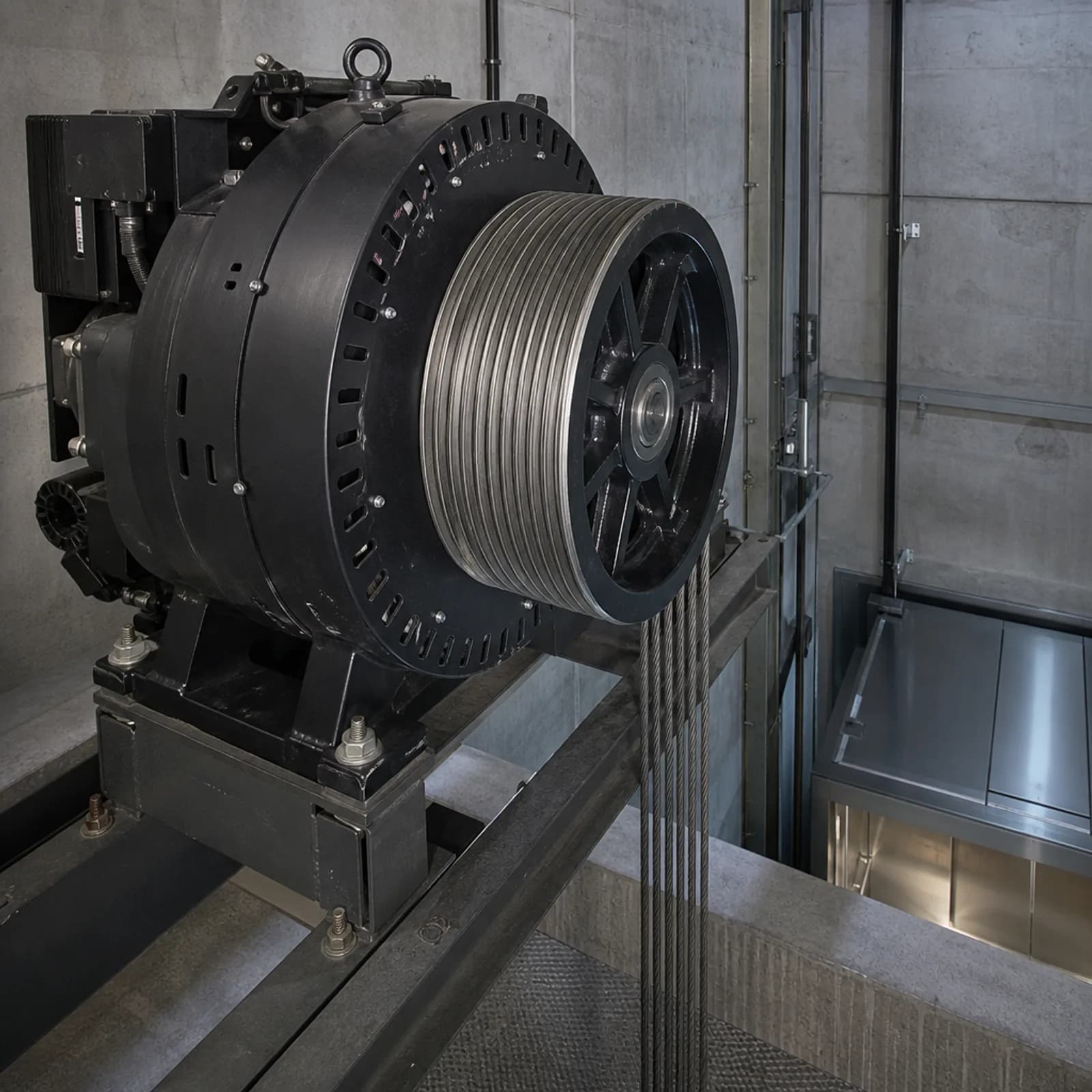
The heart of a gearless drive. No gearbox; torque comes straight from the motor. Fewer mechanical parts than a geared machine.
Sits directly on the motor shaft. The ropes run over the sheave and move the cabin up and down.
Cabin and counterweight hang from the sheave on ropes. That is the traction layout; gearless differs in the motor, not the counterweight.
A gearless motor needs a compatible controller — typically closed-loop. Do not put an unchanged geared controller on a gearless machine.
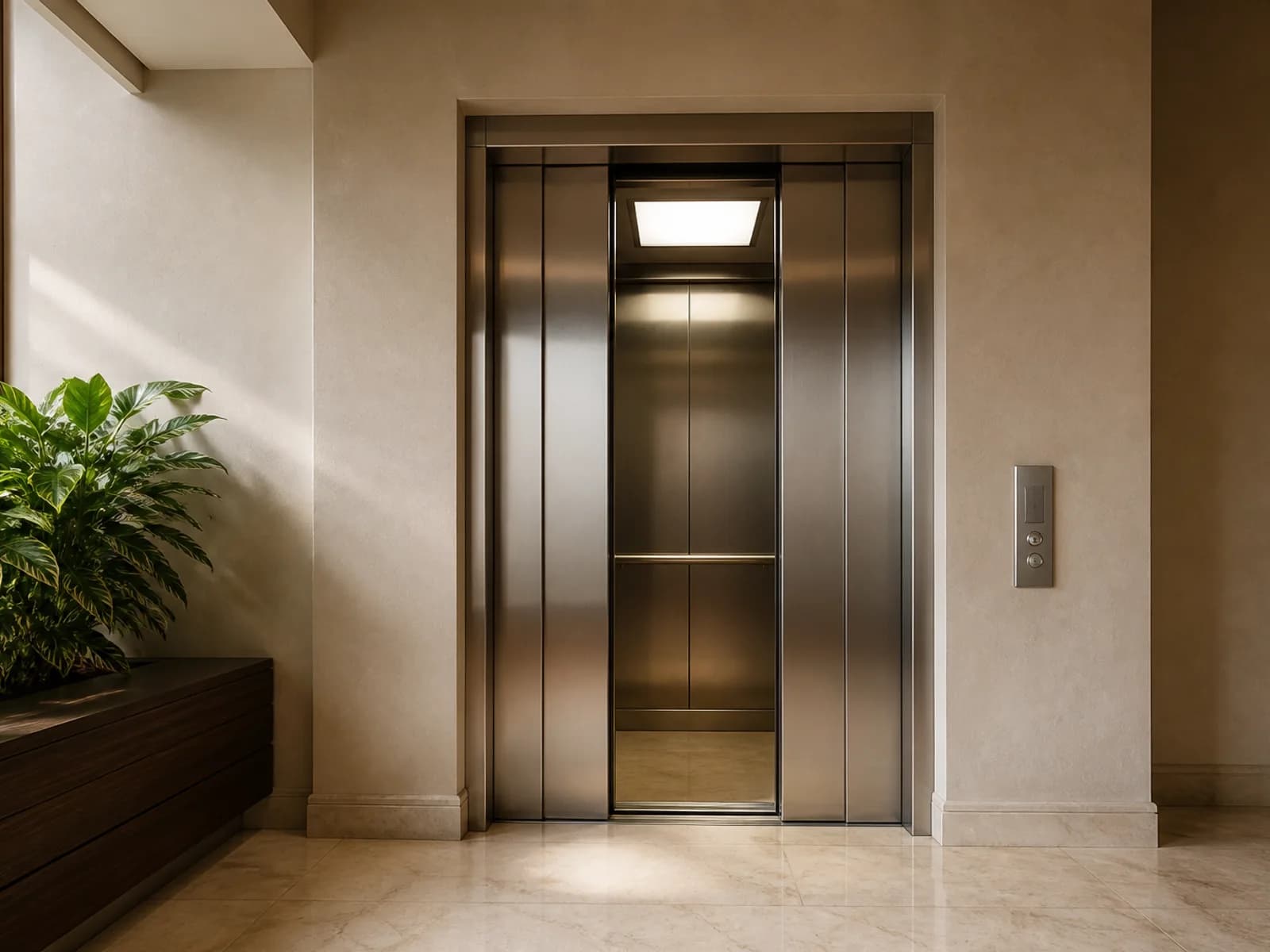
The passenger car. Finish and size come from catalog or custom specs — independent of the motor type.
A compact motor makes MRL install easier, but gearless is not only MRL. The same motor also runs with a machine room. MRL means there is no separate machine room. Do not treat the two as one thing — the survey shows which layout fits the shaft.
You pick the cabin separately from the motor — catalog or custom. The quote comes after the site visit; motor brand and power, controller match, stops, and machine-room versus MRL layout move the number.
Use cases
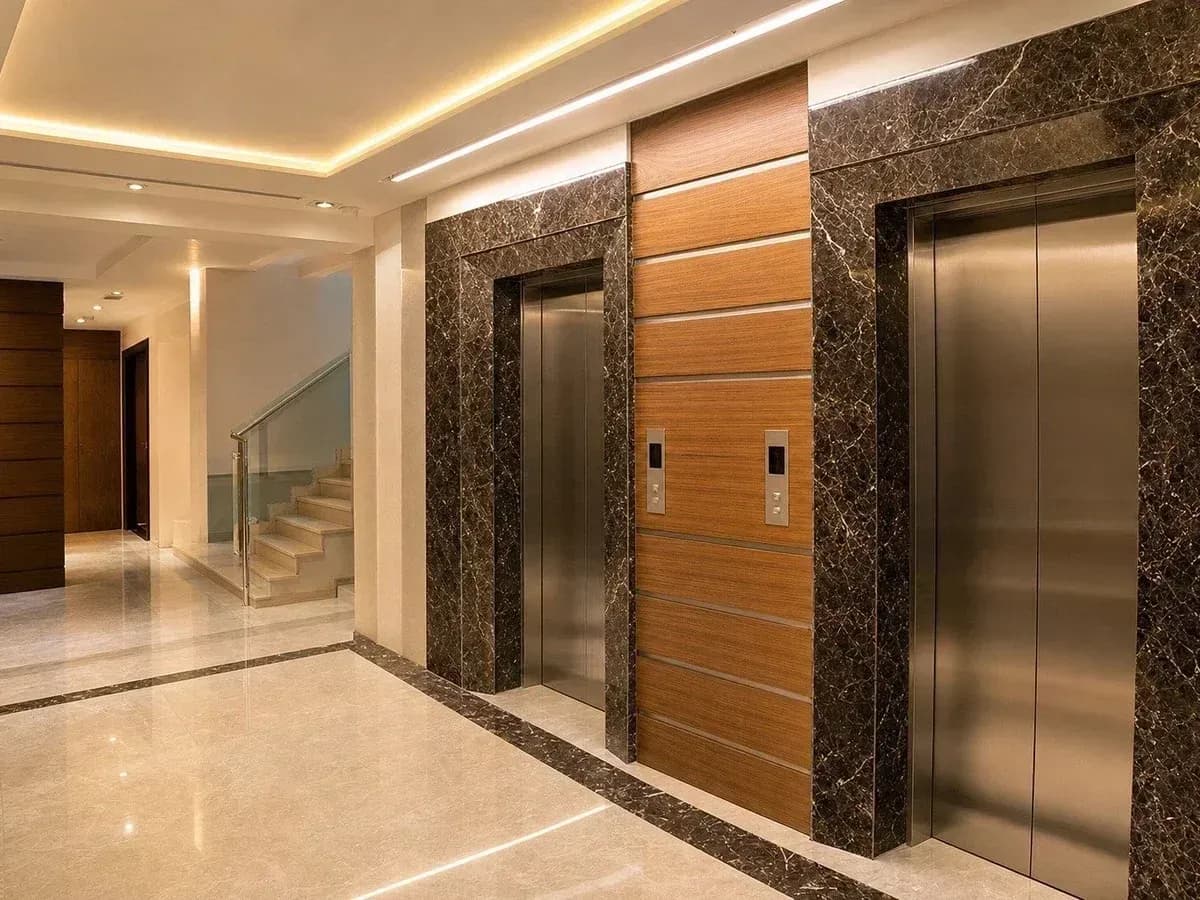
Gearless fits a building whose height or traffic has left the economical geared range, or where ride quality is the priority. A mid-rise complex, a quiet tower, a busy office — those are usually the jobs.
Gearless lifts for 5–15 stop complexes and quiet towers — smooth, low noise, built for living.
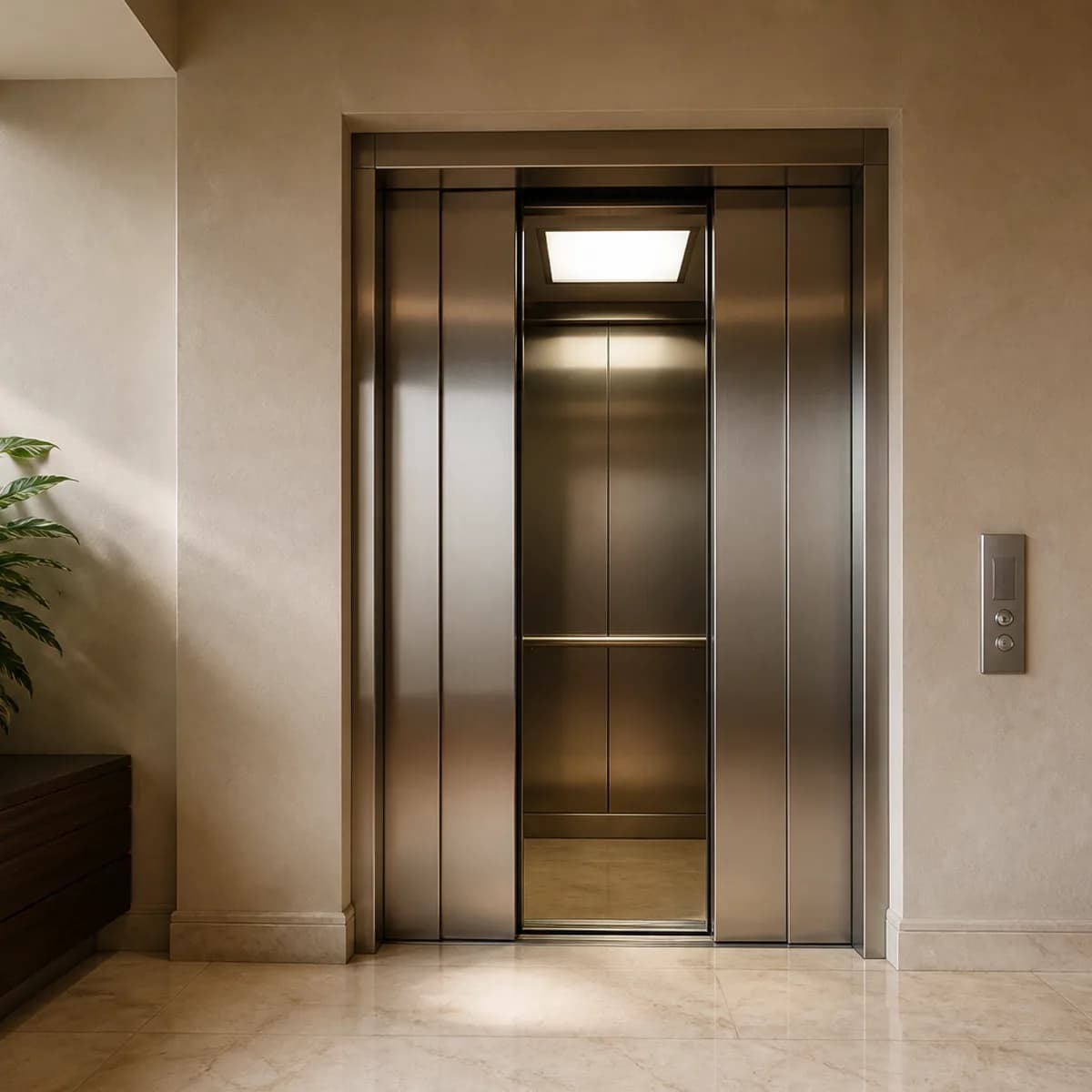
In busy offices and commercial buildings, ride quality and lower use than geared typically put gearless ahead.
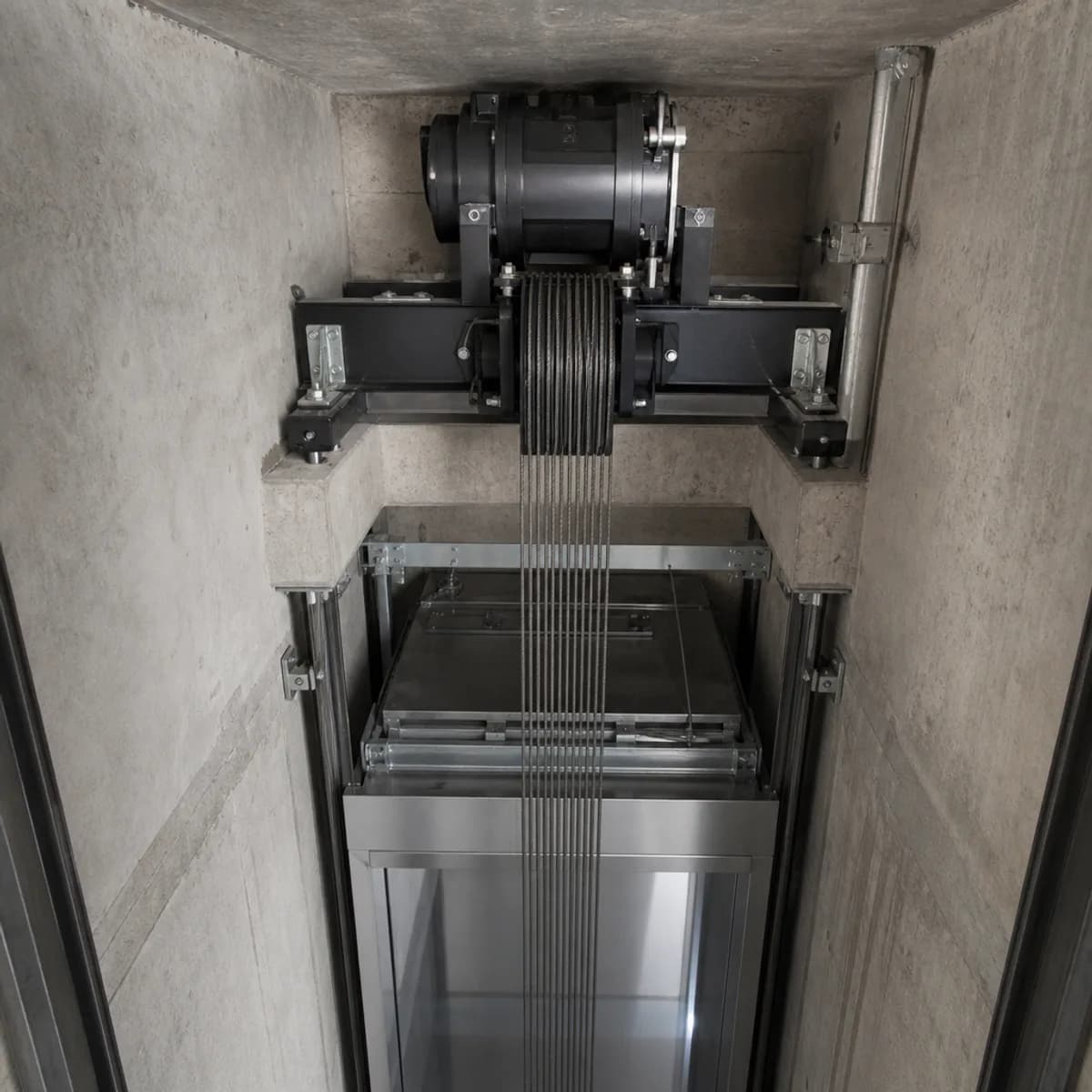
When there is no separate machine room, the gearless motor sits in or at the top of the shaft. MRL is usually gearless — but gearless is not only MRL.
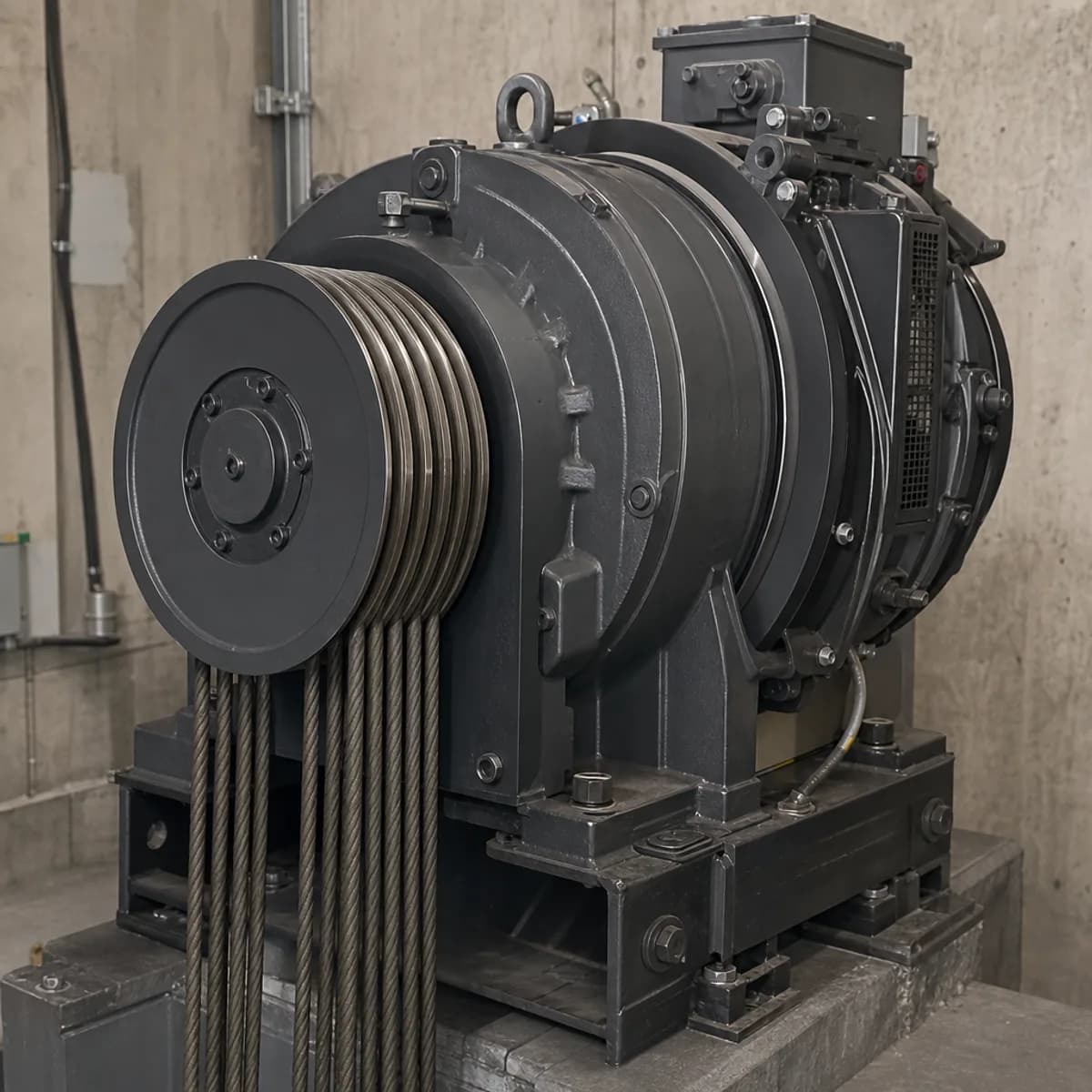
A permanent-magnet synchronous motor sits directly on the traction sheave — with a machine room or without one. There is no gearbox in this layout.
If there is no room for a machine room, a compact gearless package is often the MRL path. If you are low-rise, the budget is tight, and a machine room is ready, do not push gearless — geared is the better fit. Gearless is not the same as MRL.
An honest picture
Gearless does a few things well: a smooth ride, lower use than geared, no gearbox oil, and a size that suits MRL. Those points hold when height, traffic, or machine-room space already point that way.
With no gearbox, gear noise and mechanical vibration drop. On a calm mid- or high-rise, the passenger ride is typically more comfortable than geared.
Gearbox friction is gone; use is typically lower than a comparable geared motor. That is a qualitative comparison — we do not print an efficiency percentage on the quote.
A gearbox needs periodic oiling. Gearless does not have that part. Ropes, brake, and controller still need service — dropping the gearbox does not mean zero service.
Size and weight are typically lower than a comparable geared machine; that is why MRL so often uses gearless. If you have a machine room, you can still install gearless.
Buying and installing gearless usually costs more than geared. On a low-rise with a tight budget, geared is still the more common choice.
A gearless motor will not run on every controller. Closed-loop control and recorded power and amperage are required. A mismatch means buying again, not just a software tweak.
Gearless usually needs three-phase power. Some low-power geared machines are offered on single-phase for villas. If you only have single-phase, check the site power first.
If the building is low-rise, the budget is tight, and a machine room already exists, geared may be the more sensible path. Do not buy gearless just because it is newer.
Better to name the limits in the first meeting. The first number is usually higher than geared; the controller must match; power is often three-phase. For five floors with an existing machine room and a tight budget, geared is still rational. The full comparison is in the gearless-versus-geared guide.
Choosing a drive
If you have a mid- or high-rise, ride quality matters, or MRL is on the table, gearless is a strong option. If the building is low-rise, the budget is tight, and a machine room already exists, keep geared on the table. Floor and speed figures below are a market guide, not a rule.
Gearless
Around 15+ typically gearless — market guide, not a rule
Geared
Often more economical to about 5 floors; 5–15 either
Gearless
Above about 2.5 m/s typically gearless
Geared
Often geared to about 1.6 m/s; 1.6–2.5 either
Gearless
With a machine room or MRL — gearless is not only MRL
Geared
Usually with a separate machine room
Gearless
Higher purchase; no gearbox oil
Geared
Lower purchase; gearbox oiling required
Read the table against your building, not against which motor is “better.” A four-floor apartment with an existing machine room and a tight budget usually stays geared. The same building at twelve stops, or with a lift that must run smooth and fast at peak hours, tips toward gearless. In MRL the choice often lands on a compact gearless package; a cheap geared motor is not enough on its own. Floors and speed on this page are a market guide, not a rule.
Project path
A gearless install does not start with picking a cabin finish. First we see the shaft, stops, speed, three-phase power, and machine room versus MRL. Without those measurements, two quotes cannot be compared.
Shaft survey, stop and speed check, three-phase power, and machine-room or MRL versus geared.
Execution drawings, gearless motor and matching controller, cabin, and a transparent phased quote.
Rails, motor on the sheave, ropes and counterweight, doors and cabin; gearless controller wiring per approved drawings.
Safety tests, speed and leveling adjustment, inspection prep, and owner handover briefing.
After the survey, drawings and a phased quote follow: design, supply, install, handover. Exact timing depends on shaft readiness and motor and controller lead time. After testing we also coordinate the technical inspection. Handover means the lift works and inspection paperwork is moving — not just a cabin on rails.
How quotes are built
There is no fixed gearless price. Two twelve-stop towers can get very different quotes; usually one has a simpler motor and controller, the other a dearer brand, a tighter MRL, or more landing doors.
We write the number after the survey. Look at motor brand and power, capacity, stops, controller match, and machine-room versus MRL separately. If you only heard a lump sum, ask whether shaft steelwork, landing doors, the controller, and delivery are inside it. We do not put a ready-made package price on the quote.
Project proof
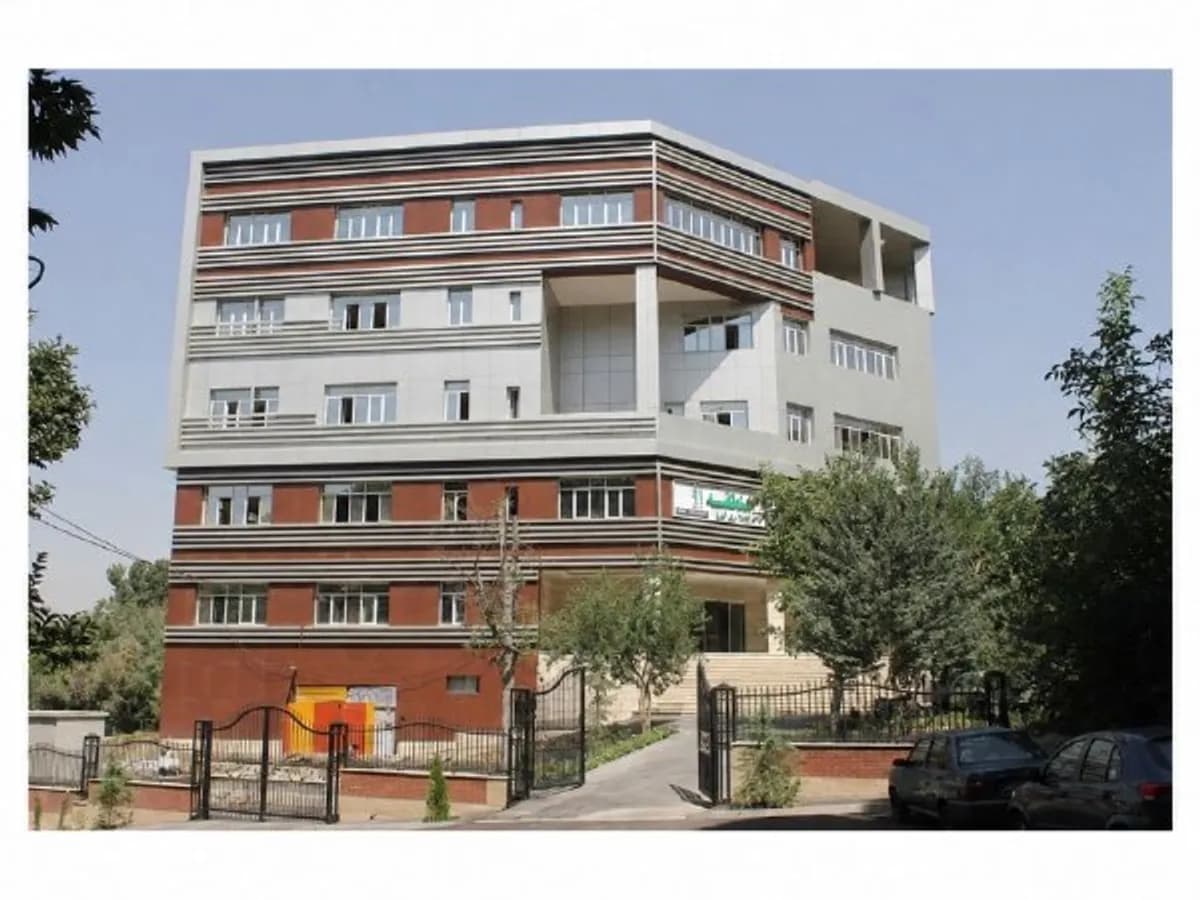
A few projects where a gearless motor is in place — mid-rise residential and civic buildings. Open a card for the details of each job.
Before a site visit the same questions come back: what gearless is, how it differs from geared and from MRL, how many floors, how service works, what builds the price, whether three-phase power is required. Short answers are here; numbers and drawings come after the shaft is measured.
Related types
If gearless does not fit the budget or height of your project, look at the other drives here. Geared is more economical on low-rise; MRL is when there is no room for a machine room; traction is the wider rope-and-counterweight family.
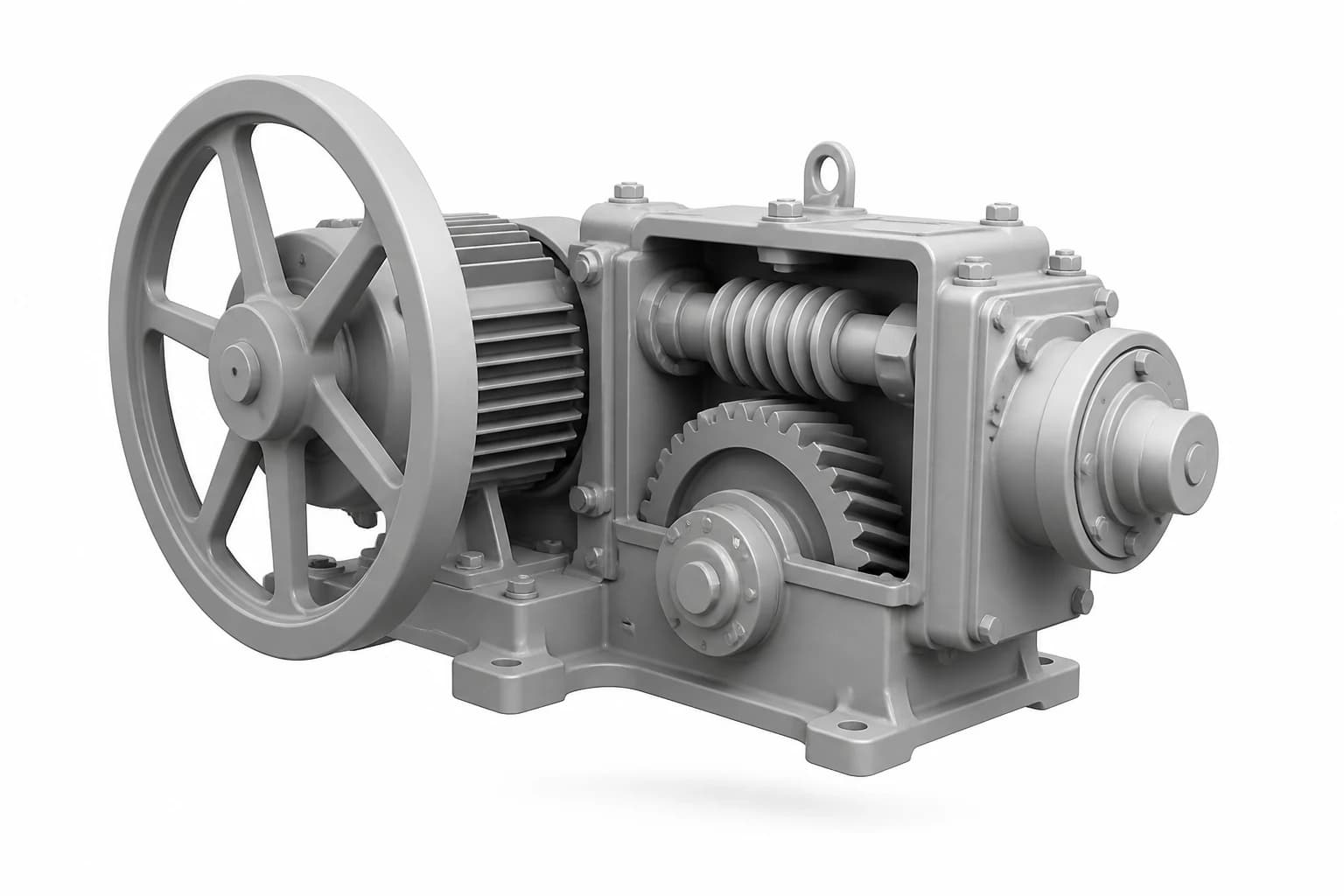
Geared elevator
A geared elevator uses an electric motor and a gearbox to reduce speed and raise torque, then drive the traction sheave. It still suits low- and mid-rise residential buildings that already have a machine room. Atlas Asanbar Arsh designs and installs in Tehran, Karaj, and cities across northern Iran.
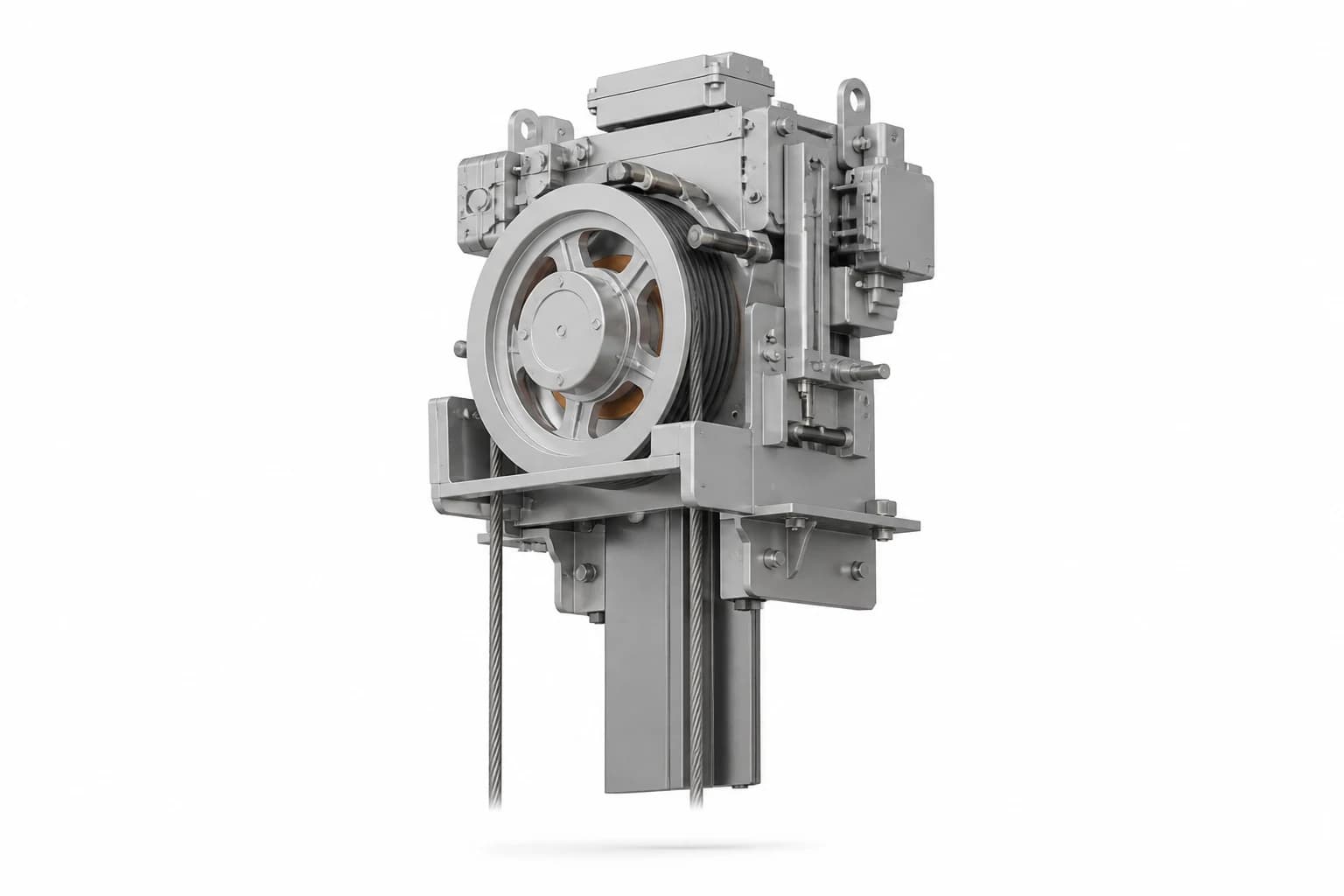
MRL elevator
An MRL elevator has no separate rooftop machine room. The drive usually sits in the hoistway on a support beam; the controller is often a cabinet at the top landing. It is common in Iran for mid-rise apartments and retrofits with a tight roof. Atlas Asanbar Arsh designs and installs in Tehran, Karaj, and cities across northern Iran.
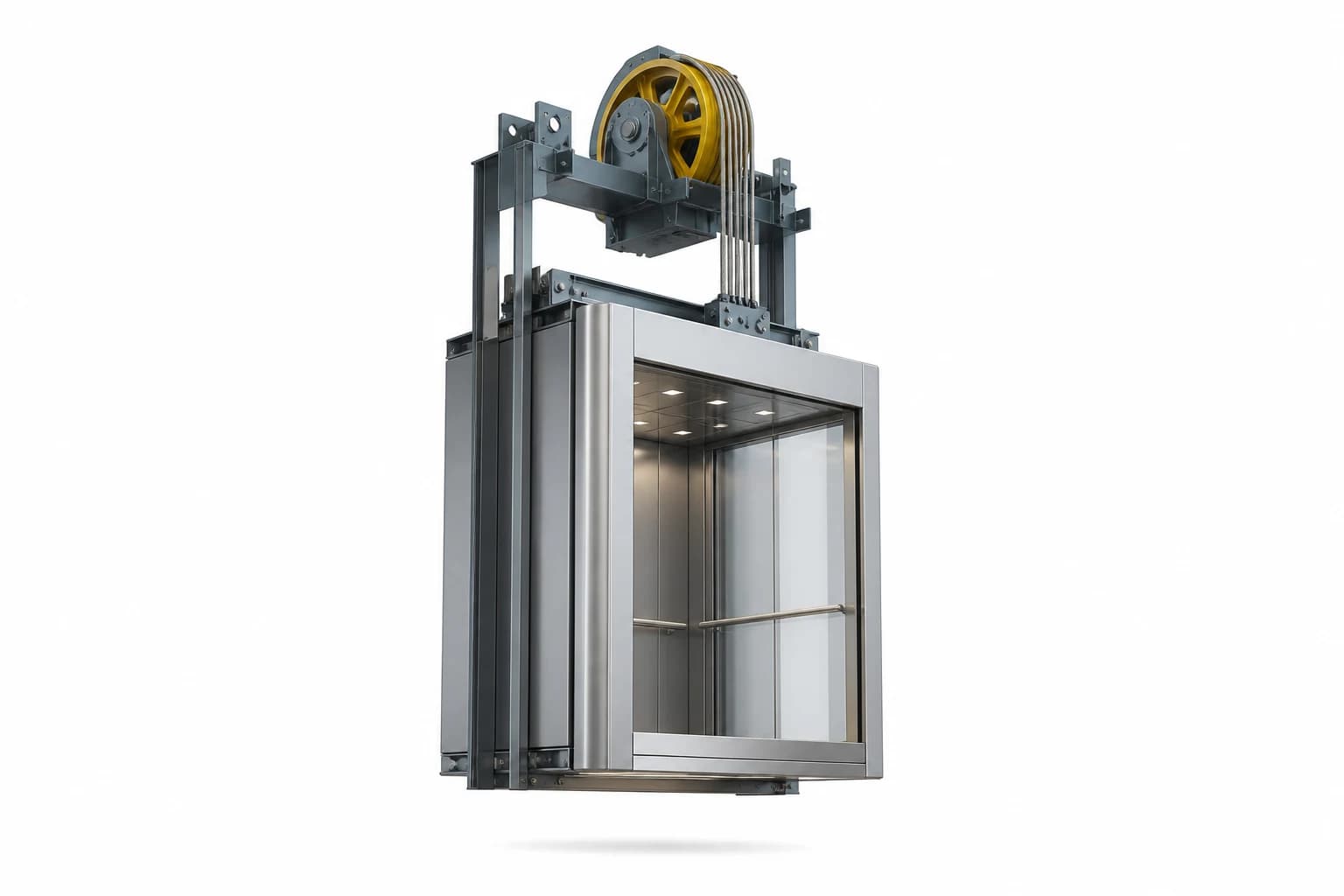
Traction elevator
A traction elevator moves the cabin with steel ropes over a motor-driven sheave and a counterweight. It is the usual choice for mid-rise and high-rise buildings with heavier traffic. Atlas Asanbar Arsh designs and installs in Tehran, Karaj, and cities across northern Iran.
Related resources
Once the motor type is clear, continue from here to installation, the gearless-versus-geared guide, or the gearless motor catalog.

Ready for a consultation?
Call now for pricing and technical advice.