01
Low- to mid-rise residential
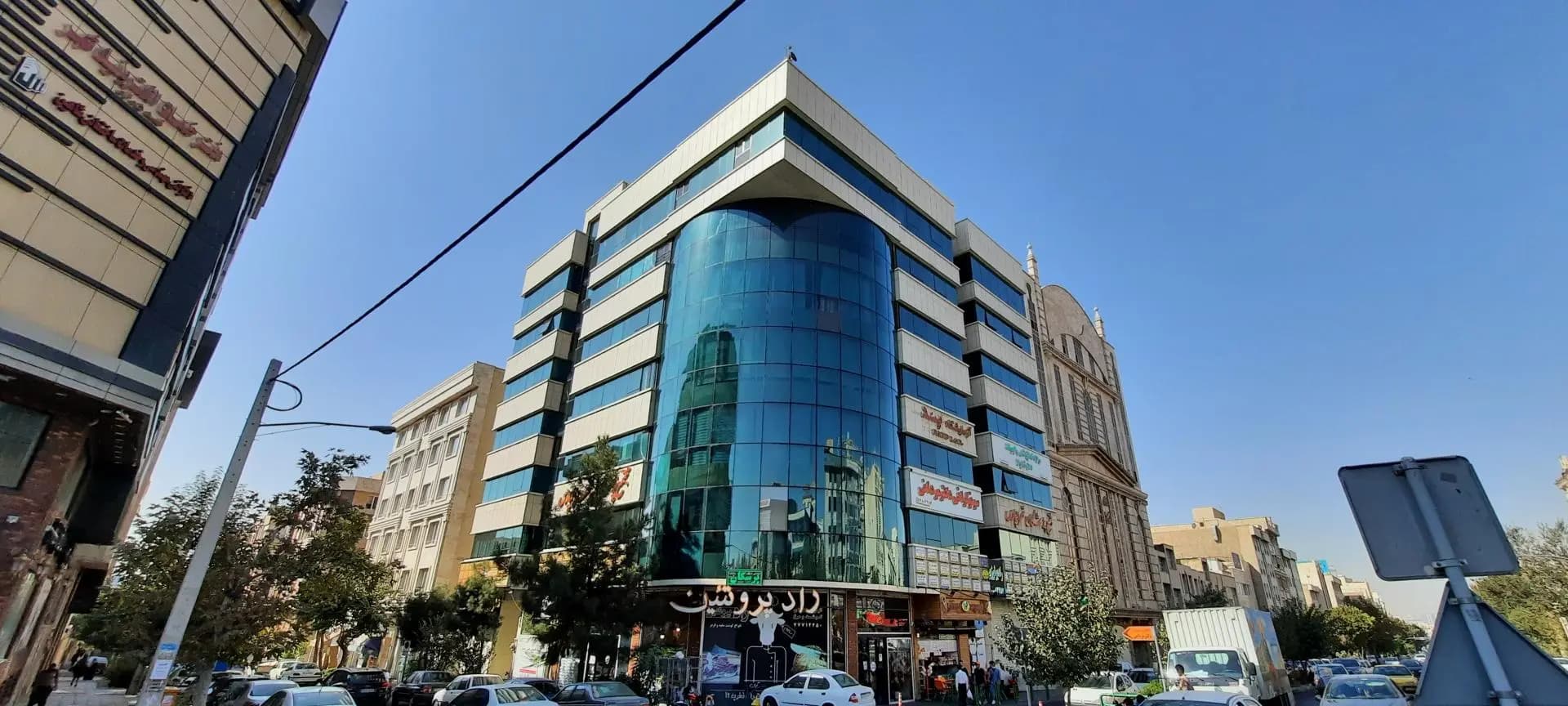
Budget-conscious apartments with a machine room — often economical to about five floors; through mid-rise depending on traffic and speed.
Motor type
A geared elevator uses an electric motor and a gearbox to reduce speed and raise torque, then drive the traction sheave. It still suits low- and mid-rise residential buildings that already have a machine room. Atlas Asanbar Arsh designs and installs in Tehran, Karaj, and cities across northern Iran.
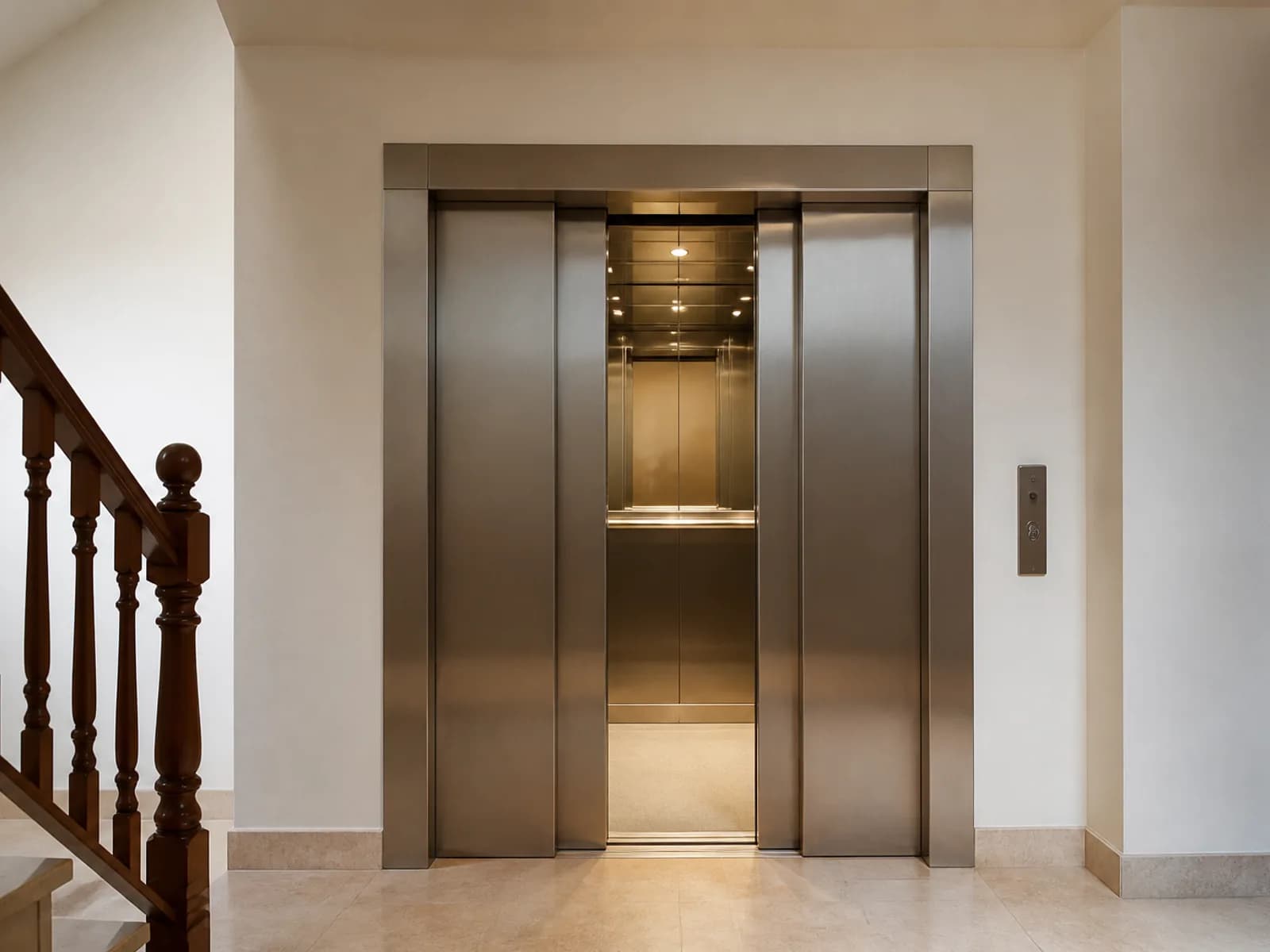
System anatomy
A geared lift is classic traction: an electric motor feeds a gearbox — typically worm — speed drops and torque rises, then the sheave pulls the ropes and counterweight. The car does not rise on oil pressure; it moves by sheave friction. Motor and gearbox usually stay in a machine room, not in the shaft the way most Iranian MRL jobs do.
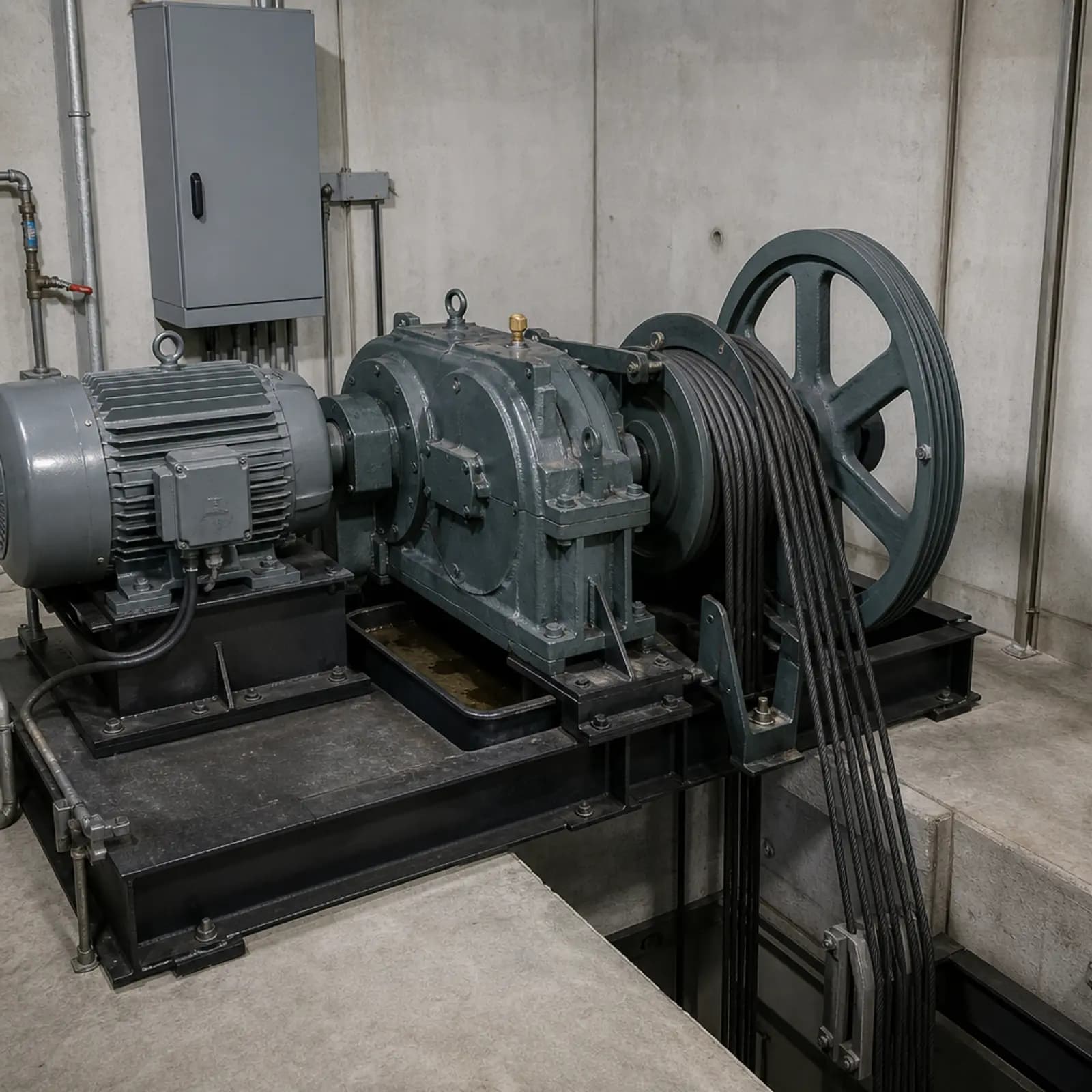
Produces rotation and feeds the gearbox. Project power and supply — three-phase, or single-phase on some small models — are settled here.
Typically a worm gearbox. It reduces motor speed and increases torque so the sheave can move the car. This is the part that needs periodic oiling.
The gearbox output turns the sheave. Groove friction on the ropes moves the car and counterweight together — classic traction.
The car sits on one side of the sheave and the counterweight on the other. Without that pair, a geared machine is not a traction lift.
The motor and gearbox usually sit in a separate room above or beside the shaft. Some small and villa models are more compact — that is not a rule for every job.
This is a market guide, not a code rule: up to about five floors, geared is often the more economical call; between five and fifteen stops, budget and traffic decide; for towers and high speed, gearless usually wins. Geared rated speed is often up to about 1.6 m/s; some sources allow up to about 2.5. Above that, gearless is usual. Some small and villa models run on single-phase power — limited output and capacity; do not count on that for every job.
You pick the cabin separately from the machine — catalog or custom. The quote comes after the site visit; stops, motor and gearbox brands, cabin finish, and machine-room condition move the number.
Use cases
Geared fits a building that sits in the low- to mid-rise range and already has a machine room, or can have one. A five-floor apartment on a tight budget, a modernization on an existing traction shaft, a moderate-speed service lift — those are usually the jobs.
Budget-conscious apartments with a machine room — often economical to about five floors; through mid-rise depending on traffic and speed.
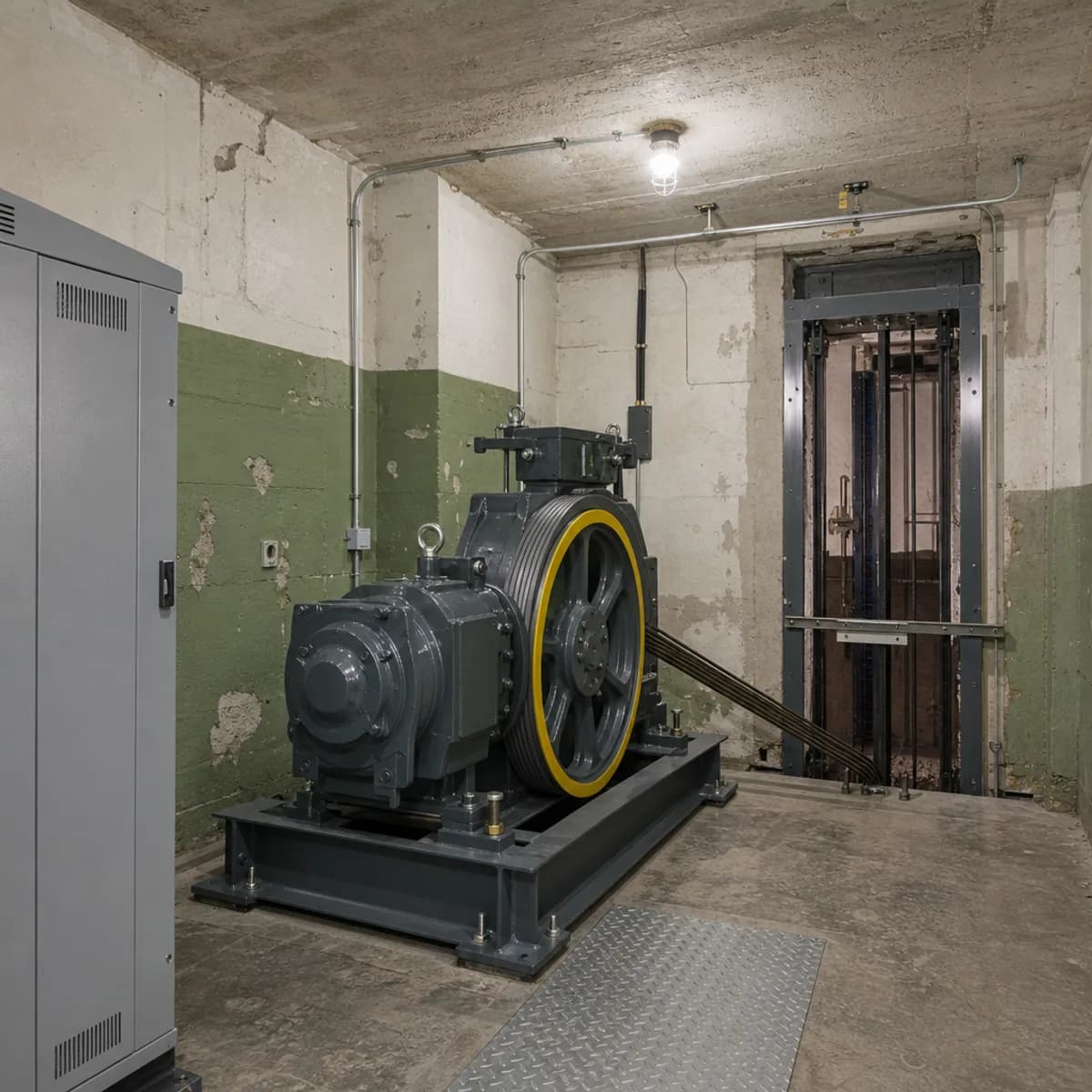
When the machine room and traction shaft are already in place, swapping a geared machine is usually simpler and cheaper than converting to MRL.
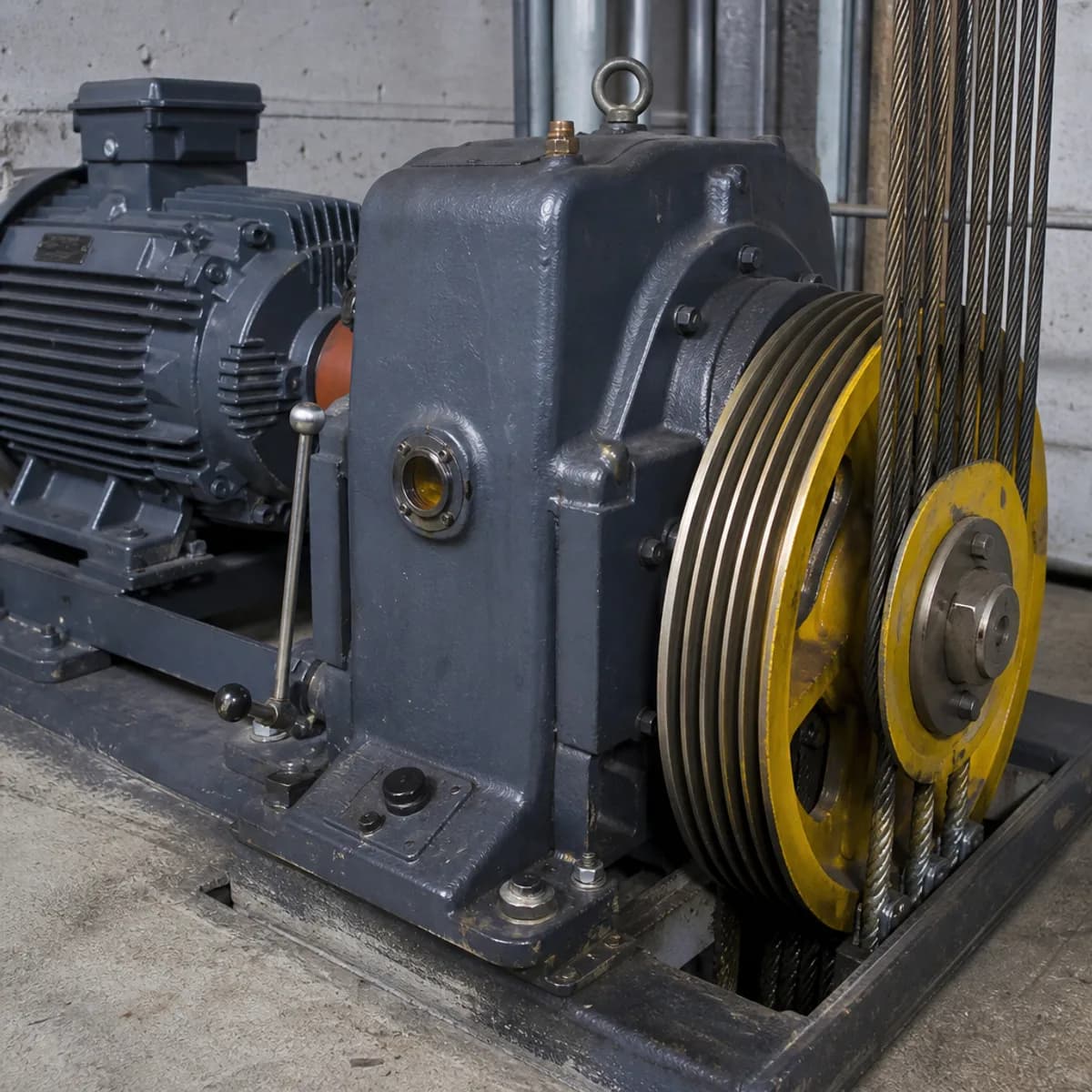
Electric motor and worm gearbox in the machine room — sheave on the gearbox output. Service means oil, noise, and temperature of that assembly.
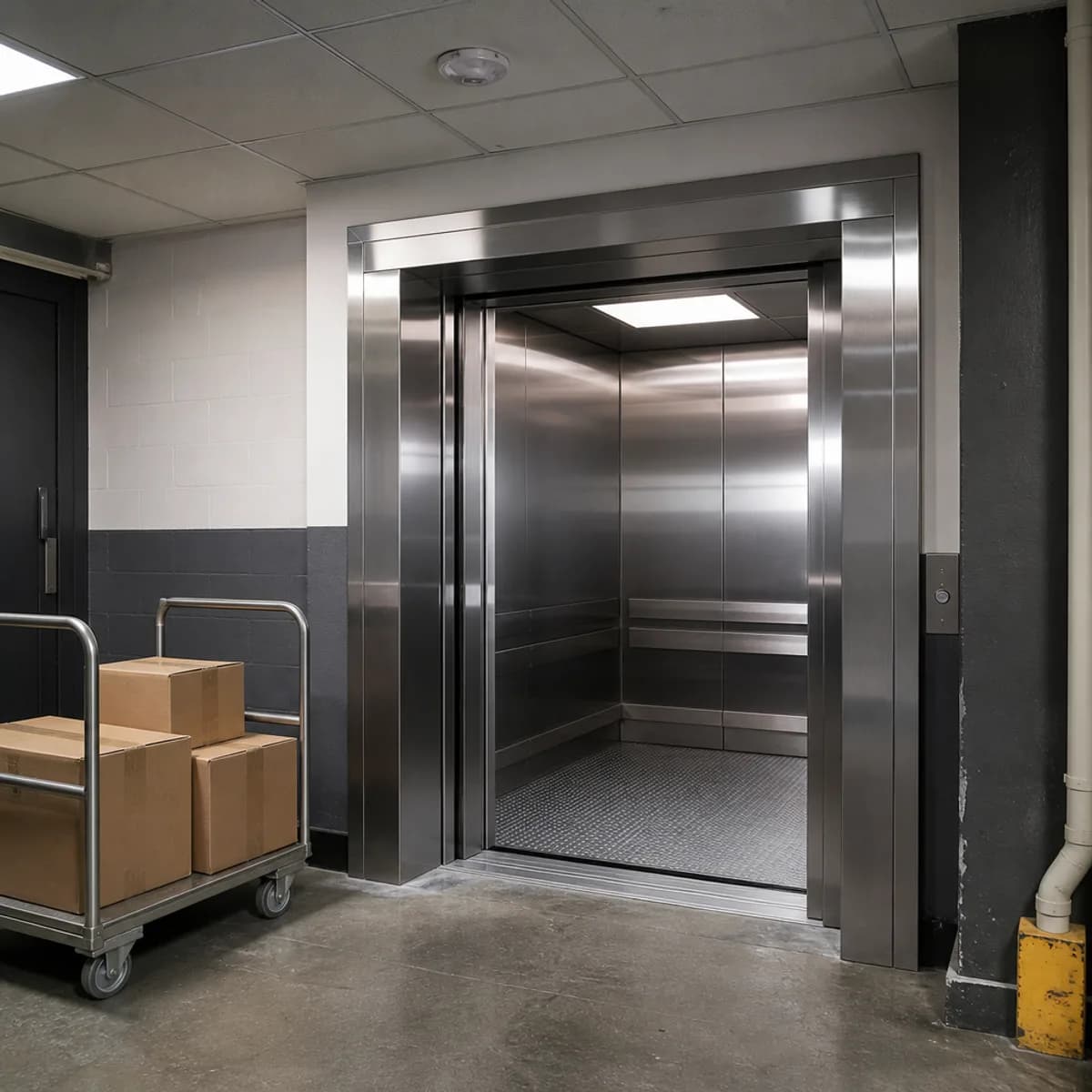
A service or light-freight lift where top speed is not the priority and a machine room fits — geared is often the practical answer.
If a machine room is already there, price the cost of tearing it out for MRL before you switch. Do not push this system on a tower, or where the lift must run fast and quiet — gearless is the better fit. Iranian MRL work usually pairs with gearless, not a bulky gearbox.
An honest picture
Geared machines are not obsolete. They still make sense for some heights and budgets: you have a machine room, travel sits in the low- to mid-rise range, and first cost matters more than the quietest ride. Those points hold when you have already ruled out a tower, MRL, and high speed.
Buying and installing a geared machine usually costs less than a comparable gearless unit. For a tight budget it is still a common choice.
Many service technicians already know gearbox oiling and sheave setup. Parts and repair know-how are usually available in larger cities.
Modernizing a traction shaft that already has a machine room is a practical path. Do not price in demolishing that room for MRL unless the space is truly tight.
Low- to mid-rise apartments and moderate-speed service lifts usually work with geared machines. Do not push this system if you need tower peak-hour performance.
The gearbox needs oil and periodic service. More moving parts mean more wear than gearless. A clean install reduces that risk — it does not remove it.
Market sources usually describe geared machines as noisier and more prone to vibration than gearless — a qualitative comparison, not a decibel figure. If quiet luxury is the priority, gearless fits better.
Gearbox friction usually means higher energy use than gearless. That is a qualitative direction; there is no single efficiency percentage for every machine.
A gearbox is usually bulky; Iranian MRL jobs are usually gearless — not an absolute never, but not the default. For towers, high speed, or quiet luxury, gearless is the more common call.
Better to name the limits in the first meeting. The gearbox needs oil and its parts wear. Noise and vibration are usually higher than gearless; efficiency is usually lower — with no marketing percentage. If the shaft must finish without a machine room, or the lift must run fast and quiet at peak hours, switch to gearless from here.
Choosing a drive
If you have a machine room, height sits in the low- to mid-rise range, and first cost matters, a geared elevator is a strong option. If you want MRL, you are building a tower, you need speed above about 1.6 m/s, or quiet luxury is the priority, go gearless.
Geared
Often economical to ~5 floors; 5–15 depends on budget
Gearless
Mid-rise to tower; the high-rise default
Geared
Usually needs a machine room; typically too bulky for MRL
Gearless
With a machine room or MRL; Iranian MRL is usually gearless
Geared
Often up to ~1.6 m/s; some sources up to ~2.5
Gearless
Above that range, gearless is usual
Geared
Cheaper to buy; more gearbox oiling and service
Gearless
Dearer to buy; no gearbox service load
Read the table against your building, not against which motor is “newer.” A five-floor apartment with a ready machine room almost always tips toward geared on cost. The same building as MRL, or with a lift that must run fast and quiet at peak hours, tips toward gearless. Gearless is not only for MRL; it also installs with a machine room.
Project path
A geared install does not start with picking a cabin finish. First we see the shaft, machine room, three-phase or single-phase supply, capacity, and speed. Without those measurements, two quotes cannot be compared — and you cannot tell whether geared stays or the job must go gearless.
Shaft survey, machine-room check, capacity and speed, and a geared-versus-gearless call on the project sheet.
Execution drawings, cabin and geared-machine selection, and a transparent quote with the motor model and a rough timetable.
Motor and gearbox in the machine room, sheave, rails, doors, and cabin; ropes and controller wiring per approved drawings.
Safety tests, speed and leveling adjustment, gearbox oil check, inspection prep, and owner handover briefing.
After the survey, drawings and a phased quote follow: design, supply, install, handover. Exact timing depends on shaft readiness and machine lead time. After testing we also coordinate the technical inspection. Handover means the lift works, gearbox oil is at the right level, and inspection paperwork is moving — not just a cabin on rails.
How quotes are built
There is no fixed geared price. Two eight-stop apartments can get very different quotes; usually one has a smaller machine and a simpler cabin, the other a dearer gearbox, more landing doors, or a tighter machine room.
We write the number after the survey. Stops and travel sit on motor power; capacity changes sheave and gearbox; cabin and doors come from the catalog and move the figure there. If you only heard a lump sum, ask whether the motor model, gearbox oiling, landing doors, and delivery are inside it.
Project proof
A few mid-rise traction jobs — open a card for the details of each one. Read the machine type on that project page; this section does not claim every job is geared.
Before a site visit the same questions come back: what geared means, how it differs from gearless, how many floors, whether MRL works, what gearbox oil needs, where price comes from, whether single-phase exists. Short answers are here; numbers and drawings come after the shaft is measured.
Related types
If geared does not fit the height, MRL, or quiet-ride priority of your project, look at the other drives here. Gearless is for towers and no machine room; traction is the wider rope-and-counterweight family; MRL is when there is no room for a machine room.
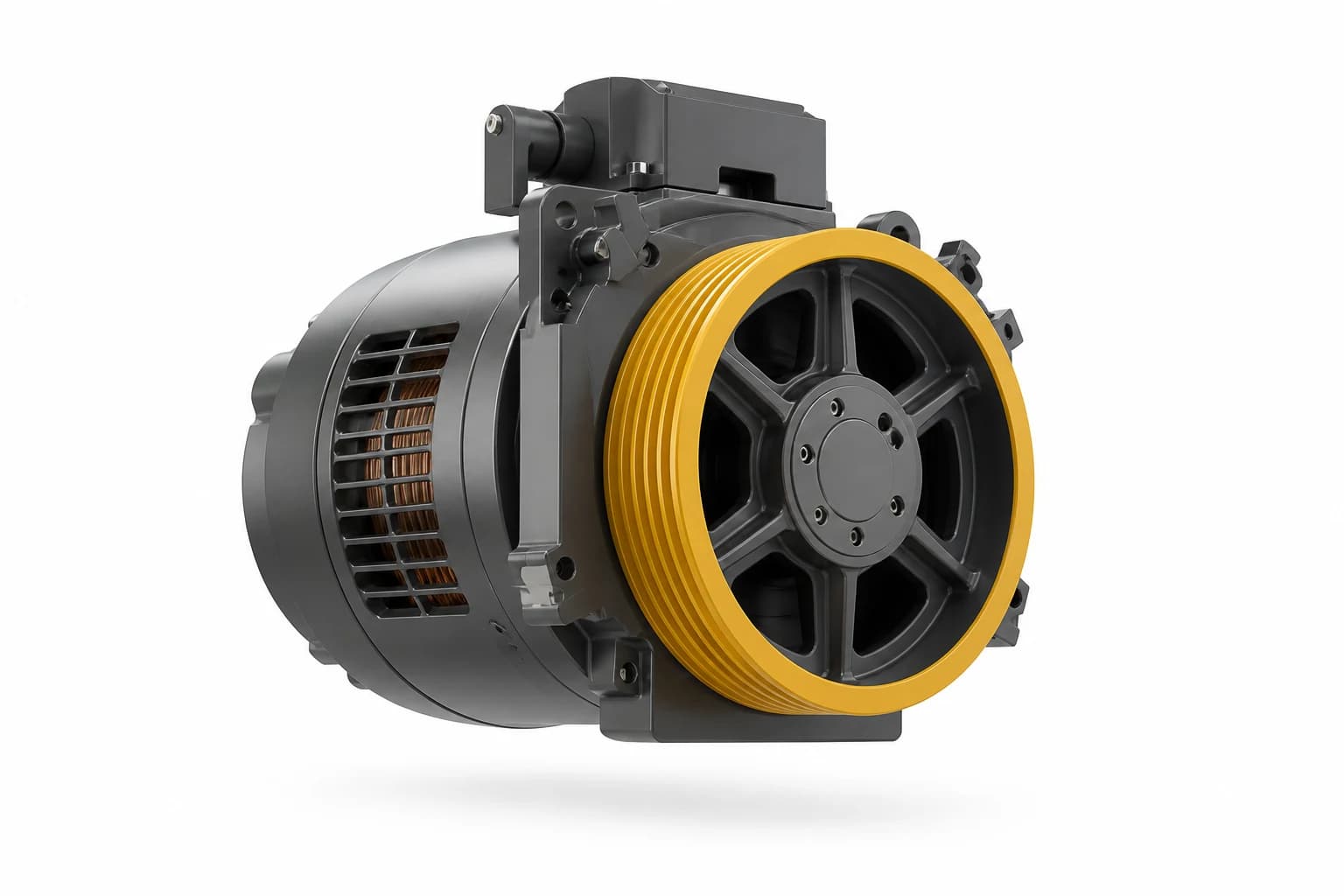
Gearless elevator
A gearless elevator uses a motor without a gearbox — usually a permanent-magnet synchronous machine coupled straight to the traction sheave. It is common on mid- and high-rise work, but it is not the same as MRL: it runs with a machine room or without one. Atlas Asanbar Arsh designs and installs in Tehran, Karaj, and cities across northern Iran.
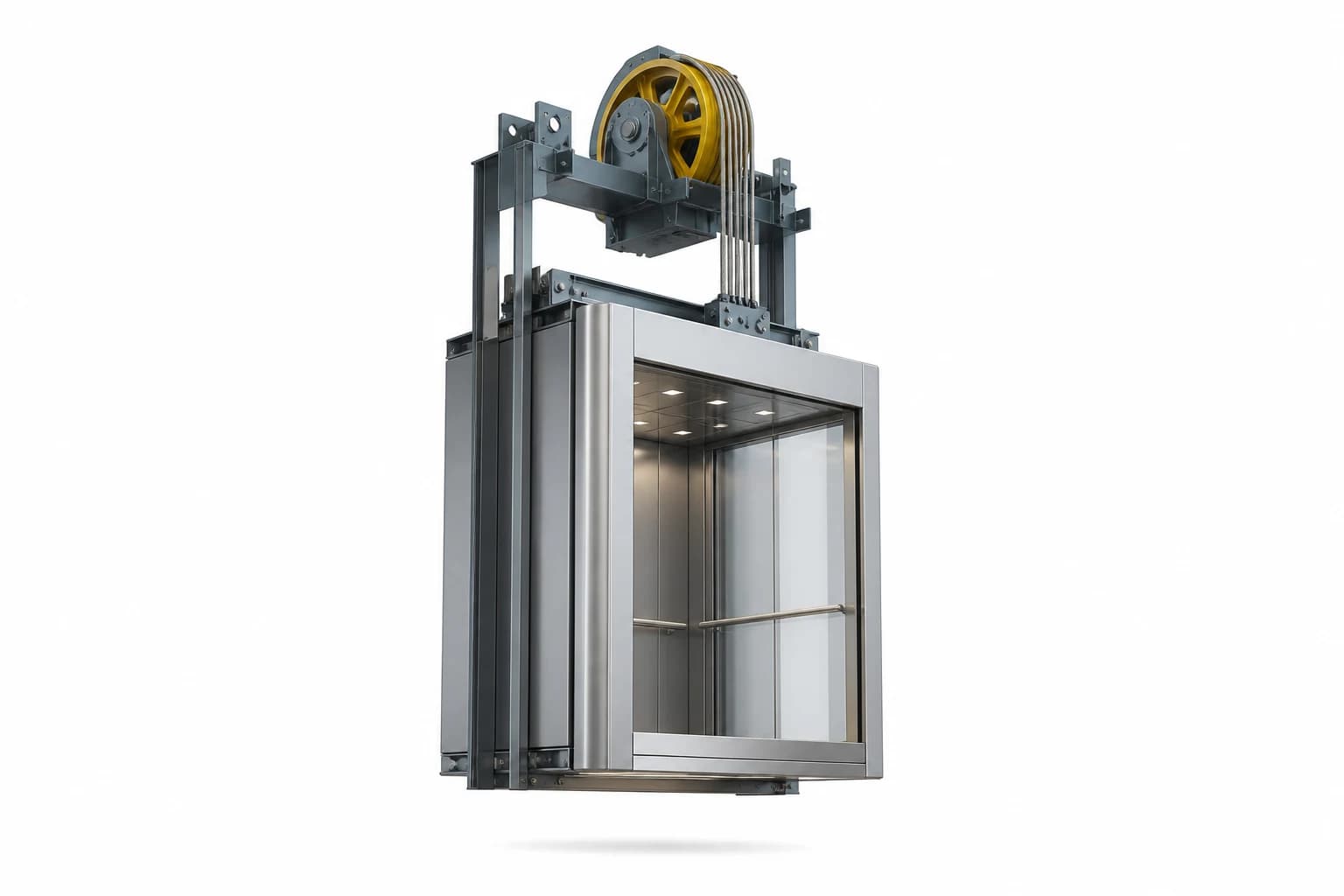
Traction elevator
A traction elevator moves the cabin with steel ropes over a motor-driven sheave and a counterweight. It is the usual choice for mid-rise and high-rise buildings with heavier traffic. Atlas Asanbar Arsh designs and installs in Tehran, Karaj, and cities across northern Iran.
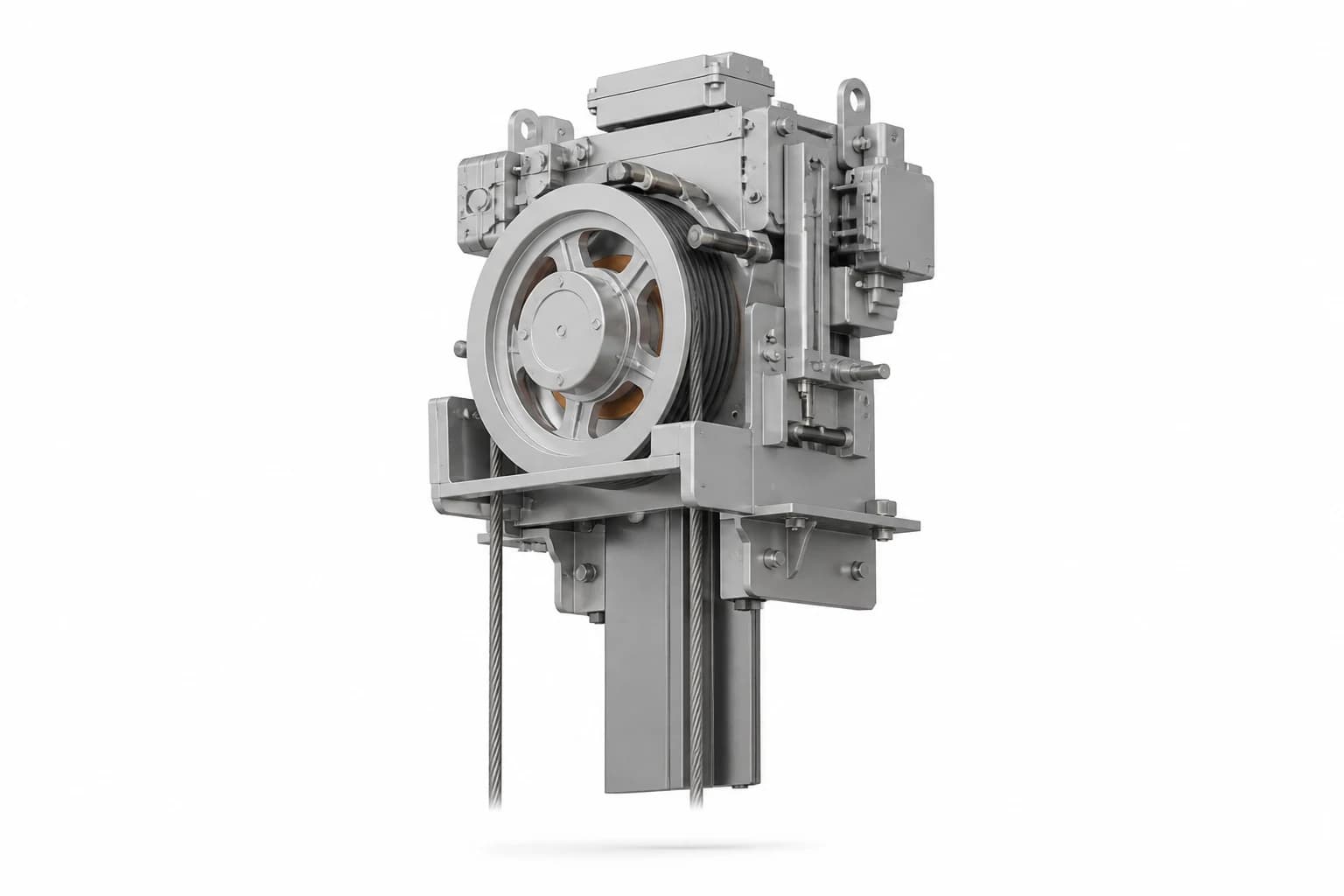
MRL elevator
An MRL elevator has no separate rooftop machine room. The drive usually sits in the hoistway on a support beam; the controller is often a cabinet at the top landing. It is common in Iran for mid-rise apartments and retrofits with a tight roof. Atlas Asanbar Arsh designs and installs in Tehran, Karaj, and cities across northern Iran.
Related resources
Once the motor type is clear, continue from here to installation, the geared-versus-gearless guide, or the geared-motor catalog.

Ready for a consultation?
Call now for pricing and technical advice.